


28 Nov Genealogist- Newsletter- November 28, 2026
GENEALOGIST- THE NEWSLETTER PODCAST STYLE!
You can now listen to and read the Dancestors Genealogy Newsletter.
Listen to all Dancestors Genealogy newsletters on our podcast page.
PODCASTS
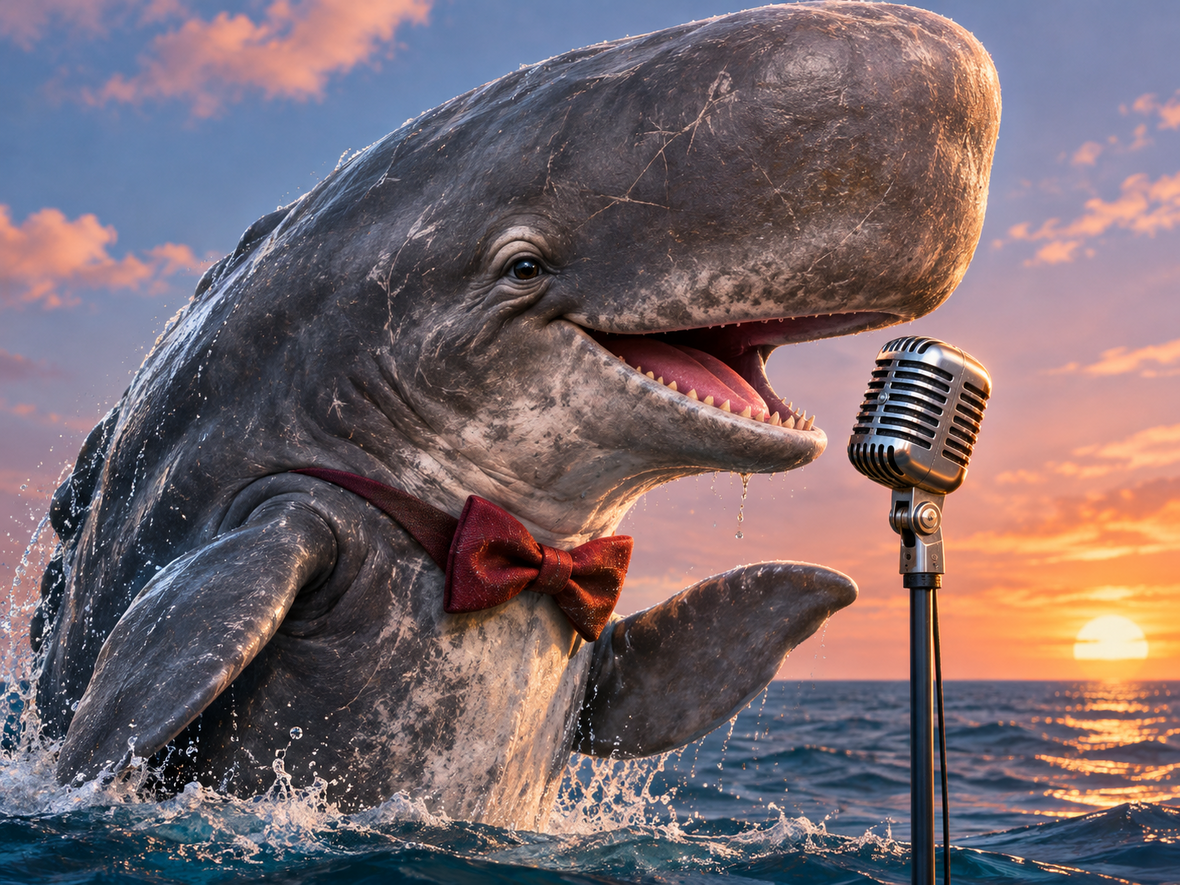
SPECIAL PODCAST
I’ve added a podcast on Captain Hezekiah Starbucks 5-year whaling expedition journal.
Using AI, we were able to transcribe the 400-page cursive document into an understandable transcript and have now created a 21-minute podcast to get the gist of the journal without having to read the 400 pages, which, while fascinating if you were a whaler in your last life, can be monotonous for others.
For those who’d prefer to read, each edition will include a short highlight as the last article.
Listen to all Dancestors Genealogy newsletters on our podcast page. PODCASTS
THE BOGARDUS FAMILY: FROM PREACHING SERMONS TO EXPOSING SPIRITS
I previously wrote about Domine Everardus Bogardus in the last edition Bogey , as he was a critic of my ancestors, Anthony and Greitje Van Salee.
Everardus’ son, Willem, married my 8th-great-grandmother, Walburga De Sille Cregiers, as her second husband.
Willem had a son, Cornelius, who had a son, Cornelius II, who had a son, Cornelius III, who had a son, Cornelius IV, who had a son, Cornelius V, who had a son, Cornelius VI. Cornelius V had a son, and for a change of pace, named him Abraham Bogardus.
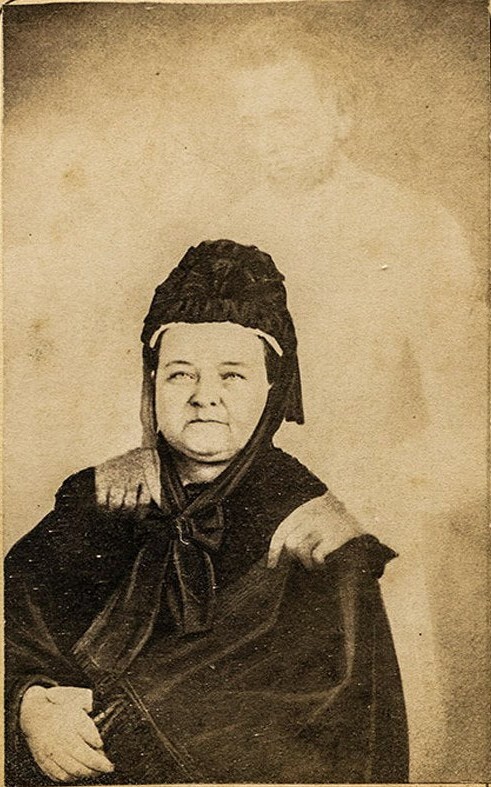
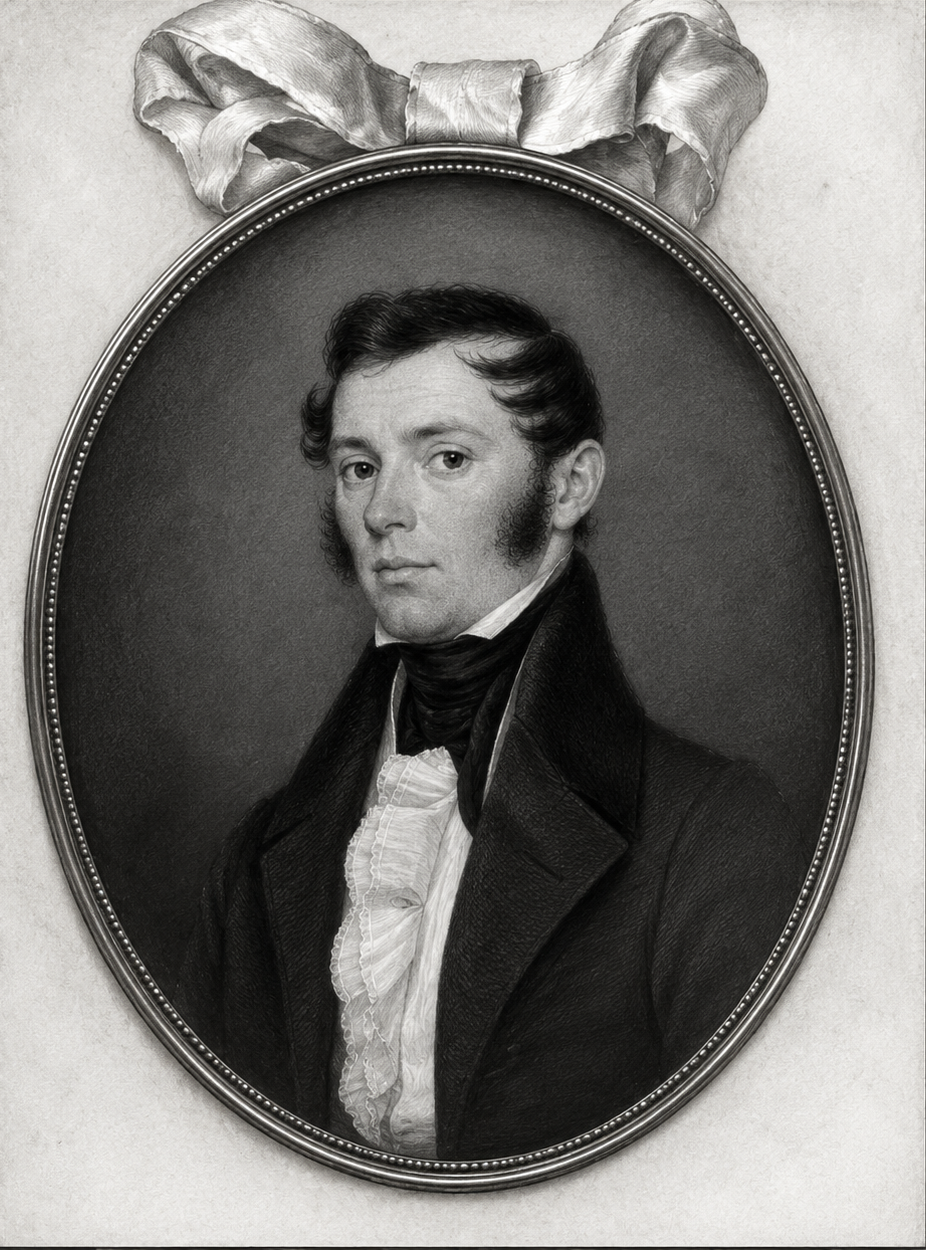
Abraham Bogardus (1822 – 1908) (pictured below left) was trained in the daguerreotype photography process by New Yorker George W. Prosch, who in 1839 had made a camera for Samuel F.B. Morse (as in Morse Code). Bogardus opened a studio and gallery at 363 Broadway in New York in 1846 and became very successful. He had studios in Greenwich, on Broadway in NYC, and in Newark, NJ. He produced over 200,000 daguerreotypes in his career. His self-portrait is above.
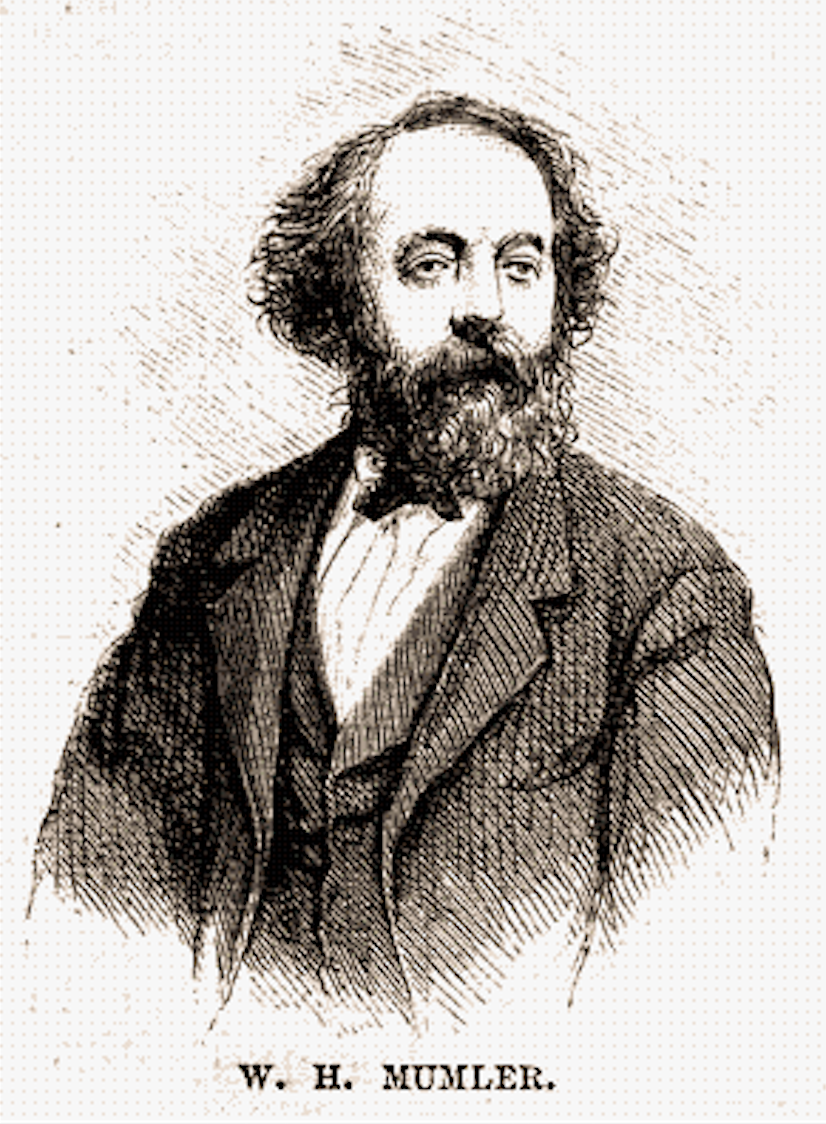
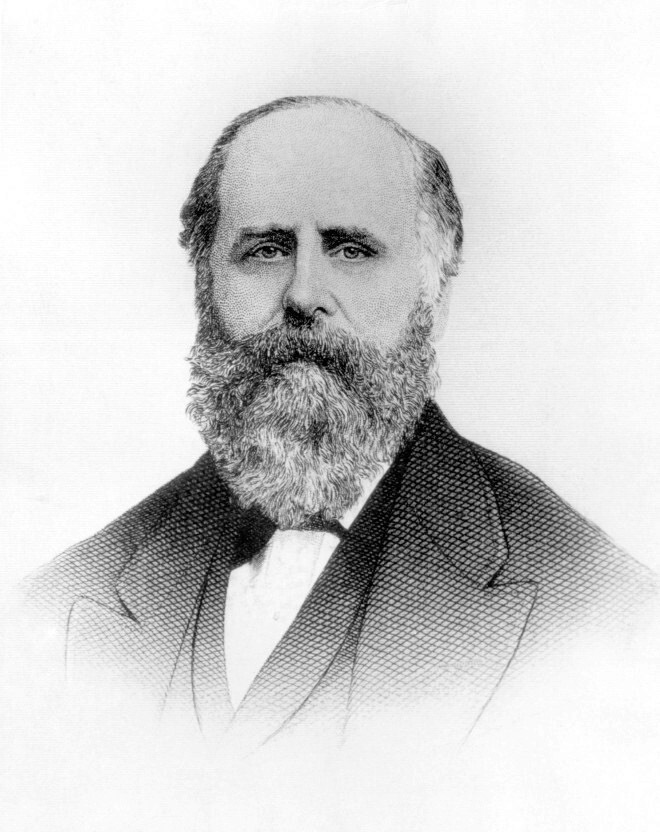
In 1869, he became an important witness at the trial of William H. Mumler (pictured below right), a spirit photographer who had been accused of fraud by, among others, P. T. Barnum. Barnum hired Bogardus to fabricate a photograph of him with the supposed “ghost” of Abraham Lincoln (pictured above); this photograph was then tendered in evidence at Mumler’s trial to demonstrate to the court how easy it was to conjure fake, images of ghosts.
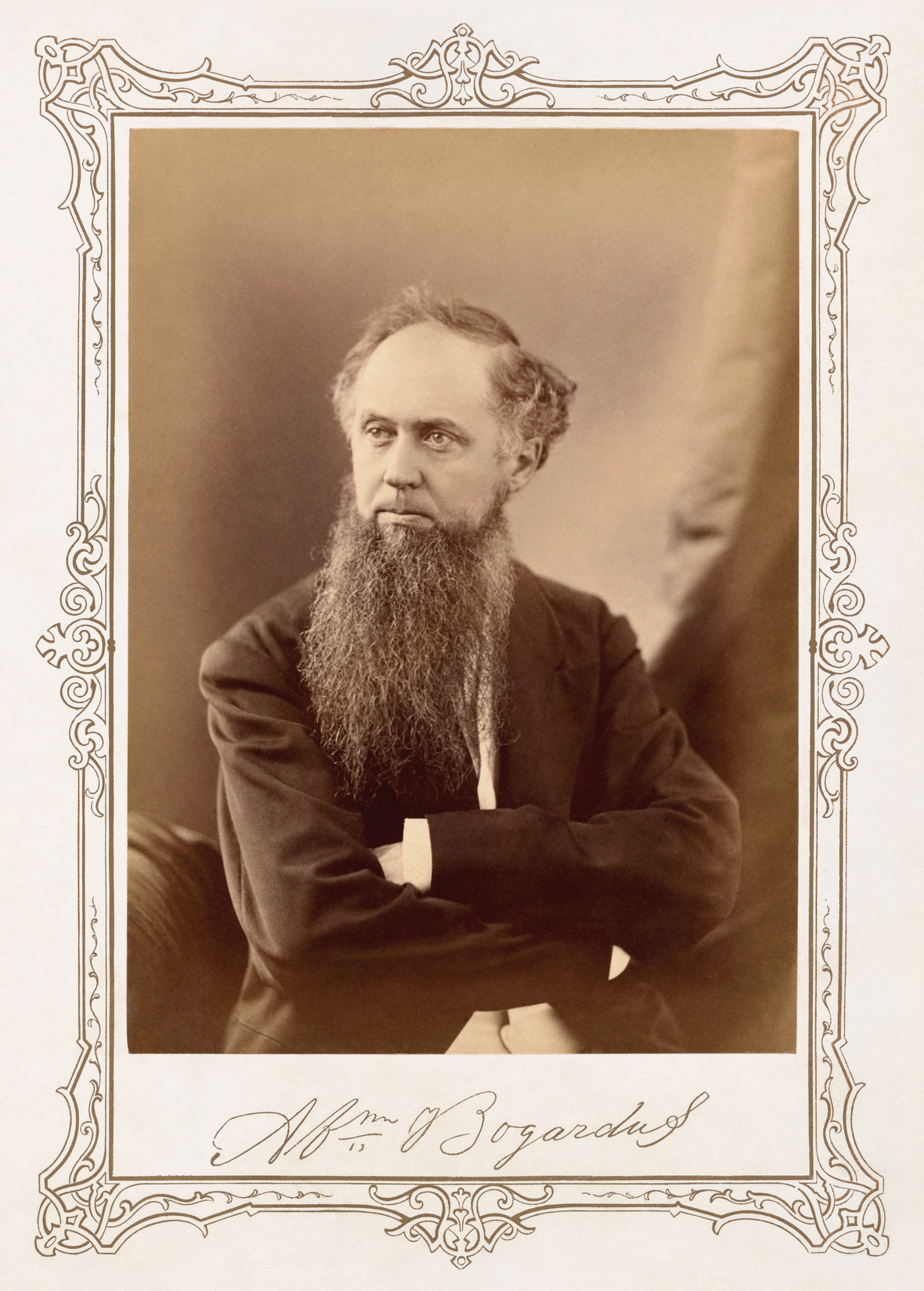
Mumler’s most famous photograph apparently shows Mary Todd Lincoln with the “ghost” of her husband, Abraham Lincoln (above).
Paranormal researcher Melvyn Willin, in his book Ghosts Caught on Film, claims that the photo was taken around 1869, and that Mumler did not know that his sitter was Lincoln, instead believing her to be a ‘Mrs. Tundall’. Willin goes on to say that Mumler did not discover who she was until after the photo had been developed.
The College of Psychic Studies, referencing notes belonging to William Stainton Moses (who has appeared in photographs by other spirit photographers), claim that the photo was taken in the early 1870s, that Mrs. Lincoln assumed the name of ‘Mrs. Lindall,’ and that she had to be encouraged by Mumler’s wife (a medium) to identify her husband in the photo. Although the image has been dismissed as a fraudulent double exposure, it has been widely circulated. In a letter to the Boston Record, Mumler claimed the photograph had been taken in late February 1872.
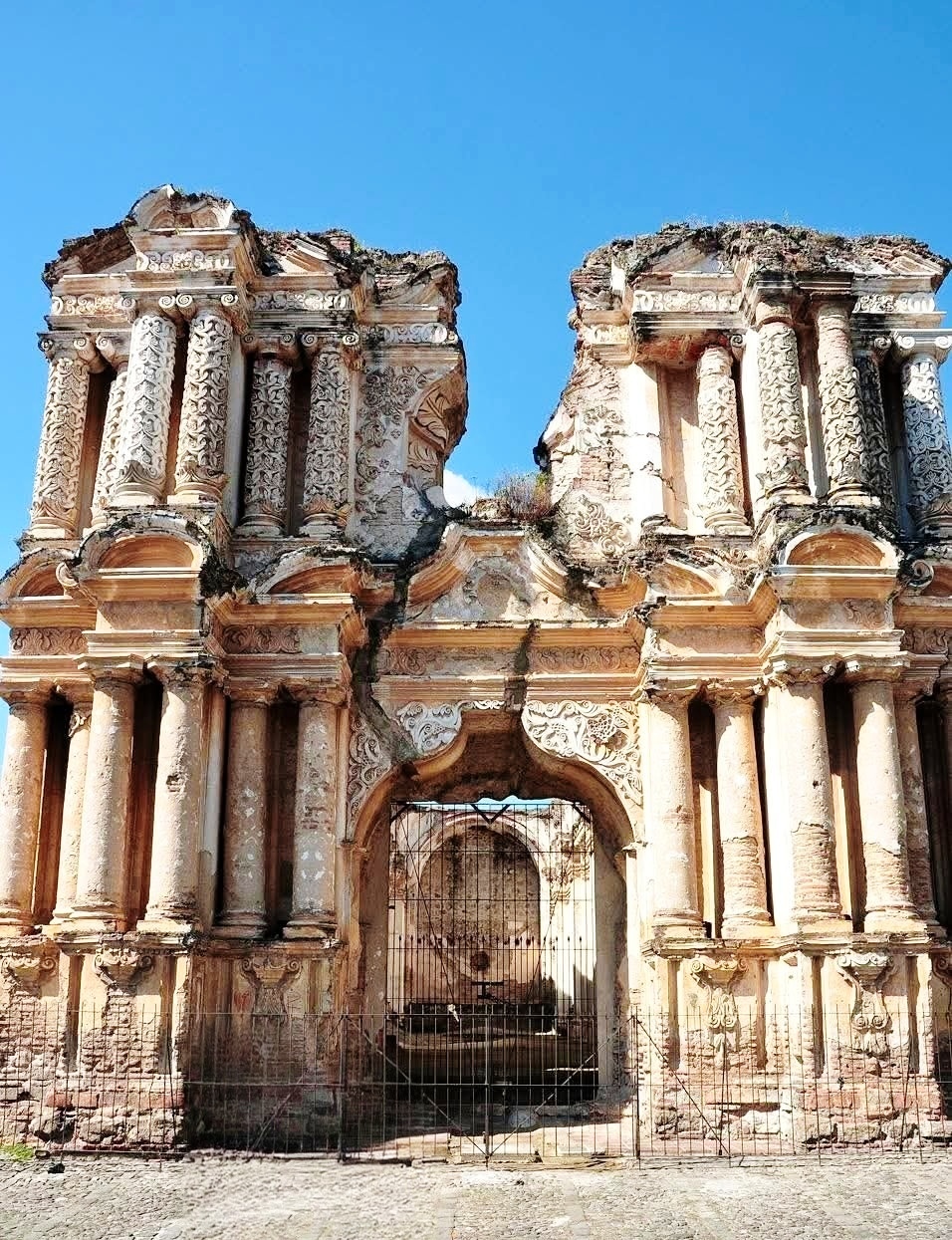
A TALE OF TWO ANTIGUAS: WHICH CAME FIRST?
On a recent trip, we visited Antigua, however, it wasn’t the Caribbean cruise ship destination.
Two places separated by the Caribbean Sea and centuries of history share the name Antigua. One became a tropical vacation paradise, while the other was once among the most magnificent cities in Spanish America—until a catastrophic earthquake changed its destiny.
Their histories contain an interesting twist: the Caribbean island of Antigua was named first, but Antigua Guatemala became a colonial settlement earlier.
Antigua: The Caribbean Paradise
When Christopher Columbus encountered the Caribbean island in 1493, he named it Santa María de la Antigua, after a revered image of the Virgin Mary in Seville, Spain. Indigenous peoples had inhabited the island for thousands of years before his arrival.
The English established a permanent colony in 1632, nearly ninety years after the founding of Antigua Guatemala at its present location.
Antigua subsequently became an important British sugar-producing colony, its plantation economy dependent upon enslaved African labor. Its strategically located English Harbor developed into a major British naval base (more in a later edition).
Following emancipation in 1834 and the eventual decline of the sugar industry, Antigua gradually developed a new economic identity.
Today, the island is a celebrated Caribbean destination, known for its turquoise waters, white-sand beaches, luxury resorts, sailing, and cruise tourism. Nelson’s Dockyard, once an important naval installation, is now a restored historical attraction and UNESCO World Heritage Site. Antigua and Barbuda achieved independence in 1981.
Antigua Guatemala: The Capital That Lost Its Crown
Across the Caribbean, Spanish conquerors established Santiago de Guatemala in 1524. After two relocations, the city was established in the beautiful Panchoy Valley in 1543 and became known as Santiago de los Caballeros de Guatemala.
For 230 years, it flourished as the capital of the Captaincy General of Guatemala, governing much of Spanish Central America. Magnificent churches, convents, palaces, and government buildings reflected its political, religious, and commercial importance.
Then disaster struck.
On July 29, 1773, the devastating Santa Marta earthquakes damaged or destroyed much of the city. Spanish authorities decided that the capital should be relocated rather than rebuilt.
By 1776, the seat of government had moved to Nueva Guatemala de la Asunción, today’s Guatemala City.
The former capital lost its political authority and much of its population. Its distinguished old name gradually gave way to La Antigua Guatemala—Old Guatemala.
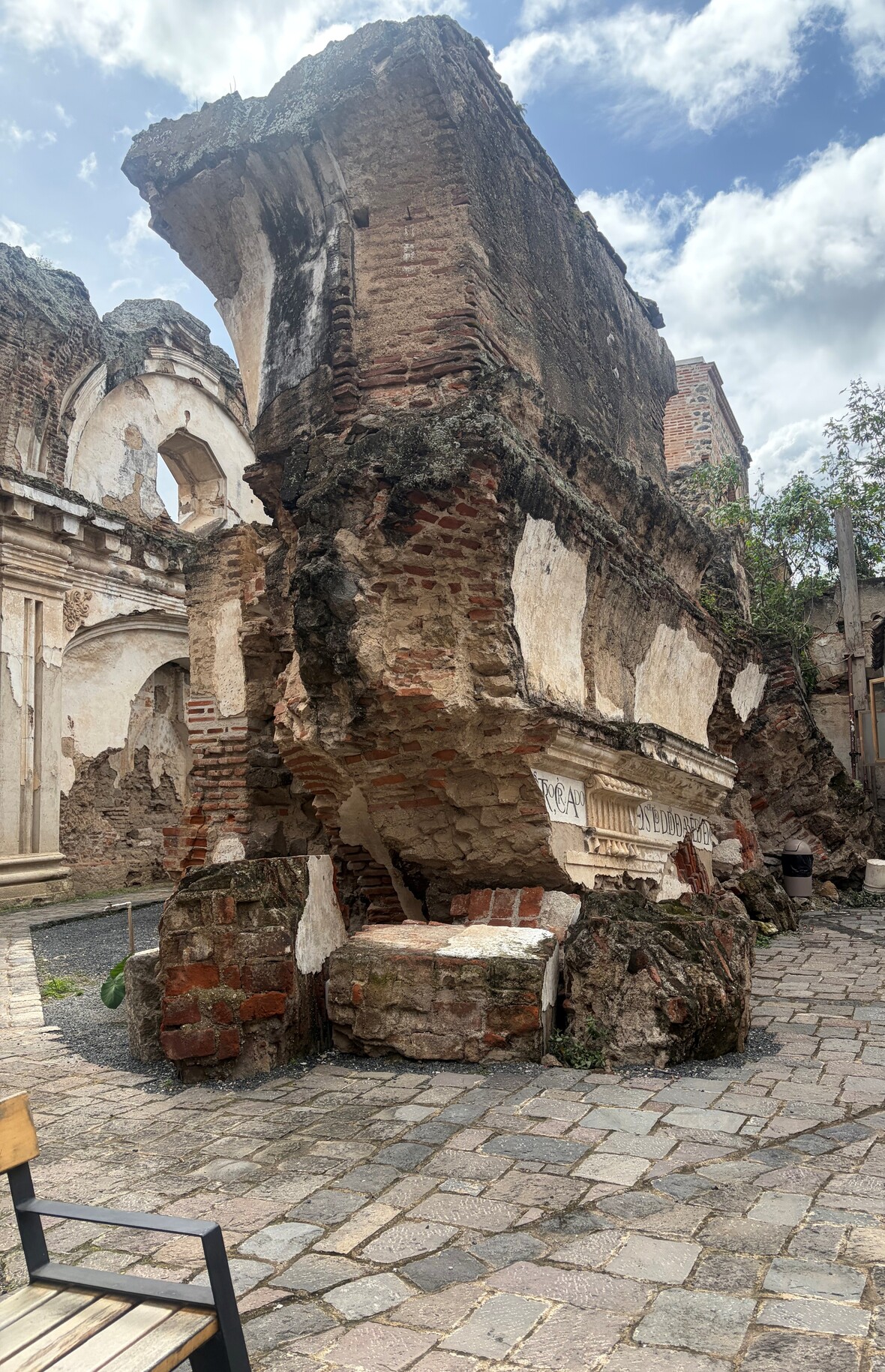
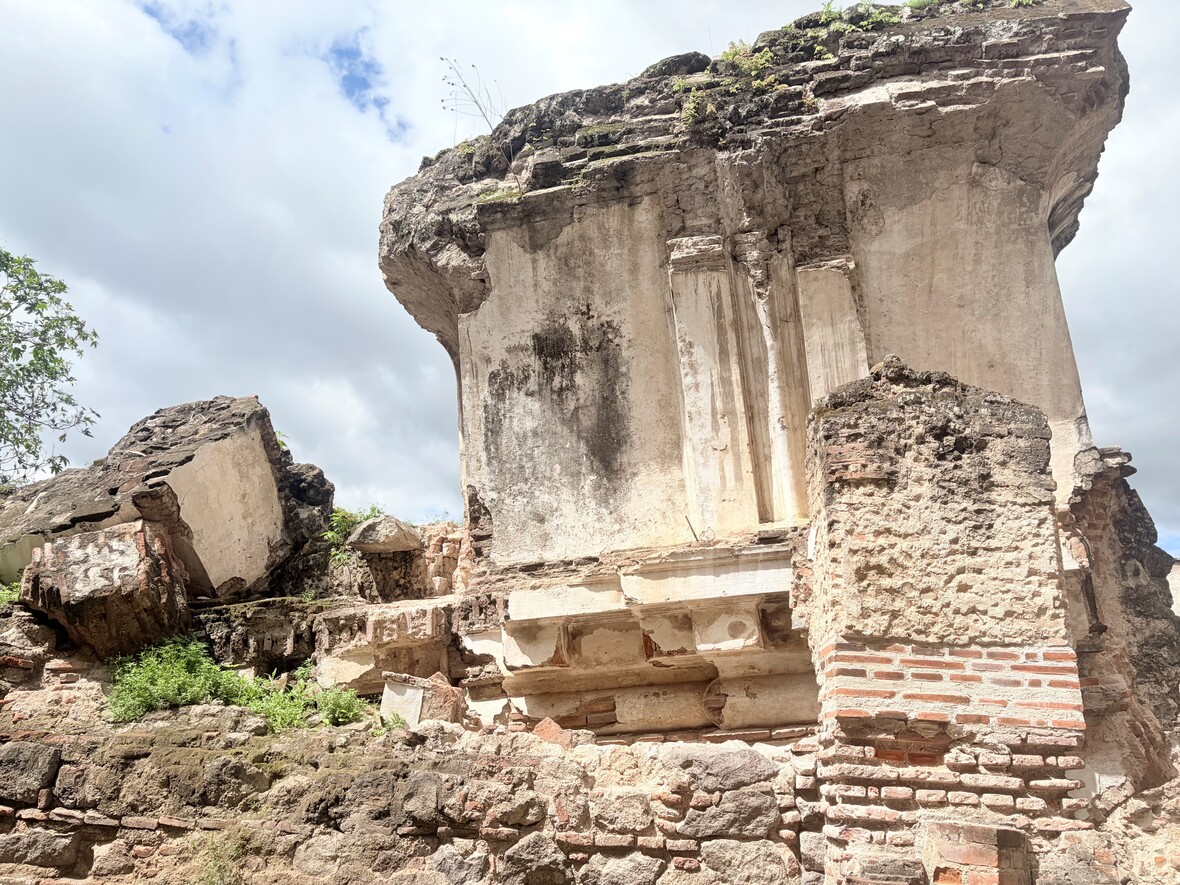
For decades, ruined churches and abandoned buildings testified to its former grandeur.
Yet history produced an unexpected reversal.
While the Caribbean Antigua developed into a beach and sailing destination, Antigua Guatemala eventually rediscovered its appeal through the very architecture the earthquakes had left behind.
Designated a UNESCO World Heritage Site in 1979, the city is now one of Guatemala’s leading cultural destinations, celebrated for its cobblestone streets, Baroque architecture, spectacular volcanoes, and hauntingly beautiful ruins.
One Antigua reinvented itself through the sea; the other found new life among the ruins of its former glory.
Their shared name conceals two remarkably different histories—and two successful transformations into modern tourist destinations.
PIRATE, PRISONER, GOVERNOR: THE FINAL CHAPTER OF MY NOTORIOUS ANCESTOR
In the last edition, Iceland we covered Janszoon’s raid on Baltimore, Ireland, and whether or not locals had encouraged, allowed, or even hired Janszoon to attack the town.
After Iceland, Murat Reis (Janszoon) chose to make large profits by raiding Mediterranean islands such as the Balearic Islands, Corsica, Sardinia, and the southern coast of Sicily. He often sold most of his merchandise in Tunis, where he befriended the Dey. He is known to have sailed the Ionian Sea. He fought the Venetians near the coasts of Crete and Cyprus with a corsair crew consisting of Dutch, Moriscos (Moroccans), Arabs, Turkish, and Janissaries (Ottomans).
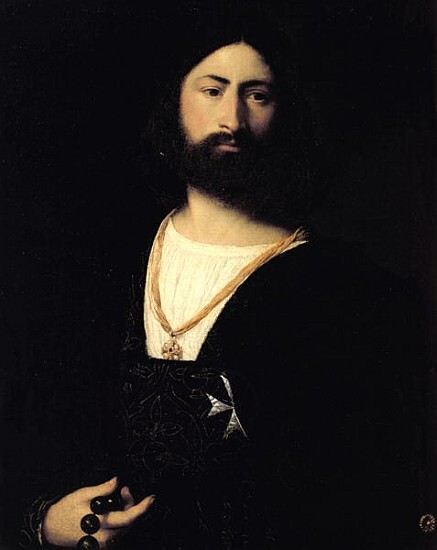
In 1635, near the Tunisian coast, Murat Reis was outnumbered and caught off guard by a sudden attack. He and many of his men were captured by the Knights of Malta (see the above Portrait of a Knight of Malta by Titian, c. 1508, Uffizi).
He was imprisoned in the island’s notorious dark dungeons. He was mistreated and tortured and suffered ill health due to his time in the dungeon. In 1640, he barely escaped after a massive Corsair attack carefully planned by the Dey of Tunis to rescue their fellow sailors and Corsairs. He was praised upon his return to Algeria and the nearby Barbary States.
After Janszoon returned to Morocco in 1640, he was appointed as Governor of the great fortress of Oualidia, near Safi. He resided at the Castle of Maladia.
In December 1640, a ship arrived with a new Dutch consul, who brought Lysbeth Janszoon van Haarlem, Janszoon’s daughter by his Dutch wife, to visit her father. When Lysbeth arrived, Janszoon “was seated in great pomp on a carpet, with silk cushions, the servants all around him”. She saw that Murat Reis had become a feeble, old man. Lysbeth stayed with her father until August 1641, when she returned to Holland. Little is known of Janszoon thereafter. The date of his death remains unknown.
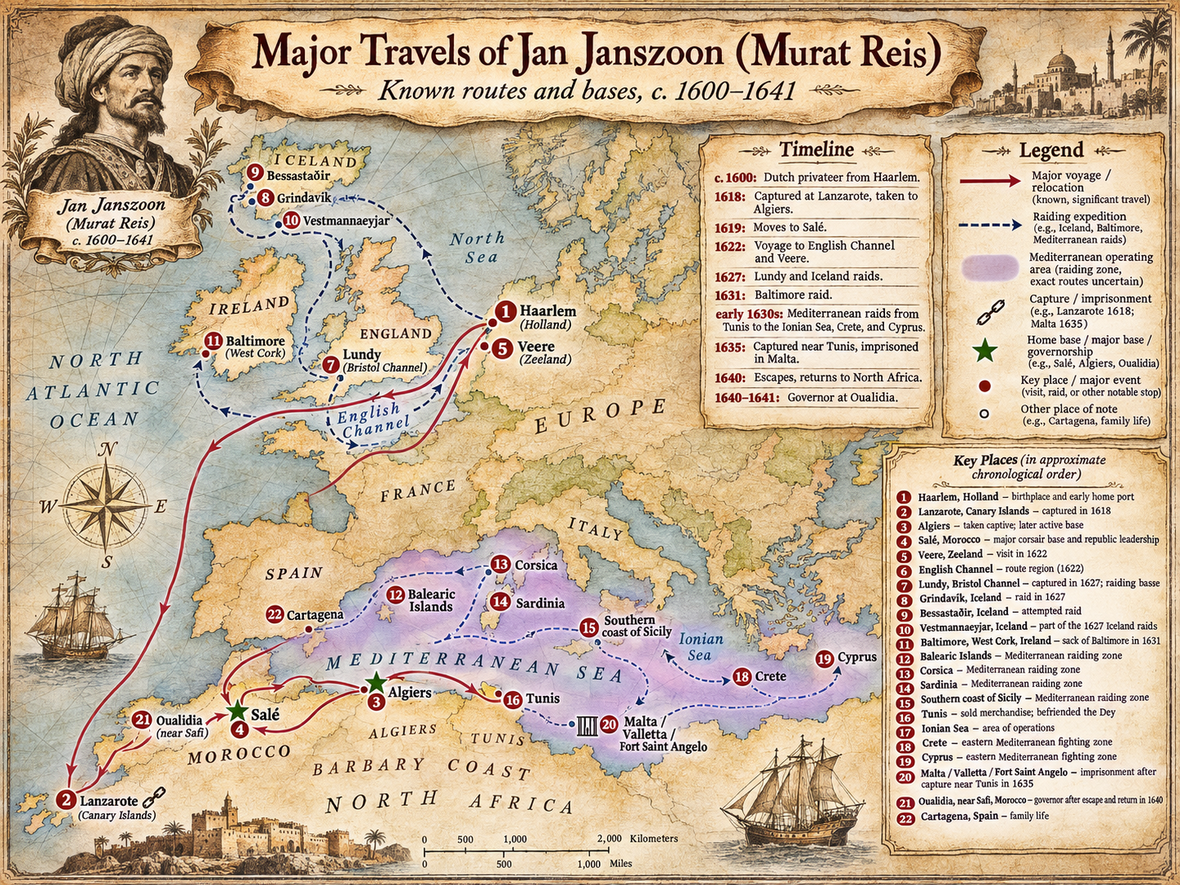
That’s all we have on Janszoon, certainly the most notorious of my ancestors! See the map below, which shows his lifetime of travel.
THE PANAMA RAILROAD: THE FIRST RAILROAD TO CROSS A CONTINENT
We last covered Panama in May 2023, when we discussed the Scottish colony of Darien. Darien
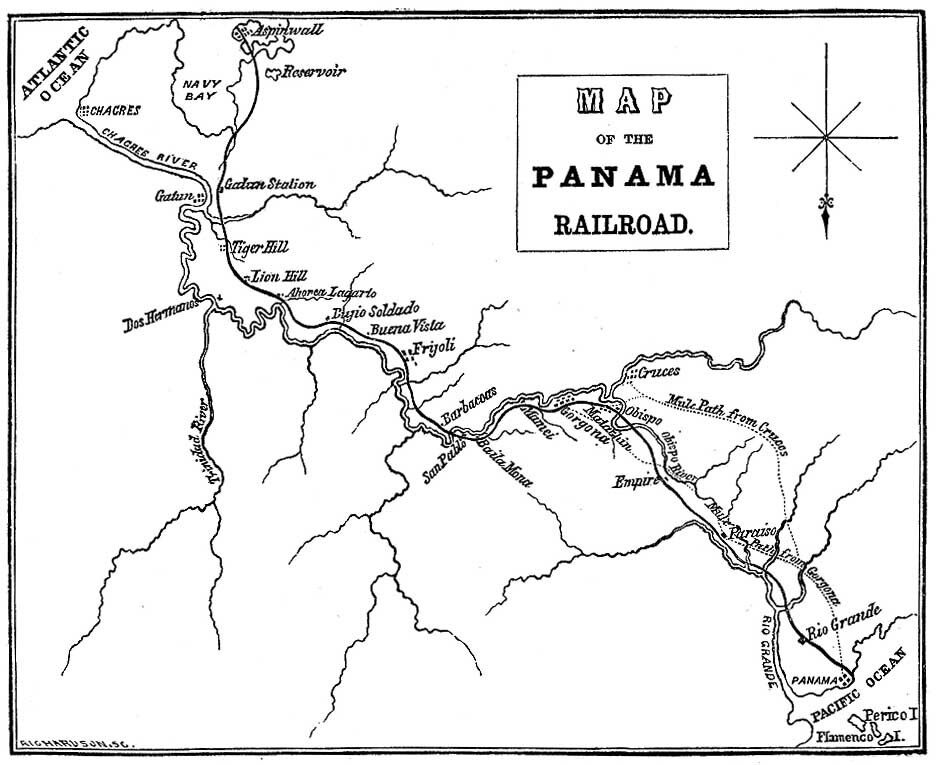
Here’s another Panama story: the first transcontinental railroad in the western hemisphere. Before the Panama Canal, there was the Panama Railroad, a 47-mile line across the narrowest part of the Americas (see route below).
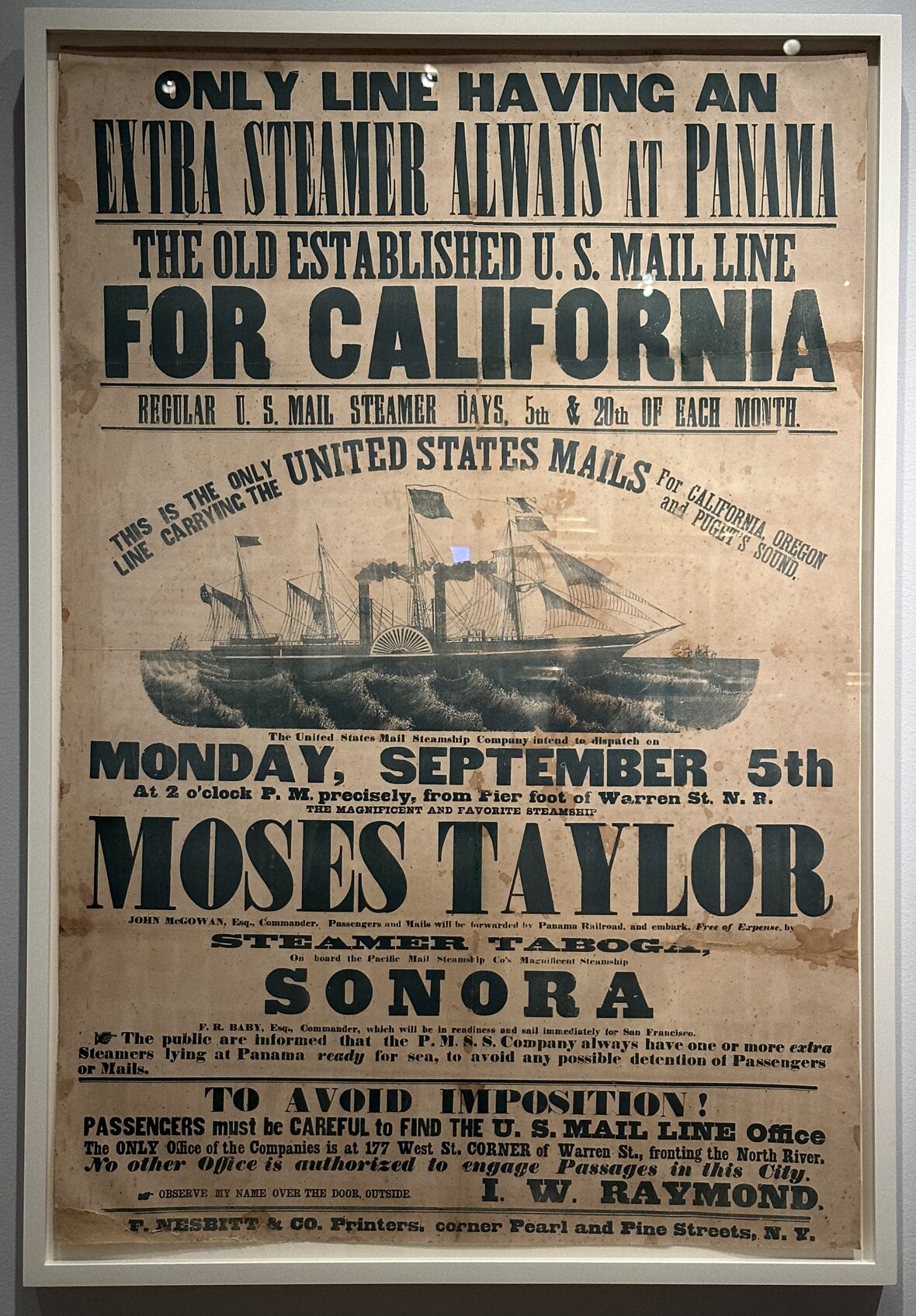
Its story begins with the California Gold Rush. After gold was found in 1848, thousands of fortune-seekers rushed west, and the fastest route from the East Coast went by ship to Panama, across the isthmus, and by ship again up to San Francisco (see poster above). Crossing Panama meant days of canoe travel and jungle trails, so New York shipping magnate William H. Aspinwall and his partners saw an opportunity. In 1849 they chartered the Panama Railroad Company with $1 million in capital, and work began in May 1850.
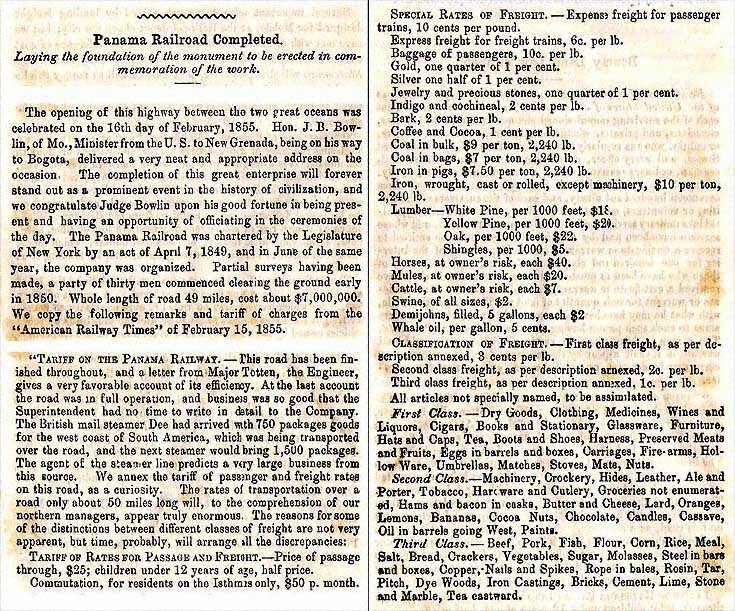
Building it was brutal. Crews cut through swamps and rainforest while cholera, yellow fever and malaria swept through the work camps. Estimates of the dead run from 5,000 to 10,000 workers, drawn from around the world. The cost climbed to about $8 million, eight times the original estimate. The last rail was laid by lamplight on a rainy night in January 1855, and the first train ran from the Atlantic to the Pacific on January 28.
The railroad paid off quickly. For more than a decade, nearly all the gold shipped out of California crossed Panama on its trains, and it became one of the most profitable railroads of its time.
Its second life came with the canal. The French canal company bought control of the railroad in 1881, and the United States acquired it in 1904 when it took over the canal project. The line was rebuilt to haul away the earth dug from the Culebra Cut, using about 115 locomotives, more than 2,000 dirt cars, and over 100 steam shovels mounted on rail cars. When it was finished in 1912, the railroad had helped build the waterway that would replace it.
After World War II, the railroad slowly fell into disrepair. In 1998, Kansas City Southern and Mi-Jack Products won a 50-year concession to run it, spent $76 million rebuilding it, and reopened it in 2001. Today, the Panama Canal Railway carries containers between Atlantic and Pacific ports and operates a passenger train along the edge of the canal. It is still one of the shortest railroads to cross a continent.
MACY’S AND STARBUCKS, QUAKERS AND WHALERS
I last wrote about Macy’s in April 2024, Parade sharing my wife’s participation in the Macy’s Thanksgiving Day Parade (which due to rescheduling you can watch after reading the newsletter) and the tragic deaths aboard the Titanic of Isidor and Ida Straus. Isidor and his family had helped acquire and expand the famous department store.
Macy’s namesake, Rowland Hussey Macy (pictured below left), was born into a Quaker family on Nantucket Island, Massachusetts. At fifteen, he went to sea aboard the whaleship Emily Morgan, where he acquired a red star tattoo on either his hand or forearm (accounts differ). That star would eventually become the famous symbol of Macy’s.
Macy shared an interesting heritage with another Nantucket native, our Captain Hezekiah Starbuck. Both were raised as Quakers, both went to sea as whalers, and, as it turns out, they were second cousins, three times removed!
Macy was among the first major American retailers to embrace the Quaker practice of one-price merchandising, eliminating the need for customers to bargain. He also pioneered advertising that prominently displayed specific merchandise and prices.
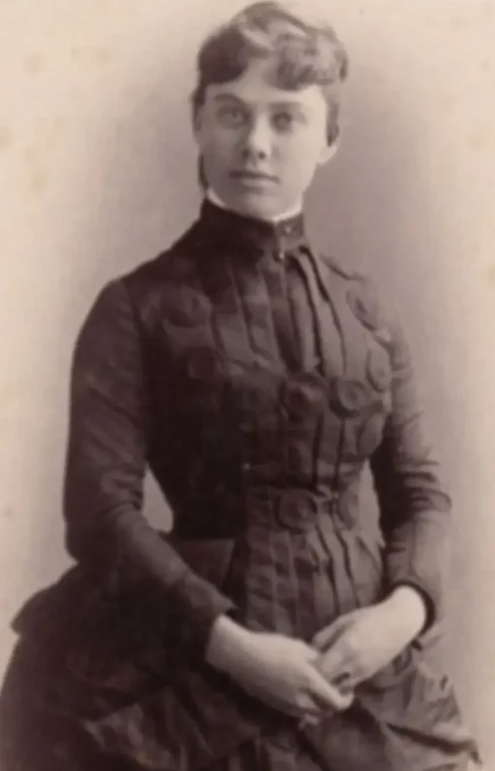
Another of Macy’s innovations was promoting a woman, Margaret Getchell (pictured below right), to an executive position—remarkable for the nineteenth century.
Interestingly, Margaret Getchell and Rowland H. Macy had known each other since her childhood on Nantucket. Genealogical research identifies them as third cousins, twice removed, through their common ancestor Richard Macy. Whether either recognized that family connection when Margaret joined Macy’s in 1860 remains unknown.
In 1869, Getchell married Captain Abiel T. LaForge, a lace buyer at Macy’s who later became a partner in the business. Despite Margaret’s considerable contributions, her salary was eliminated in 1871 when her husband became a partner, reflecting the gender expectations of the time.
That didn’t stop her. In 1873, while pregnant with her third child, Margaret managed the entire store for three months while her husband was on a buying trip to Europe. She continued to assist the business part-time, particularly during busy periods such as inventory.
Sadly, Margaret’s later years were plagued by health problems, including neuralgia and complications from childbirth. She died at her Manhattan home on January 25, 1880, at just 38 years old, reportedly suffering from heart failure and ovarian inflammation.
Now, here’s where my wife’s family tree enters the story.
Captain Hezekiah Starbuck was her fourth-great-grandfather. Through him, she shares ancestry with Rowland H. Macy, tracing both family lines back to Nathaniel Starbuck (pictured above) and his wife, Mary Coffin, of Nantucket.
So, in addition to marching in the Macy’s Thanksgiving Day Parade, my wife can claim a distant family connection to the man whose name appears above the doors of one of America’s most famous department stores!
MOMENTS FROM A WHALER’S JOURNAL
As mentioned above, I’ll share a couple of highlights from Captain Starbuck’s journal in each edition.
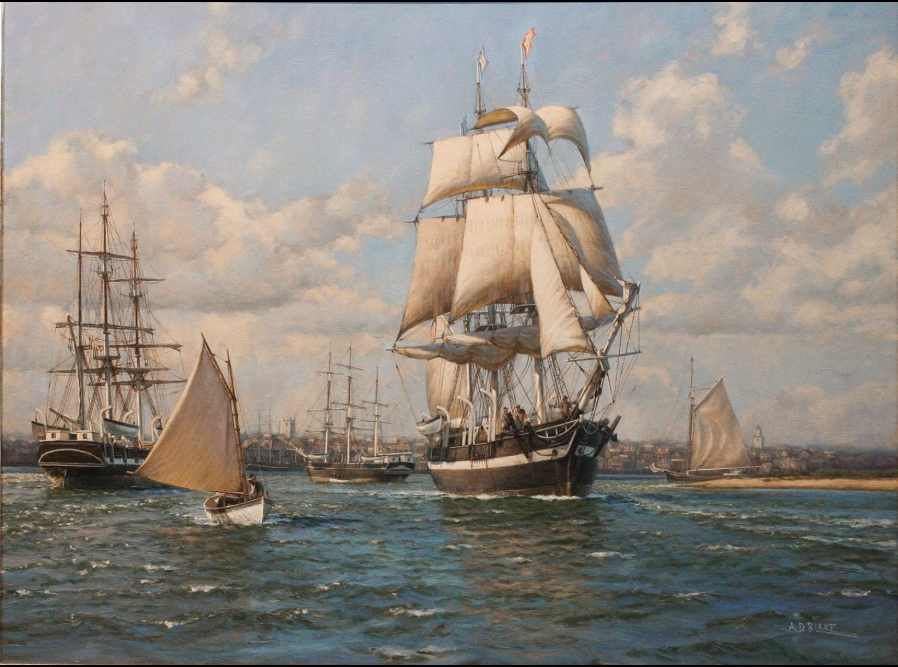
“Leaving Nantucket in the schooner Sea Flower, the company soon had rain and fog and “No Land in Sight,” making the sailors feel “Quite Lonsom.” April 17, 1770
PRESERVE YOUR FAMILY HISTORY, TODAY
Reach out to Dancestors Genealogy. Our genealogists research, discover, and preserve your family history so those stories don’t disappear. Ancestry only gets tougher as time diminishes recall.
No one is getting any younger, and memories fade every year, eventually slipping beyond our ability to recover them. Paper gets thrown in the trash; books survive.
We offer:
Ready to embark on your family history journey?
Call Dan Nelson at 214-914-3598 and get your project started today.
