

19 Sep Genealogist- Newsletter- September 19, 2026
GENEALOGIST- THE NEWSLETTER PODCAST STYLE!
You can now listen as well as read the Dancestors Genealogy Newsletter.
Listen to all Dancestors Genealogy newsletters on our podcast page.
PODCASTS
GENEALOGIST- MORE ON MY SWEDISH DUTCHMEN ANCESTORS
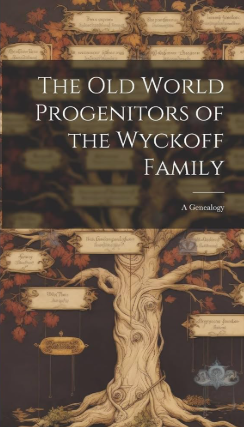
In the last edition I wrote about my 9th Great Grandfather Claes Corneliszen Van Schouwen CLAES The information came from a book called “The Old-World Progenitors of the Wyckoff Family: a Genealogy” (see adjacent picture) is often used as the source for this particular line by descendants of the Wyckoff family. However, it turns out that the Wyckoff connection to the Van Schouwen Family does not hold up, due to the fraudulent work of a genealogist, that I shared back in June.
Pieter Claesen Wyckoff (ca. 1620 – June 30, 1694) was a prominent figure in Dutch and later English colonial Kings County, Long Island, New York. Most persons surnamed Wyckoff in North America, including many variations in spelling, can be traced to his family. Because of the work of a fraudulent genealogist (Gustave Anjou) ANJOU, it was mistakenly believed for many decades that Pieter Claesen Wyckoff was the son of Claes Cornelissen van Schouw and Margaret van der Goes.
However, in 1932, Charles Arthur Hoppin argued that Wyckoff was not their son. In 1945, William J. Hoffman reinforced Hoppin’s conclusions through his own analysis in the article “Claes Cornelissen van Schouwen Mutelaer and the Wyckoff Ancestry”, noting that “There is absolutely no evidence that Claes Cornelissen van Schouw was the father of Pieter Claesen Wyckoff, as has been repeatedly claimed. No connection between them has been found in any public record”
Fortunately, Claes’ line beyond his fictitious son Pieter Wyckoff is well documented.
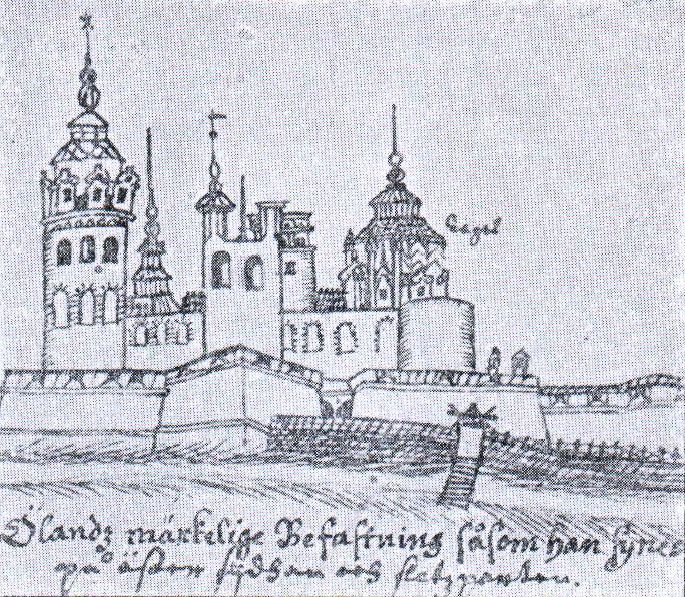
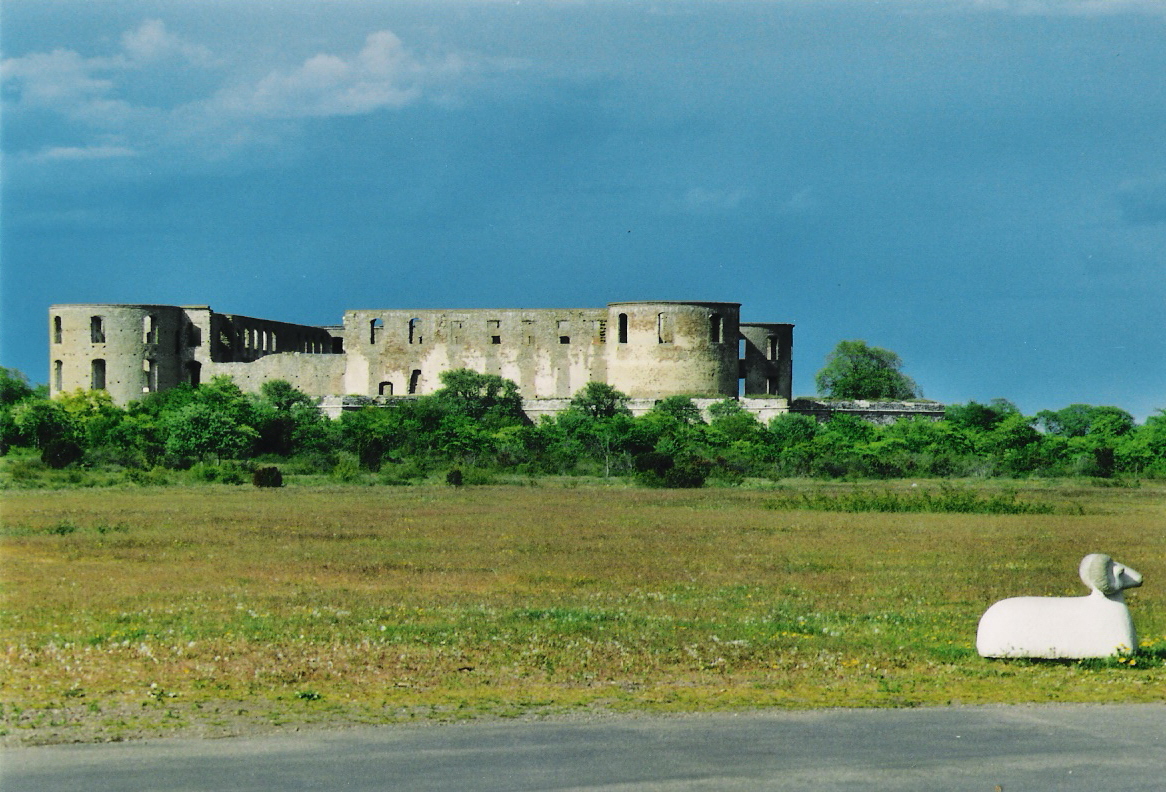
Borgholm, as we mentioned in last week’s article, was a town with a Castle. Borgholm Castle was built in the 12th Century. You can see a 1634 rendering of the castle (below left). Today it is a ruin of walls, but it is still used for special events, we visited it in 2018 (below right).

GENEALOGIST- THE BUSIEST PRESIDENTIAL LIBRARY IN THE LEAST BUSY PLACE
We’ve been to Teddy Roosevelt’s birthplace in NYC, home on Long Island, Inaugural site in Buffalo, and his National Park in North Dakota. We were back up north again and headed west across North Dakota to visit the Theodore Roosevelt Presidential Library that opened in July of this year.
We’ve been to almost all the presidential libraries, and many of the birthplaces and homes of presidents, but the TR Library had more people present than all of the people at all of the other libraries put together. This was even though western North Dakota is a long way from most Americans.
We showed up on Saturday and found out that we couldn’t get tickets that day, and so fortunately we were there for a few nights, so we bought tickets for Monday, and it was still very busy. As we visited the historical sites mentioned above, there were some side conversations with the staff about how they would have anything to put on display as all of his papers were donated to Harvard, and they wouldn’t give anything up, and the three sites had pretty much staked out what was left.
Well, not to worry, through the use of technology and AI, they have made it a highly interactive and interesting library. You could spend 3-4 hours there easily and really enjoy yourself. Now of course Teddy was not a boring president, so they had plenty to work with in terms of stories and places he’d been. We mentioned his trip to Africa in our July 2025 newsletter.
AFRICA
It is also a stunning location on a hilltop in the Badlands, with noteworthy architecture and design features.
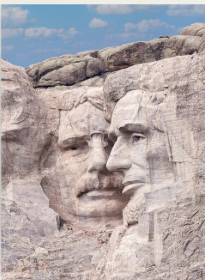
While there you can visit his namesake national park and then head down the road to South Dakota where he’s one of the four presidents on Rushmore. PBS’s history of Mount Rushmore describes Roosevelt as the sculptor Gustav Borglum’s “great personal friend and political hero,” and notes that Borglum had met Roosevelt and campaigned for him, which didn’t hurt his chances of making the short list. As you approach Rushmore from the east, Teddy appears to be studying Lincoln (see picture above), whom he admired to the point that he wore a ring with a lock of his hair, so now they hang from a mountain for eternity!


 GENEALOGIST- THE PIRATE FATHER OF THE VAN SALEE BROTHERS
 GENEALOGIST- THE PIRATE FATHER OF THE VAN SALEE BROTHERS
So, over many editions I shared information on my 9th Great Grandfather, Anthony Van Salee and his brother Abraham. So here’s some of what we know about their father.
Jan Janszoon van Haerlem was born in Haarlem in 1570, in Holland, then a province ruled by the Habsburg monarchy. The Eighty Years War between Dutch rebels and the Spanish Empire under King Philip II had started seven years before his birth; it lasted all his life. He married and had three daughters.
In 1600, Jan Janszoon began as a Dutch privateer sailing from his home port of Haarlem, working for the state with letters of marque to harass Spanish shipping during the Eighty Years’ War. Janszoon overstepped the boundaries of his letters and found his way to the semi-independent port states of the Barbary Coast of North Africa, whence he could attack ships of every foreign state: when he attacked a Spanish ship, he flew the Dutch flag; when he attacked any other, he became an Ottoman captain and flew the crescent moon and star flag of the Turks or the flag of any of various other Mediterranean principalities. During this period, he abandoned his Dutch family
Below is a sail plan for a polacca, first built by the Barbary pirates around the 16th century. Many scholars believe the polacca was extensively used by Jan Janszoon. The ship could sail with a large crew of 75 and was armed with 24 cannons.
On May 1, 1618, 36 Algerian galleys arrived at Arrecife, Lanzarote, in the Canary Islands, aiming to raid and plunder anything valuable. Led by Tabac Arraez, the pirate commander, a force of 3,000 or 5,000 men looted the island, leaving the inhabitants to seek refuge in caves. Eventually, they were besieged and captured by the Regency of Algiers, totaling 900 men, women, and children. On that day, my 10th Great Grandfather Jan Janszoon, a Dutch soldier, was also captured, and was taken to Algiers
Upon learning of the event, King Philip III of Spain ordered the Spanish navy to intercept the pirates, successfully rescuing around 200 captives. The remaining 700 were sold in Tunis and Algiers.
In Algiers, Janszoon “turned Turk”, or Muslim. Some historians speculate that the conversion was forced under penalty of death. Janszoon himself, however, tried very hard to convert his fellow Europeans who were Christian to become Muslim and was a passionate Muslim missionary.
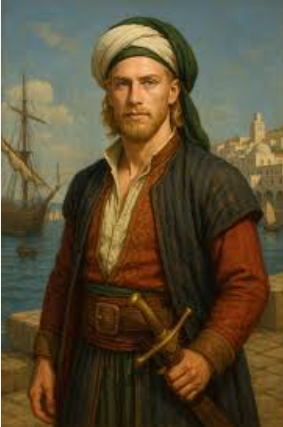
The Ottoman Turks maintained a precarious measure of influence on behalf of their Sultan by openly encouraging the Moors to advance themselves through piracy against the European powers, which had long resented the Ottoman Empire. After Janszoon’s conversion to Islam and the ways of his captors, he sailed with the famous corsair Sulayman Rais (speculative image above), also known as Slemen Reis, who himself was a Dutchman named De Veenboer, whom Janszoon had known before his capture and who had also converted to Islam. They were accompanied by Simon de Danser. But, because Algiers had concluded peace with several European nations, it was no longer a suitable port from which to sell captured ships or their cargo. So, after Sulayman Rais was killed by a cannonball in 1619, Janszoon moved to the ancient port of Salé and began operating from it as a Barbary corsair. More on Janszoon’s time in Salé in the next edition.

GENEALOGIST- THE GLADS ON THE HILL
 GENEALOGIST- THE GLADS ON THE HILL
In the last edition, I wrote about my grandfather’s farm in Iowa. FARM
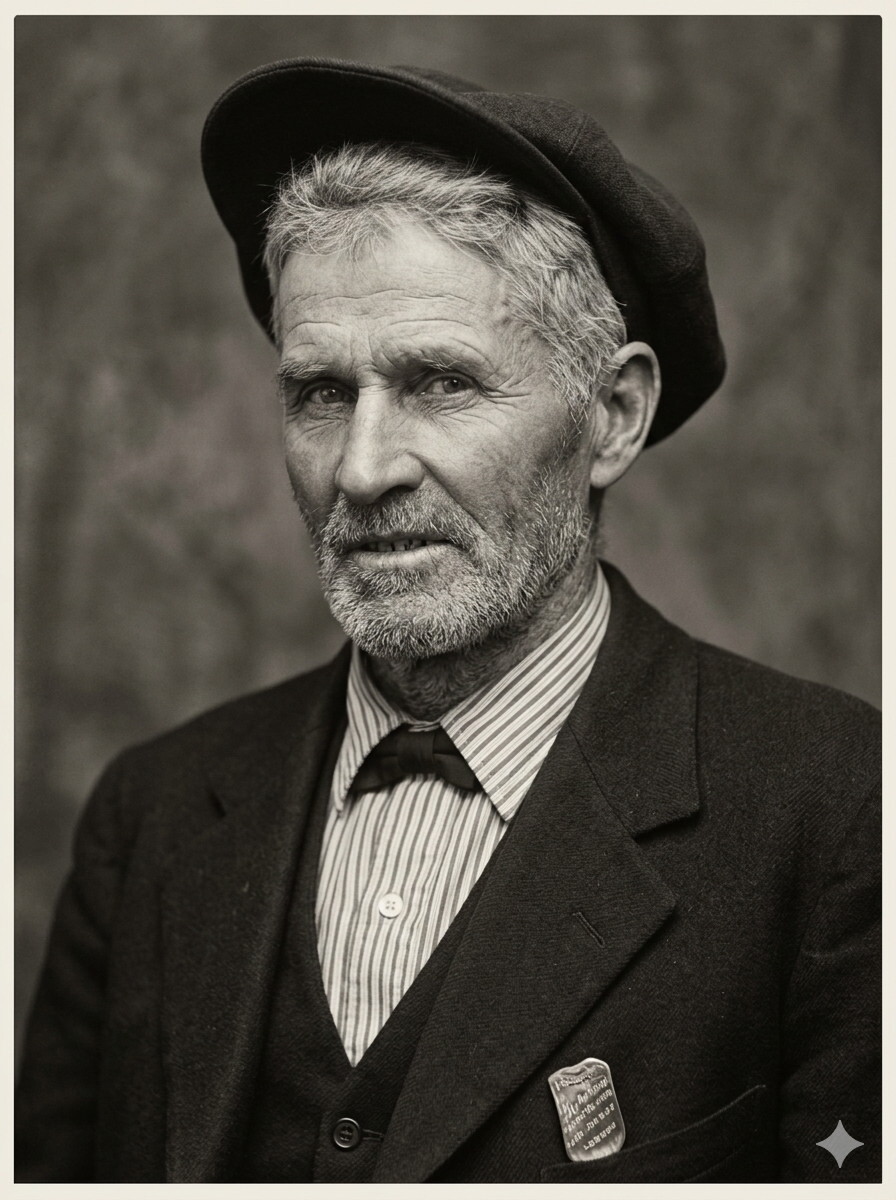
My dad told me that my grandfather had bought it from Cyrus Lamb (pictured) in 1944, who had lived on it since 1863. Even if you assumed he acquired it at the age of 21, he would have been over 100 years old when he quit farming and sold it. I was also told that my grandfather found a Civil War-era gun in the barn.
The reality was that Cyrus was born in 1863 and lived on the farm in a log cabin on the site of the house pictured in the last edition, which was built and has since burned down. Cyrus was the only child of Cyrus Lamb Sr. and Elizabeth Smith. Cyrus Sr. was killed in the Civil War, and Elizabeth married Daniel Kohl and started a new family, living on her father Daniel Smith’s farm. The Kohls moved to another farm, and Cyrus continued living with his Smith Grandparents.
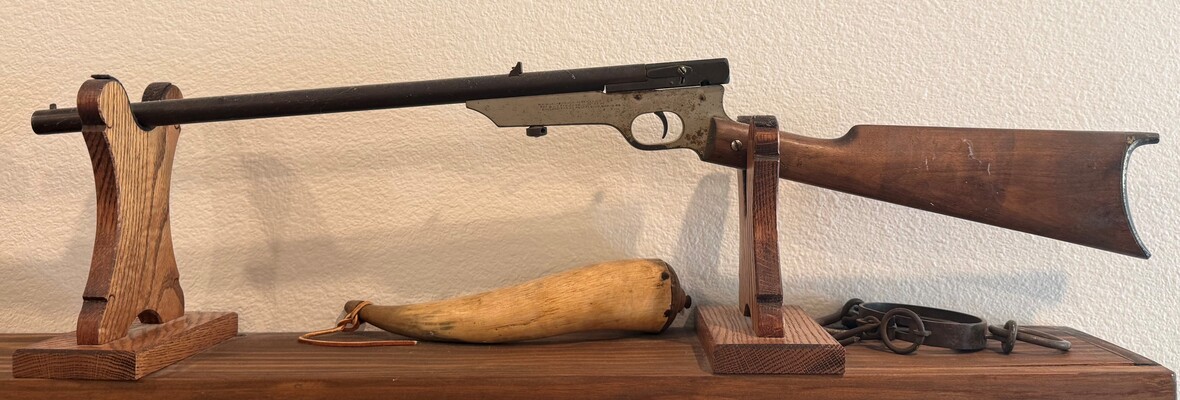
The gun was a Quackenbush (see picture and article) that was mass-produced in the 1890’s through 1920’s, so a little late for the Civil War.
After Cyrus graduated from nearby Cornell College, he bought his grandparents’ farm. He married but had no children. However, Cyrus had an interesting hobby.
He farmed, of course. However, he also raised nursery stock and small fruit. What the neighborhood remembered was the flowers. After the heavy work of grain and orchard, he turned the slope into what he called Hill Crest Glad Gardens. At one time he listed about three hundred varieties of gladiolus. Dahlias followed, a handful at first, then thirty kinds. People driving the road two miles north of Morley knew the place by color before they knew it by name.
The glads are the part that still photographs well in the mind: a Jones County farm boy who came home from college, kept the Smith land in production, and then, later, filled the hill with spikes of color until the place needed a name of its own. Hill Crest was not a catalog house. It was one man’s extra work after the corn was in.
Iowa was deep in the “glad game” then. The towns of Decorah and Creston issued catalogs; Des Moines hosted Midwest shows. The three hundred named varieties Cyrus had on one farm north of Morley would have read as a serious amateur collection, not a roadside stand. Below is an illustration of the Hill Crest farmhouse with the rows of glads!


GENEALOGIST- THE FIRST LADY OF MONMOUTH: LEGEND VS. THE TRUTH
 GENEALOGIST- THE FIRST LADY OF MONMOUTH: LEGEND VS. THE TRUTH
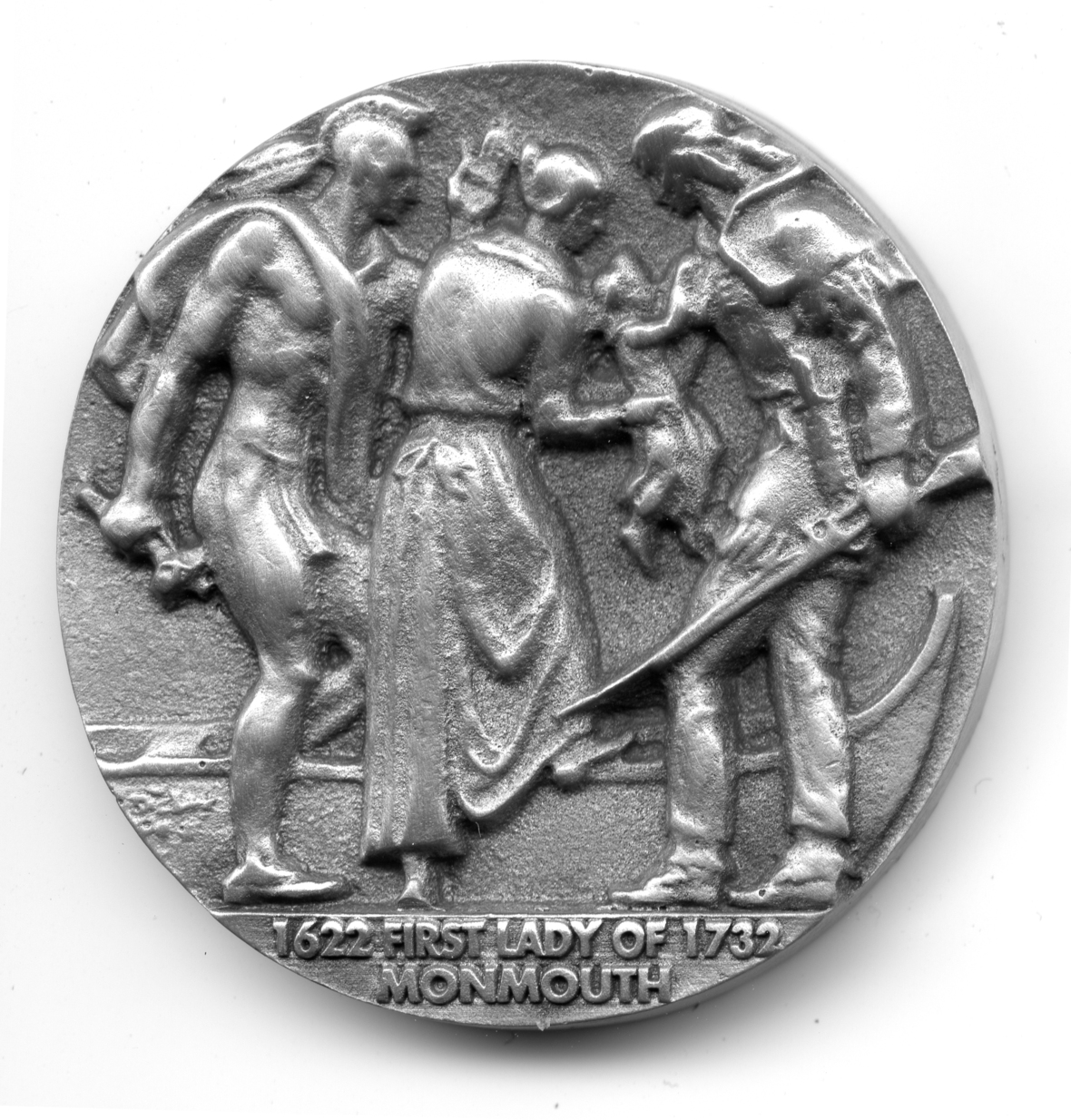
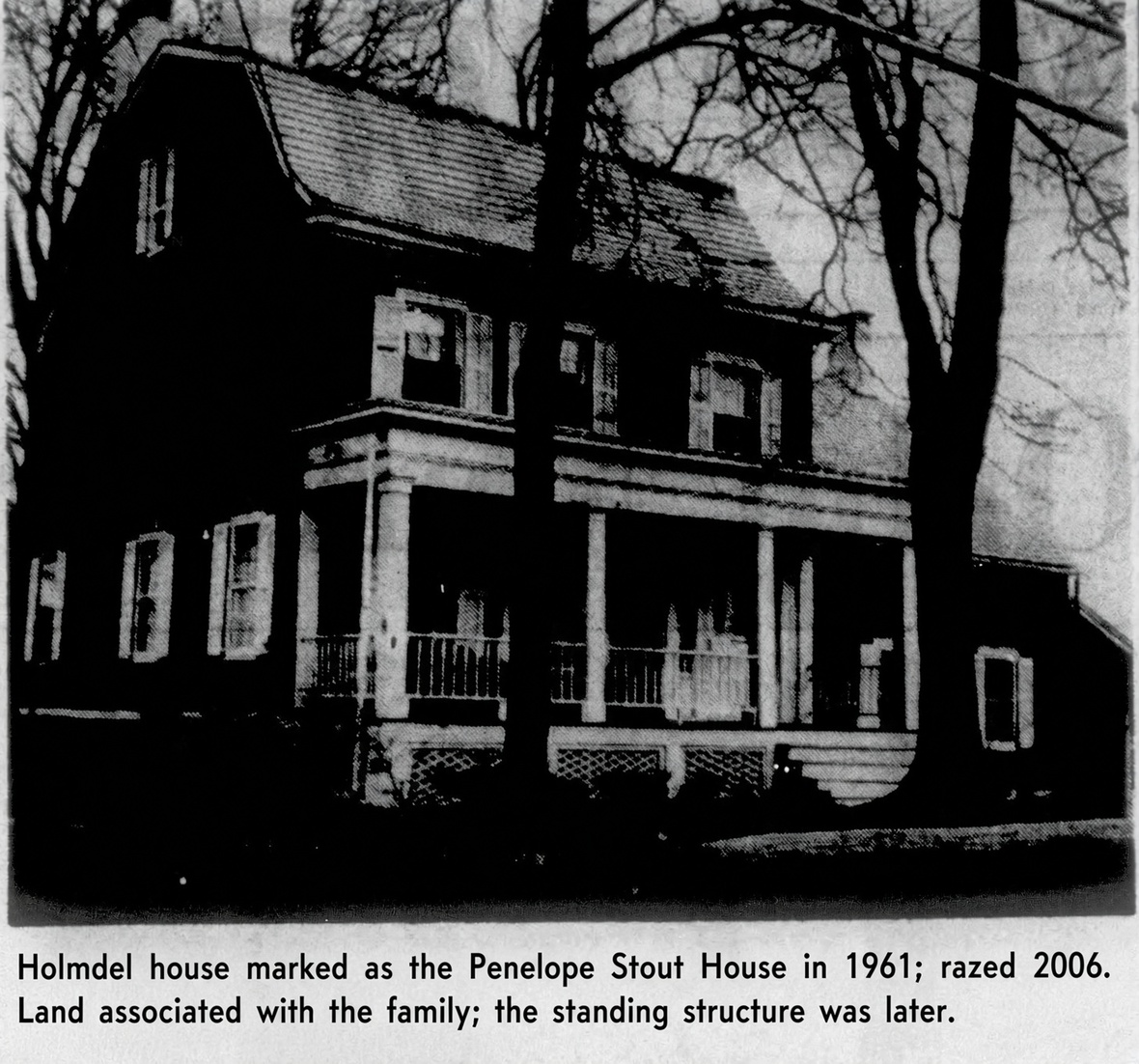
Penelope Stout is remembered as the “First Lady of Monmouth,” one of the original English settlers of Middletown, New Jersey, in 1664 with her husband Richard Stout (see the last edition). What can be documented is modest. In September 1648, as Penelope Prince, she appeared in Gravesend, New Netherland, after accusing a neighbor of milking another’s cow and then apologized. Later Middletown deeds name “Richard and wife Penelope,” including a 1670 sale and a 1690 transfer “for the Joynture of [his] Loving wife Penelope.” Richard’s will was proven 23 October 1705. After that date she disappears from the record. There is no known birth, emigration, second-marriage, or death register, and no contemporary notice of a shipwreck that fits her presence in the colony by the mid-1640s.
The legend that grew around her is far larger than those scraps. Since Samuel Smith’s 1765 History of New Jersey, tellings agree on a rough plot: a ship bound for New Amsterdam strands near Sandy Hook; the company hurries on and leaves behind a sick or injured husband and his wife; Native attackers kill the man and leave the woman for dead; she hides in a hollow tree; an older Lenape man saves her, heals her, and later returns her to the Dutch. Smith added a later scene in which the same man warns the Stouts of an attack and a canoe escape leads to peace. Rev. Oliver Hart’s version, printed by Morgan Edwards in 1792, supplied the gore—fractured skull, ruined shoulder, bowels held in by hand—plus the surnames Kent and Vanprincis, a 1620 or 1640 voyage, and the claim that she lived to 110. Later Stout descendants and county historians mixed, corrected, or inflated those two incompatible originals.
Almost every date Hart used collapses against the records. He had Richard as forty at a 1624 wedding, which would make him 121 at death; the marriage belongs around 1644. He had Penelope born in 1602, emigrated in 1620, married in 1624, and died in 1712 at 110.
The 1675 land claim, which dates the marriage to about 1644, also implies children born between about 1645 and 1669. If she married at about twenty-two, she was born about 1622–23, bore children into her forties, and was about eighty-three when widowed. Nothing after the 1705 probate confirms or denies a later death, but it forces rejection of Hart’s other dates. Smith’s “Indian war in New England” timing points at the Pequot War of 1636–37, too early for the family the land records describe.
Claims that Middletown was a Dutch hamlet of fifty families in 1648 are likewise wrong: the Monmouth Patent is 1665, and the first settlers were English.
There is no primary evidence she married anyone but Richard Stout, none that she was a Dutch baron’s daughter, and little that she was Dutch at all. She used an English name, lived in the English town of Gravesend, married an Englishman, and gave her children English names. Later writers piled on Kent, Lent, Von Printzen, Van Princis, a scalping, a drowned shipload, and a 1680 wreck—none of it sourced. Nathan Stout, Therese Seabrook, the Powers, Salter, and Stockton each shifted the beach, the number of Indians, who paid the ransom, and who hid the canoe.
Stockton’s 1896 schoolbook version, still in print in the twentieth century, added “bloodthirsty redmen” and a 110-year lifespan Hart had asserted without a grave.
The most likely outline is therefore the smallest one the documents will bear. Penelope was probably born about 1622–23, in England or among English people in the Low Countries. She was in New Netherland by the mid-1640s, married Richard Stout about 1644, and was in Gravesend by 1648. They raised a large family, took up land under the Monmouth Patent, and lived in Middletown. She was still living when his will was proved in 1705 and was buried in Middletown. A stranding and a Lenape rescue may preserve a real memory, but every printed version is late, internally contradictory, and padded with dates and titles the archives do not support. What remains solid is the settler, the wife on the deeds, and a story the family loved more than they could prove.
GENEALOGIST- MAMA HAD A BUSY SOCIAL CALENDAR
 GENEALOGIST- MAMA HAD A BUSY SOCIAL CALENDAR
Years ago, I received a call from a lady (let’s call her Mary) who lived near us, and she was trying to figure out how my sister-in-law was related to her (I administer her DNA results). Mary was the daughter of a lady who had six children with six different men. I loved her words “my mom had a busy social calendar”.
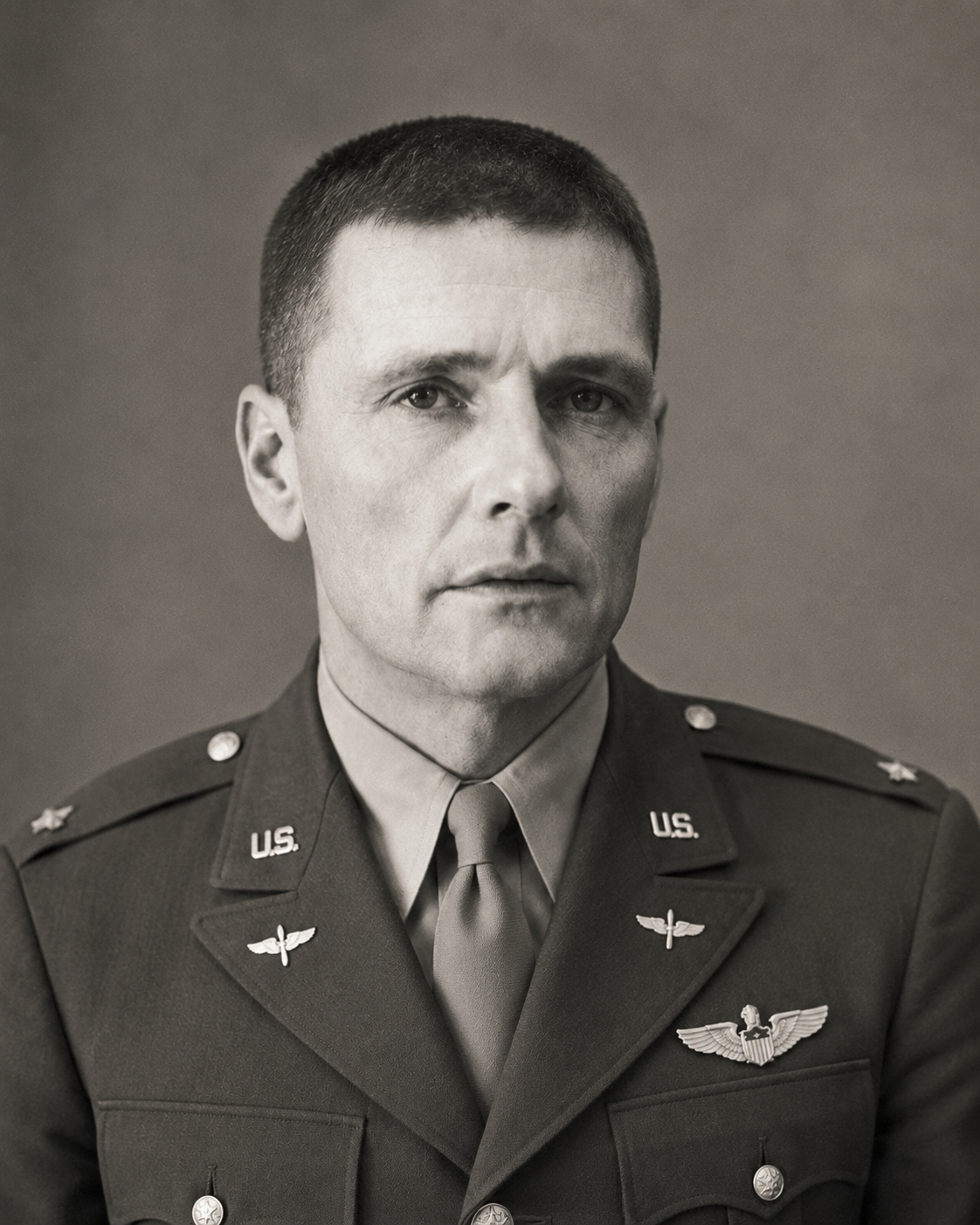
Mary had solved who four of the six fathers were and was working on the last two and was hoping we could provide the link for one of them. Through some interfamily effort we determined that the father of the Mary’s half-sister (who lived in France), was my sister-in-law’s Uncle Dick. Coincidentally, Uncle Dick served at the end of WW2 in the US Army Air Corps at a base in France near where Mary’s sister was born and where her mother lived.
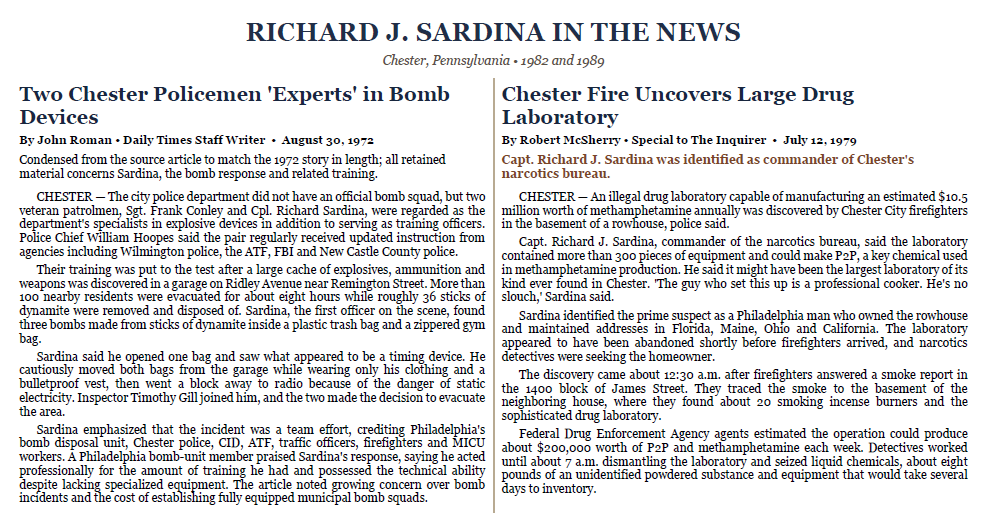
My sister and her immediate family got tight-lipped because Uncle Dick was a Philadelphia police officer and his family had been harassed by people, he’d arrested (see articles below) and how upsetting it would be if someone tracked him down through his family’s DNA. Of course, Uncle Dick had been long dead, but you never know.
Meanwhile Mary had found articles in the Philadelphia paper, that gave her enough information to find the late Uncle Dick’s wife, and she wrote a letter to her. It turned out she knew all about her husband leaving behind a French infant daughter when he was sent home at the end of the war.
Mary had told me that her sister lived in a chateau in France, so I joked with my nephew he could travel to France and have a place to stay. However, that all ended when my sister-in-law’s half-cousin once removed passed away six months later. At least, she left us knowing her biological father was a positive contributor to society!
GENEALOGIST- PRESERVE YOUR FAMILY HISTORY, TODAY
 GENEALOGIST- PRESERVE YOUR FAMILY HISTORY, TODAY
Reach out to Dancestors Genealogy. Our genealogists research, discover, and preserve your family history so those stories don’t disappear.
No one is getting any younger, and memories fade every year, eventually slipping beyond our ability to recover them. Paper gets thrown in the trash; books survive.
We offer:
Ready to embark on your family history journey?
Call Dan Nelson at 214-914-3598 and get your project started today.
