
14 Nov Genealogist- Newsletter- November 14, 2026
GENEALOGIST- THE NEWSLETTER PODCAST STYLE!
You can now listen to and read the Dancestors Genealogy Newsletter.
Listen to all Dancestors Genealogy newsletters on our podcast page.
PODCASTS
GENEALOGIST- THE FEUDING PREACHER, A FATAL SHIPWRECK, AND A BILLION-DOLLAR MANHATTAN LAND DISPUTE
In August, we shared Anthony Van Salee’s troubles with BOGEY
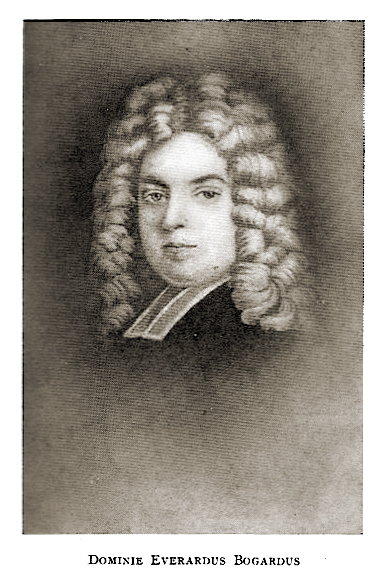
Everardus Bogardus (27 July 1607 – 27 September 1647) (pictured), who was the dominie of the New Netherlands and was the second minister of the Dutch Reformed Church, the oldest established church in present-day New York, which was then located on Pearl Street at its first location built in 1633, the year of his arrival. Bogardus was, in fact, the second clergyman in all of the New Netherlands.
Bogardus was born in Woerden, in the province of Utrecht, Holland, in 1607. He entered Leyden University to study theology in July 1627. On 11 January 1632, just five years after he had entered Leyden University, he was ordained a regular minister of the Dutch Reformed church. Soon after, he was commissioned by the “Lords Directors of the Honorable West India Company of the United Provinces of the Netherlands” to minister to the spiritual needs of the colony at New Amsterdam.
Bogardus arrived in New Netherland in 1633, sailing from Amsterdam on the ship “Zoutberg”. When it became known that Kiliaen van Rensselaer planned to erect a church upriver at Rensselaerswyck, Governor Kieft hastened his plans to rebuild the church in Fort Amsterdam.
A humorous anecdote about the building of this church contends that-
Governor Kieft decided that there should be [a new church] of stone, and that it should be built inside the fort. There was a question about how to secure the funds to build it. Kieft gave a small amount, as did other colonists, but there was not enough. Fortunately, just at this time, a daughter of Bogardus, the minister, was married. At the wedding, when the guests were in good humor, a subscription list was handed out. The guests tried to outdo one another in subscribing to money for the new church. The next day, some of the subscribers were sorry they had agreed to give so much, but the Governor accepted no excuses and insisted on the money. It was collected, and the church was built.
Bogardus frequently was combative with the Directors of New Netherland and their management of the Dutch West India Company colony, going up against the often-drunk Wouter van Twiller and famously denouncing Willem Kieft from the pulpit during the colony’s disastrously bloody Kieft’s War (1643–1645). He stepped up his denunciations when Kieft tried to place a tax on beer.
Bogardus died on September 27, 1647, in the Princess Amelia shipwreck near Swansea, Wales, while en route to Amsterdam, along with many of his congregants and his opponent, Willem Kieft. Popular sources describe Bogardus… “on his way to Holland on a mission relating to his church. The people of New Amsterdam mourned for their minister, but there was little sorrow felt for the Governor who had plunged the colony into war by his obstinate and cruel temper.”
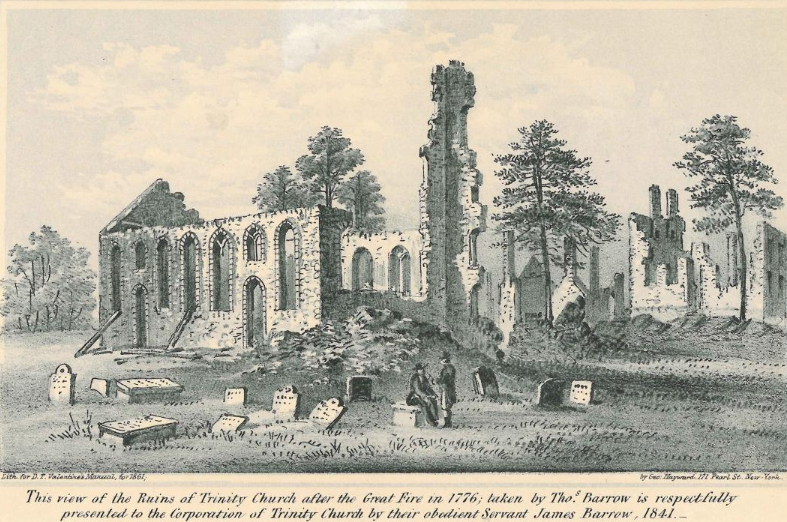
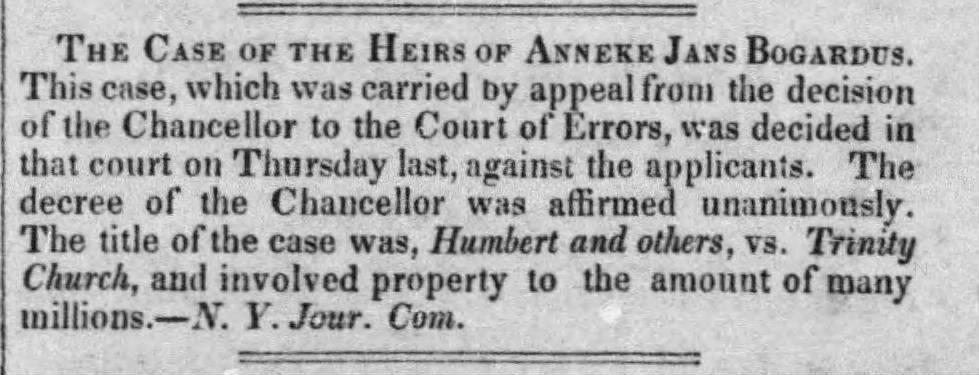
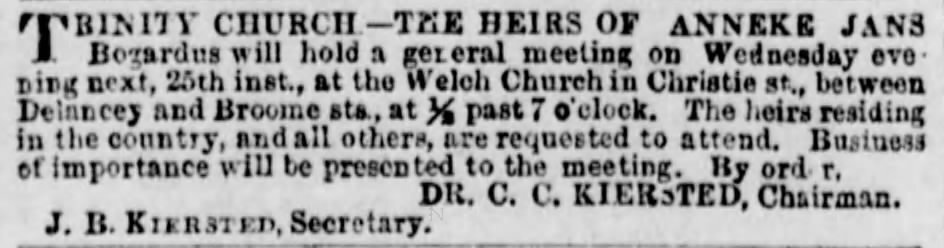
Beginning in the 1780s, the Trinity Church’s (pictured below) claim on 62 acres of Queen Anne’s 1705 grant was contested in the courts by descendants of a 17th-century Dutchwoman, Anneke Jans Bogardus (Everardus’ granddaughter), who, it was claimed, held original title to that property. The basis of the lawsuits was that only five of Bogardus’ six heirs had conveyed the land to the English Crown in 1671. On numerous occasions over six decades, the claimants asserted themselves in court, losing each time. See the articles below. The attempt was even revived in the 20th century.
A disclosure resulting from a lawsuit filed by a parishioner revealed total assets of about $2 billion as of 2011. Although Trinity Church Trinity has sold off much of the land that was part of the royal grant from Queen Anne, it is still one of the largest landowners in New York City with 14 acres of Manhattan real estate including 5.5 million square feet of commercial space in Hudson Square. The parish’s annual revenue from its real estate holdings was $158 million in 2011, with net income of $38 million, making it among the richest individual parishes in the world.

GENEALOGIST- THE GUN-TOTING DR. WHO KNEW EVERYBODY- MARK TWAIN, SENATORS AND RAILROAD MILLIONAIRES
William Green Alban was born in 1821 in Ohio. William grew up with John Sherman, US-Senator from Ohio and the brother of General William Tecumseh Sherman. They were initiated together into the Odd Fellowship in Mansfield in 1843.
William married Ann Jenner, the daughter of Abraham Jenner. Abraham was a physician and was William’s medical teacher. Ann died in April 1850 in Richland, OH, at age 24, of Marasmus (which is severe undernourishment), which seems odd for the daughter and wife of a physician. William apparently decided to get a fresh start, as his children were living with their Jenner grandparents in Springfield, OH, as of August 1850.
William moved to Nevada City, CA, later that year, where he was recorded in the October 1850 Sacramento census. William had learned the printer trade in Ohio, and so when he went west, he first associated with the Nevada City Journal. He then owned the Journal in partnership with Henry A. “Harry” DeCourcey, and later sold it to DeCourcey and Aaron Sargent.
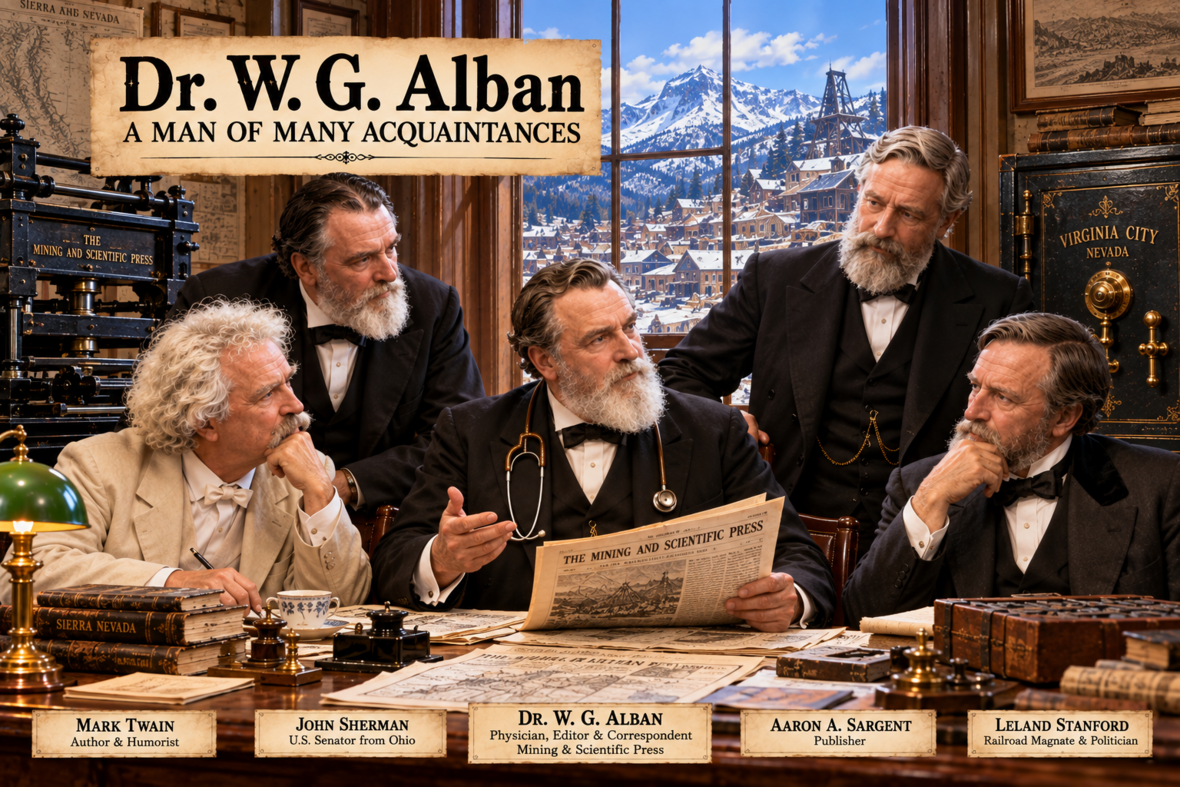
William has enjoyed the distinguished honor of having, for a devil in his print shop, a youth who thereafter became the Governor of California, a Senator in the Congress of the United States, and a minister plenipotentiary to a foreign country and court, the Hon. Aaron A. Sargeant. “He moved to California in 1849 and settled in Nevada City in 1850. There he was on the staff of the Nevada Daily Journal, eventually becoming that newspaper’s owner.” You can see the AI-created image, showing all of these legendary early Nevada figures together.
William married Martha Ann in 1851, in Nevada City, Nevada, CA, at age 26. Here he started the practice of medicine. After 1859, they moved to Virginia City, where they resided during the Comstock Lode silver boom. William was friends with and the personal physician of Mark Twain.
“Dr. W. G. Alban, of Walla Walla, who joined the rush for gold in California, was well acquainted with the late Leland Stanford and his millionaire associates. “When I first knew him,” said the doctor to a Union representative, “he was justice of the peace in Alcalde, and mining in Michigan bar on the American River. This was in 1852; he afterward started an oil house in Sacramento with his brothers. The great enterprise in which he made his millions was the formation of the Central Pacific syndicate, composed of the two Crockers, Huntington, Hopkins, and Colton. He put all his property into a sixth interest. He was the financial head, business manager, and superintendent of construction of the concern. He was a man of powerful physique, large head, and indomitable force. I have seen him many times going out on the line with his men in high-top boots. He was the genius, brains, and money-making power of the old syndicate, although I suppose Huntington later acquired more wealth.”
By 1863 Alban had become involved in the booming Comstock mining industry in Nevada Territory. He was associated with the Alexander and Catherine Consolidated Mining Company at Gold Hill and, in 1864, served as president of the Orleans Flat Silver Mining Company in the Virginia Mining District. A surviving Orleans Flat stock certificate dated May 21, 1864, lists him as president. The Virginia City directory for that same year independently lists “Alban W. G., M.D.” on North E Street, documenting that he was practicing medicine there at the same time.
The Albans found Virginia City too rough a place to raise a family, so they moved to Santa Rosa, CA. By 1870 they were living in the Ukiah City Hotel in Ukiah, CA.
THE GAZETTE, p3, c1, 23 December 1870, Nevada City, CA:”DR. ALBAN SHOT – Dr. Alban, who formerly resided in this city, was shot at Ukiah City, last week, by a gambler named Pacheco. It appears that the gambler was paying attentions to Dr. Alban’s daughter. The Doctor objected to Pacheco on the grounds that he was a professional gambler. The couple determined upon an elopement, procured a license, and started in a buggy for a parson, or some person competent to marry them. Alban proceeded on horseback, and caught up with them a few miles from Ukiah City. Pistols were brought into use and doctor Alban was shot in the mouth, but we believe is not dangerously hurt. The lover was slightly injured while the girl escaped unhurt. After this episode in affairs all parties returned to Ukiah City. The girl still insists upon marrying Pacheco.”
Alban’s daughter Alice, at 17, married Thomas W. Cunningham, who we reported on in May, dying in a shootout in San Francisco. SHOOTOUT
In 1873, Alban took over the management of the Mapes House Hotel in Santa Rosa. In 1878, they moved to Walla Walla, Washington. William practiced medicine until age 79. He also served as the Walla Walla city health officer. William died June 20, 1906, in Walla Walla, WA, at age 81, of senility.
GENEALOGIST- THE BALTIMORE RAID OF 1631: PIRACY, REVENGE OR CONSPIRACY?
In the last edition RAID , we shared Janszoon Van Salee’s raid of Baltimore. What if one of Ireland’s most infamous pirate raids was actually a carefully orchestrated conspiracy involving a wealthy landowner, a dispossessed Irish clan, and a notorious Dutch pirate?
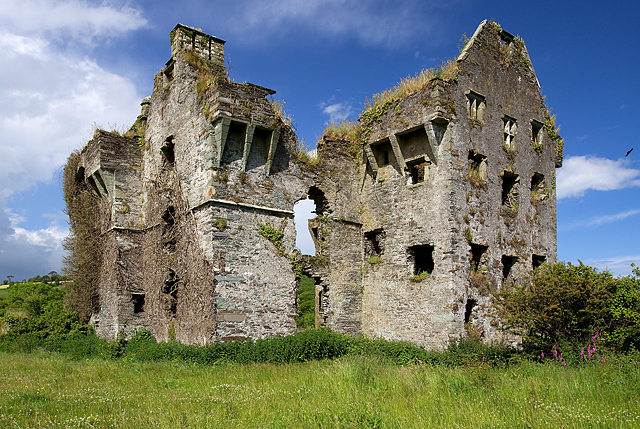
In his book The Stolen Village, historian Des Ekin explores the possibility that the 1631 Barbary pirate raid on Baltimore, Ireland, was secretly arranged by Sir Walter Coppinger of Coppinger’s Court (pictured below), a wealthy Catholic lawyer and moneylender who desperately wanted control of the village’s lucrative fishing trade.
In 1610, the powerful O’Driscoll clan had leased Baltimore and its valuable pilchard fishing grounds to English Puritan settlers for 21 years. Because of debts owed by clan chief Sir Fineen O’Driscoll, ownership of the property was scheduled to transfer to Coppinger when the lease expired.
The expiration date was June 20, 1631. Remember that date.
Coppinger spent years attempting to evict the settlers through lawsuits and intimidation. But in 1630, the courts ruled against him, ordering that the Puritans be allowed to remain indefinitely.
Then something extraordinary happened.
On June 20, 1631—the exact day the original lease was to expire—Barbary pirates attacked Baltimore, carrying away more than 100 inhabitants into slavery in North Africa.
Was it merely a remarkable coincidence?
Ekin suggests that Coppinger may have collaborated with members of the O’Driscoll clan living in exile in Spain.
These aristocratic intermediaries could have recruited the notorious corsair Murad Reis, the Dutch pirate Jan Janszoon van Salee to remove the Puritan settlers once and for all.
Although no documentary evidence proves the conspiracy, the timing is certainly intriguing.
But another explanation is equally fascinating.
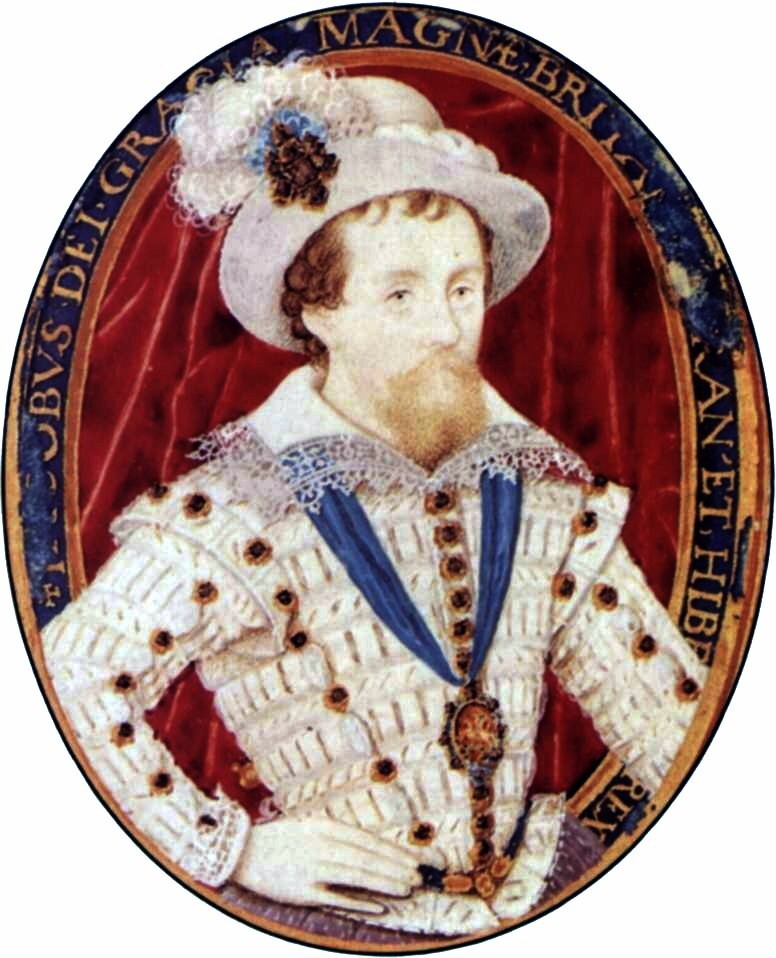
Baltimore was not simply a peaceful fishing village. By the early 1600s, it had become a notorious haven for privateers and pirates. Local officials reportedly tolerated the illegal trade despite orders from King James I (pictured above) to suppress it. Even the village’s Puritan women were rumored to be wives or mistresses of pirates.
Murad Reis may therefore have attacked Baltimore to eliminate competitors or retaliate for raids against Ottoman shipping.
There is yet another possibility. Scholar María Antonia Garcés points to historical accounts describing Irish-born pirates operating from Algiers. Some were former Christian captives who had converted to Islam, gained their freedom, and joined the Barbary corsairs. Could these men have helped identify Baltimore as a target?
Adding to the mystery, English authorities had actually received advance warning that Murad intended to attack the County Cork coast.
Unfortunately, they believed his target was Kinsale rather than Baltimore.
More than three centuries later, the mystery remains unresolved. Was Baltimore destroyed by pirates seeking plunder, by enemies seeking revenge, or by a wealthy landowner determined to reclaim his property?
One chilling coincidence remains: the very day Coppinger was supposed to gain control of Baltimore was the day its inhabitants were carried away into slavery.
Coincidence—or conspiracy?
GENEALOGIST- UNCLE BILL AND HIS FAMOUS ELK-SCULPTING COUSIN
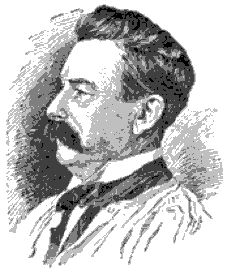
My wife’s Uncle Bill was an amateur artist, and he once asked me whether I knew how he was related to the sculptor, painter, and animalier Eli Harvey (1860-1957) (adjacent). I did not, but now I do.
Harvey was born in Ogden, Ohio, a Quaker community in Clinton County. He attended art school in the Art Academy of Cincinnati, where he studied painting with Thomas Satterwhite Noble and sculpture with Louis Rebisso. In 1889, he moved to Paris, where he continued his studies with Lefebvre, Constant, Doucet, and finally Frémiet. In 1897, he began exhibiting sculptures of animals at Paris salons and continued doing so until returning to the United States in 1900, by which time he was “firmly committed to animal sculpture.” Now we all know what an animalier is!
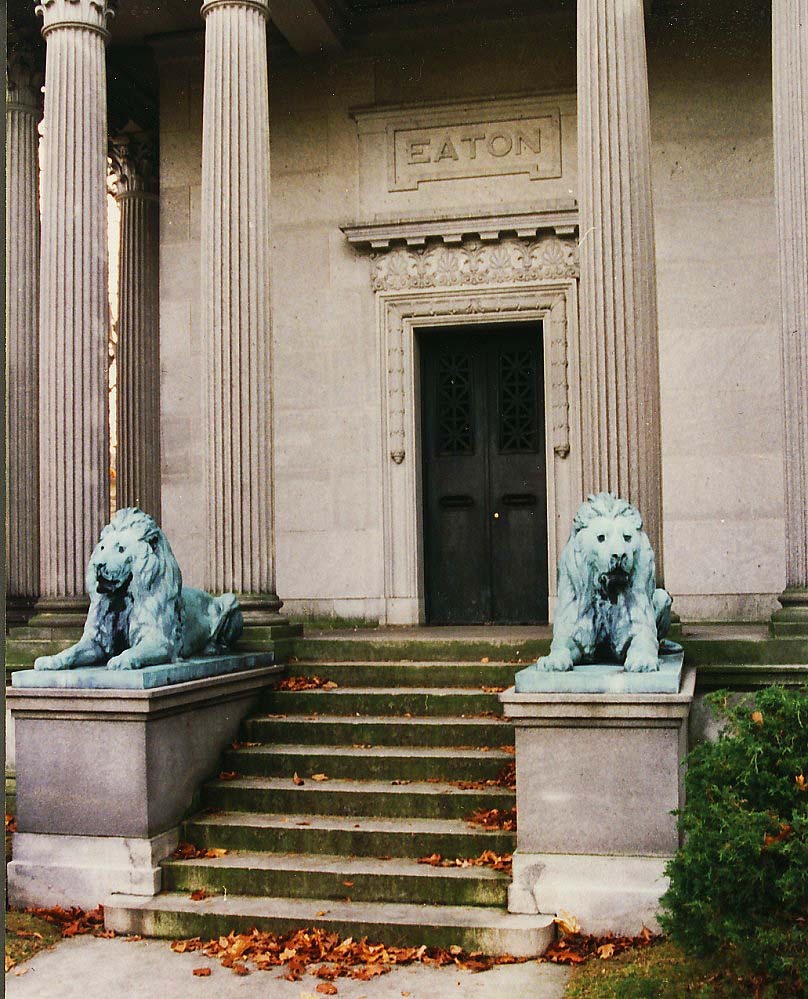
His work was exhibited at both the Pan-American Exposition (Buffalo, New York, 1900) and the Louisiana Purchase Exposition (Saint Louis, Missouri, 1904), and a decade later, at the Panama–Pacific International Exposition (San Francisco, California, 1915). Harvey also produced architectural sculpture for the lion house at the New York Zoological Park and two lions for the Eaton family mausoleum in Toronto, Ontario, Canada (pictured).
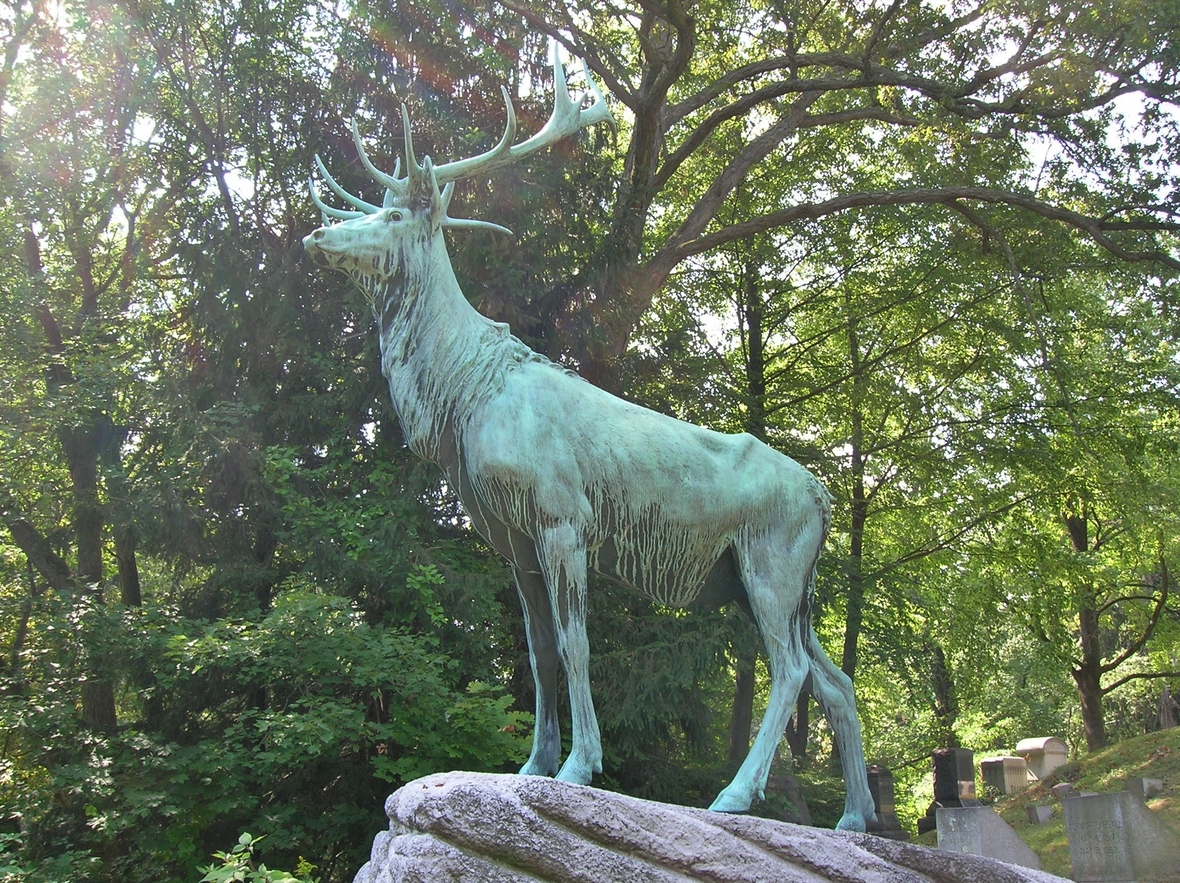
Harvey’s most popular work was a life-sized elk (pictured) produced for the Benevolent and Protective Order of Elks and used in their buildings and cemeteries across the United States.
Eli was Uncle Bill’s 4th cousin once removed.
GENEALOGIST- A $50 CANOE AND THE STEAMBOAT GRAVEYARD
Growing up, my parents owned a canoe that my dad paid $50 for at a gas station, when $50 was a week’s groceries and gas. We used that canoe throughout my childhood. I remember when it would get a leak, and my dad would take it down to the neighbor’s pool to find it, then take it over to the high school’s welding class, and they would patch it up.
My parents later bought a longer canoe and, for years, canoed with the Thunderdux Canoe Club, making trips to the Boundary Waters and the Bowron Lake Circuit in British Columbia. Their old canoe now hangs on my backyard fence, sometimes serving as a planter.
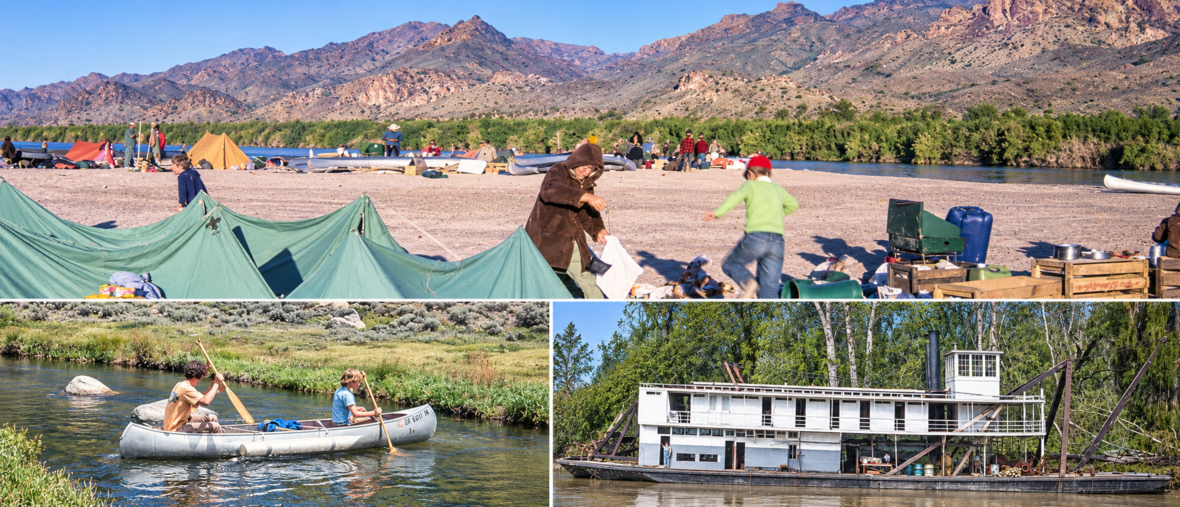
The last trip I took in the old canoe was with my brother on the Owens River (pictured below left). The Owens is considered one of the most convoluted rivers in America. In the spring, it flows very fast because its source is the steep eastern side of the High Sierra. At some places, you can canoe east and wave to someone heading west around the next bend, with a few feet of land between you.
In addition to the family canoeing, we also canoed every Thanksgiving with the Boy Scouts on the Colorado River, so I’ve had my share of sand-laced, dehydrated turkey (campsite pictured below). I thought my canoeing days were over when I moved to Texas. However, it turned out that one of my friends led a group on trips down the Brazos River below the Possum Kingdom Dam a couple of times a year. The cruise director and his cruisers have now retired from canoeing the Brazos after one too many swampings in the rapids.
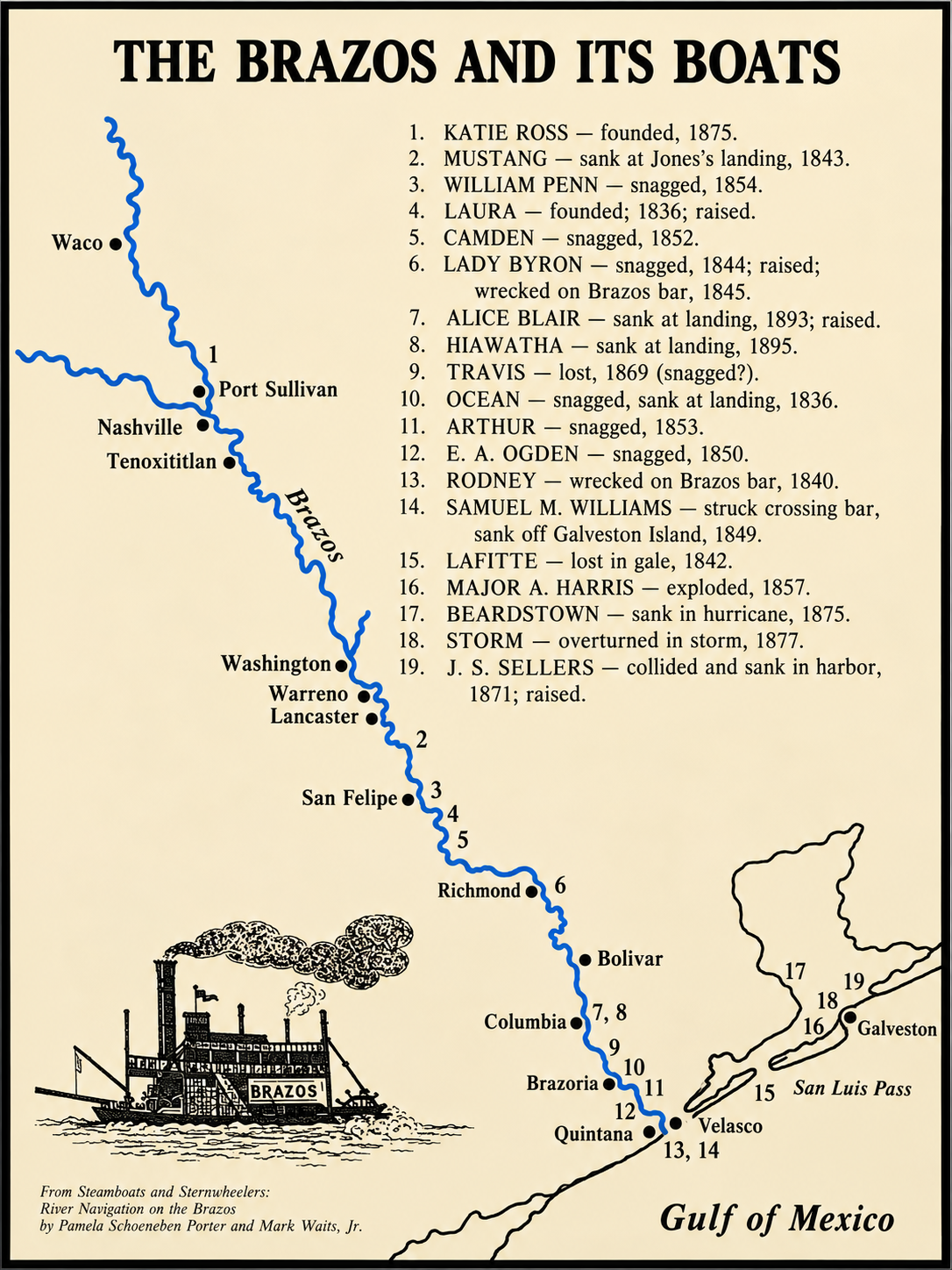
When we visited the Bullock Texas State Museum in Austin, I saw the map above showing the sinkings of steamboats on the Brazos River, so I researched the history.
I discovered that steamboats began navigating the Brazos River during the early years of the Republic of Texas and became an important link between the rich agricultural settlements of the Brazos Valley and the Gulf of Mexico. The river flowed through some of Texas’s most productive cotton and sugar country, and steamboats carried these crops downstream to the coast, where they could be shipped onward to markets such as New Orleans.
River landings developed at communities including Velasco, Columbia, Brazoria, Richmond, San Felipe, Washington-on-the-Brazos, and other settlements farther upstream. Boats carried cotton, sugar, and other agricultural products downriver while bringing manufactured goods, machinery, household supplies, mail, and passengers into the interior. Washington-on-the-Brazos (the first seat of government in Texas) became an especially important distribution point for river commerce.
Navigation was never easy. The Brazos was shallow and unpredictable, with shifting channels, sandbars, submerged trees, and seasonal changes in water level; therefore, all of the sinkings recorded on the map. Pictured below right is the Snagboat Navasota on the Brazos River, March 1911.
Eventually railroads provided a faster and more dependable means of transportation, and commercial steamboat traffic declined. But for several decades, the steamboats of Brazos were one of the principal means by which the plantations, farms, and towns of the Brazos Valley were connected to Galveston, New Orleans, and the wider Gulf economy.
GENEALOGIST- FINALLY, WHALES, AS CAPT. STARBUCK’S JOURNEY CONTINUES
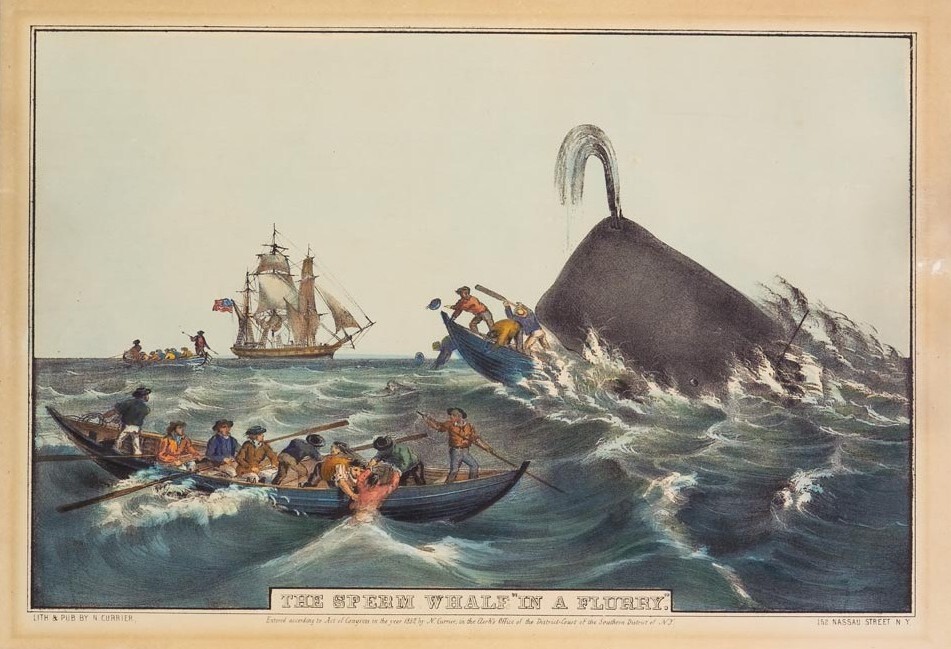
Wednesday, April ye 25th, saw plenty of Spamasitics (sperm whales) & chased them but could not harpoon any of them
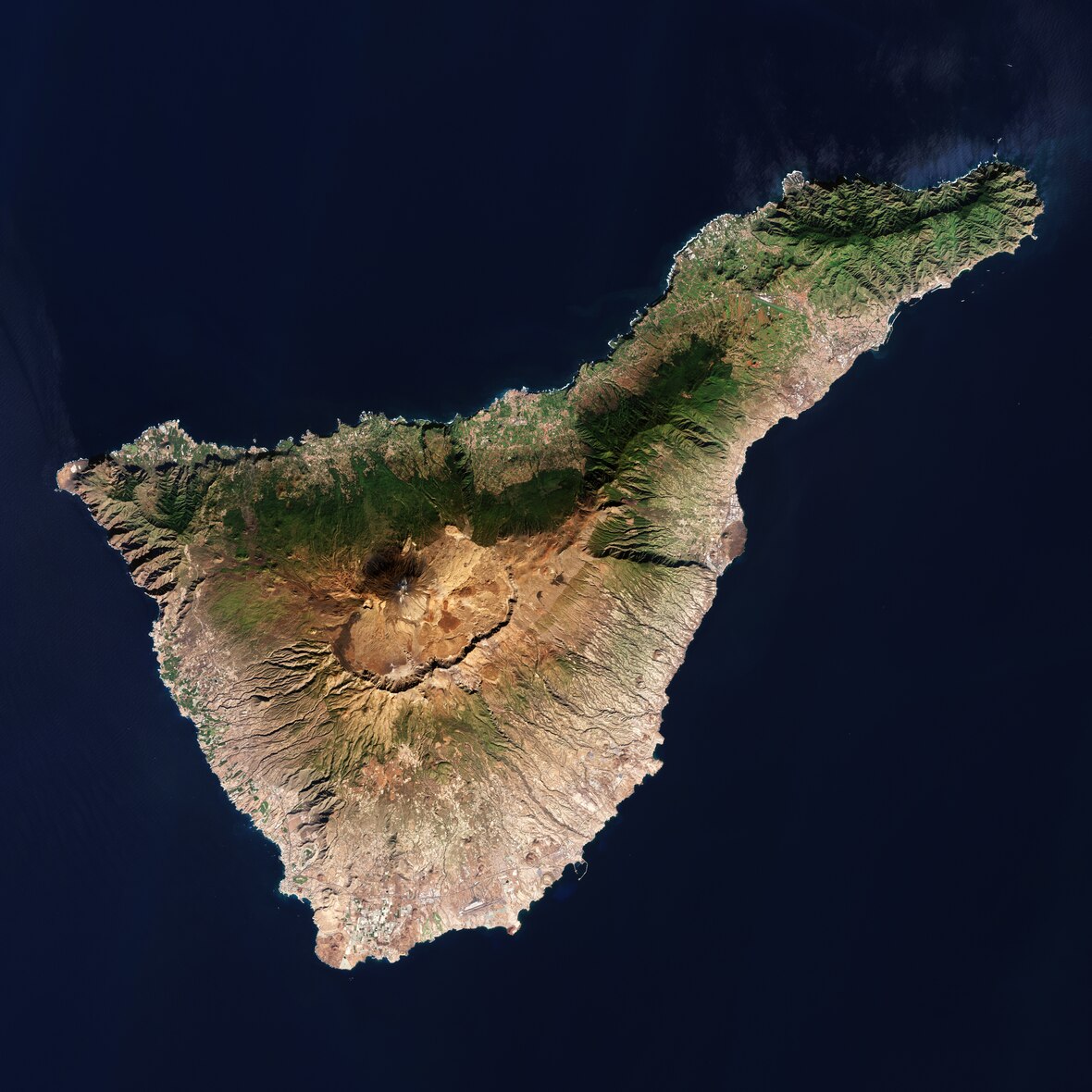
Saturday, April ye 28th, we saw a sloop at a great distance to ye westward of us, so we went about & stood to ye westward, & at 3 of clock spoke with her, & she proved to be a sloop from Tenarife (Canary Islands- pictured above) bound to New York. He told us that he had been driven off twisted & had been from said port 52 Days & further he told us that he was scant of provisions or meat. So, we let him have some of ours.
Monday April ye 30th water had fine red & black sand judged it to be ye south end of Saint Georges Bank.
Thursday May ye 3rd ye saw plenty of humpbacks & chased them but could not strike.
Sunday, May ye 6th, saw a Spamasite & killed her & towed her alongside of our consort & went to cutting, but night coming on we quit till morning & further that Taber from Dartmouth harpooned a whale & finally got it to stove. Cut ye head off & took it alongside of our vessel & cut it
GENEALOGIST- PRESERVE YOUR FAMILY HISTORY, TODAY
Reach out to Dancestors Genealogy. Our genealogists research, discover, and preserve your family history so those stories don’t disappear. Ancestry only gets tougher as time diminishes recall.
No one is getting any younger, and memories fade every year, eventually slipping beyond our ability to recover them. Paper gets thrown in the trash; books survive.
We offer:
Ready to embark on your family history journey?
Call Dan Nelson at 214-914-3598 and get your project started today.
