

31 Oct Ancestor- Newsletter- October 31, 2026
ANCESTOR- THE NEWSLETTER PODCAST STYLE!
You can now listen to and read the Dancestors Genealogy Newsletter.
Listen to all Dancestors Genealogy newsletters on our podcast page.
PODCASTS
 ANCESTOR- THERE GOES THE VAN DER GOES
 ANCESTOR- THERE GOES THE VAN DER GOES
I was working on a line extension for my De Sille family ANCESTOR-NEWSLETTER June 13, 2026 and the Van der Goes family that had married in and also was included in an article on my Swedish Dutchmen Goes
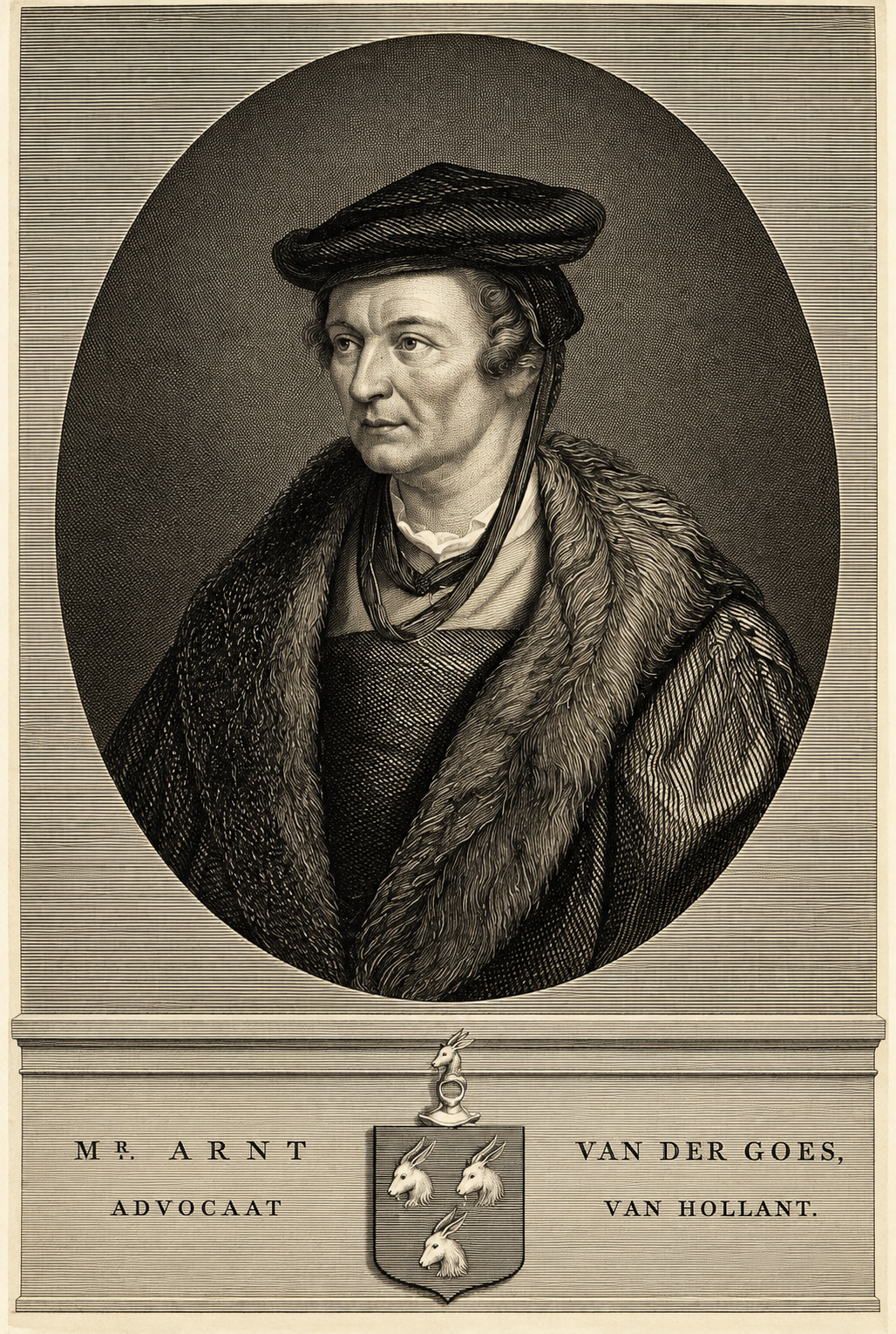
What I discovered about the Van der Goes is that my 5th Great Grandmother Adriaantje Gerritse Kroesen Nevius had, on her maternal side, ancestors starting with her 3rd Great Grandmother Johanna Van Der Goes Petersson, and, on her paternal side, ancestors starting with her 5th Great Grandmother Barbara Van der Goes De Sille. The common ancestor is Arnt Wittesz Van der Goes (pictured below left), who was born in 1475 in Delft, Netherlands. A city that we visited in July this year.
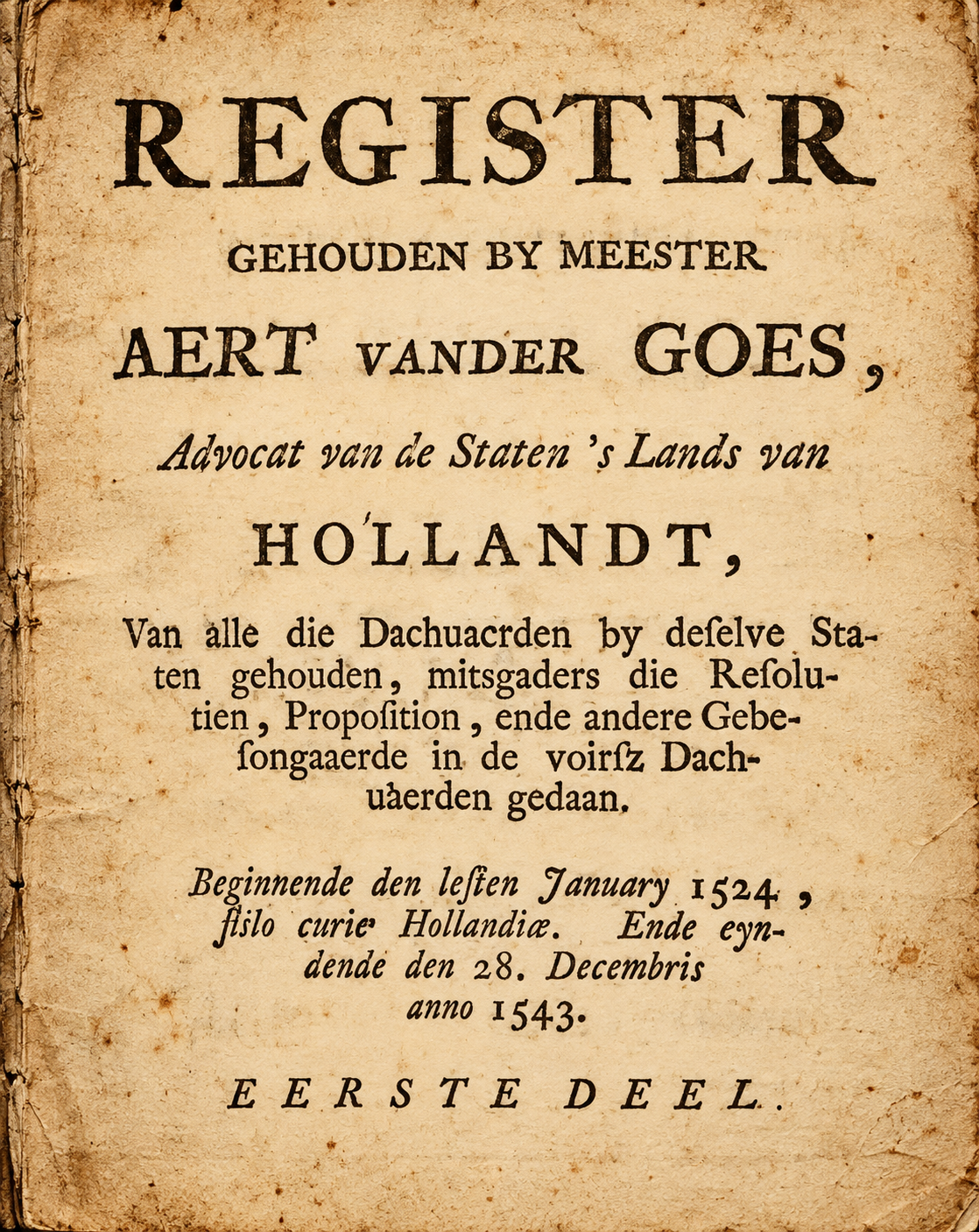
Arnt studied at the University of Leuven, where he became a lawyer and pensionary. Serving in that role in Delft from 1508 to 1525. From May 1525 to January 1544, he was State Attorney (Grand Pensionary) of the States of Holland. He also served as the Landsadvocaat (Advocate of Holland). He wrote the Register of the Lands of the States of Holland, in which events from the meetings of the States were recorded (pictured above).
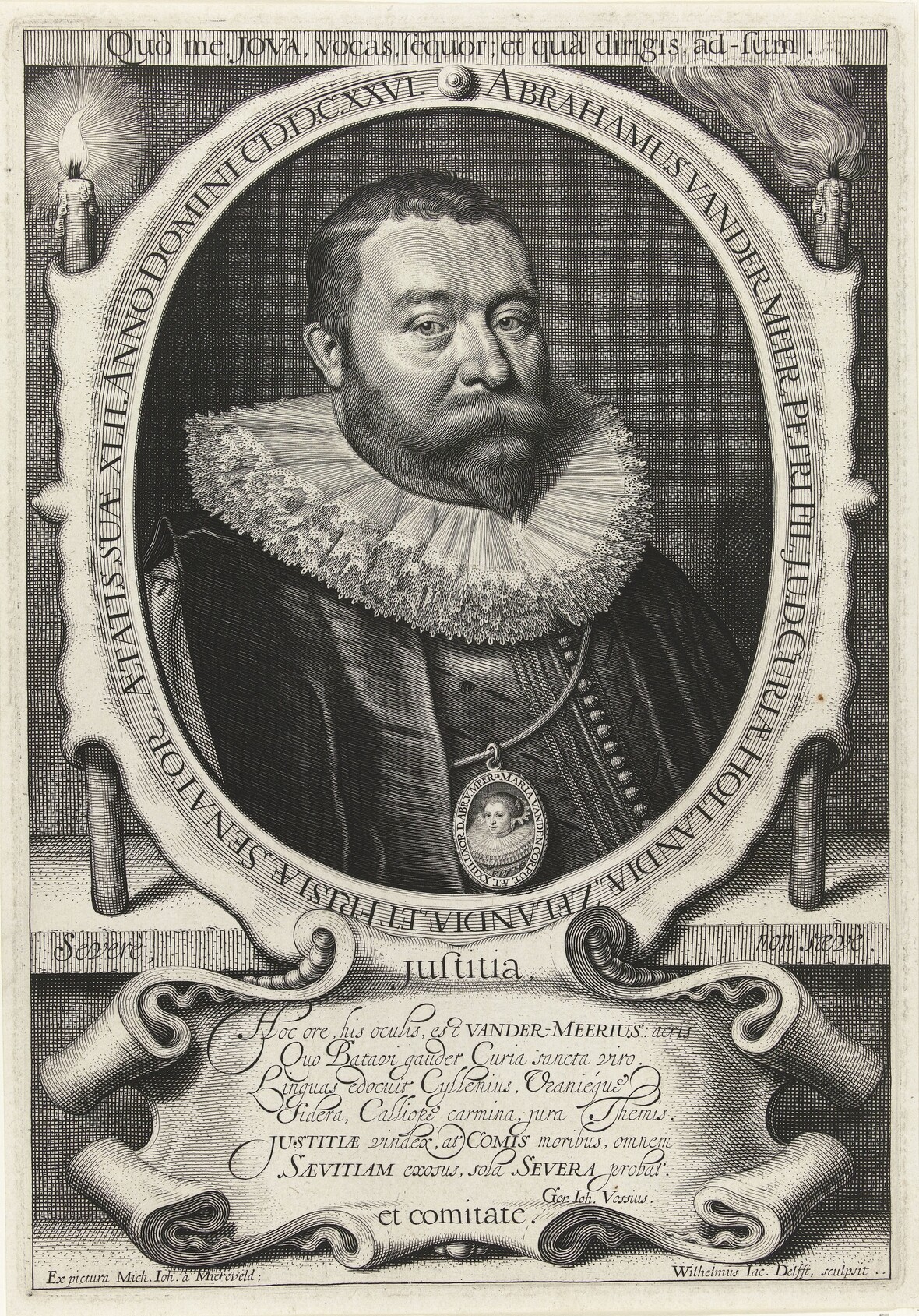
Arnt’s great-grandson, Abraham Van der Meer, was a member of the Forty Council and an orphan master in Delft, and from 1621 to 1638 a councilor of the Court of Holland.
Abraham is pictured below in an engraving wearing a medallion depicting his wife, Maria van den Corput. I was excited to learn that the engraving is in the Rijksmuseum’s possession in Amsterdam. I have visited the Rijksmuseum and seen the collection of Dutch art and history, including works by 17th-century Dutch masters such as Rembrandt, Vermeer, and Hals. Suddenly, I had a connection to Dutch history that is preserved in our modern world; what a fun discovery!

ANCESTOR- WARNSBORN- THE ESTATE MY ANCESTORS BOUGHT AND I CAN STILL VISIT
One of my newly discovered Dutch ancestors was Laurens De Sille’s wife Walburga’s great-uncles: Willem (Guillaume) and Evert Everwijn. They were directors of the WIC (West India Company) and prominent members of Arnhem’s government, serving for approximately two decades as schepen (alderman, magistrate, and local judge) and several times as burgemeester (mayor).
The Everwijn brothers operated in Amsterdam’s cloth and wine trades and married two sisters from the wealthy Amsterdam merchant family Sautijn—Willem married Johanna Sautijn, and Evert married Sara Sautijn. The Sautijns had migrated from Antwerp to Amsterdam during the Dutch Revolt and had been financing voyages to the Indonesian archipelago even before the VOC (Dutch East India Company) was established. The family’s investments continued for generations, and VOC dividends became a regular source of income for the Everwijn family. The Everwijns eventually used their commercial and investment wealth to acquire country estates around Arnhem, including property associated with Zypendaal, Kemperberg and Warnsborn. A significant portion of the wealth generated by VOC and WIC investments was allocated to houses and surrounding estates in Arnhem.
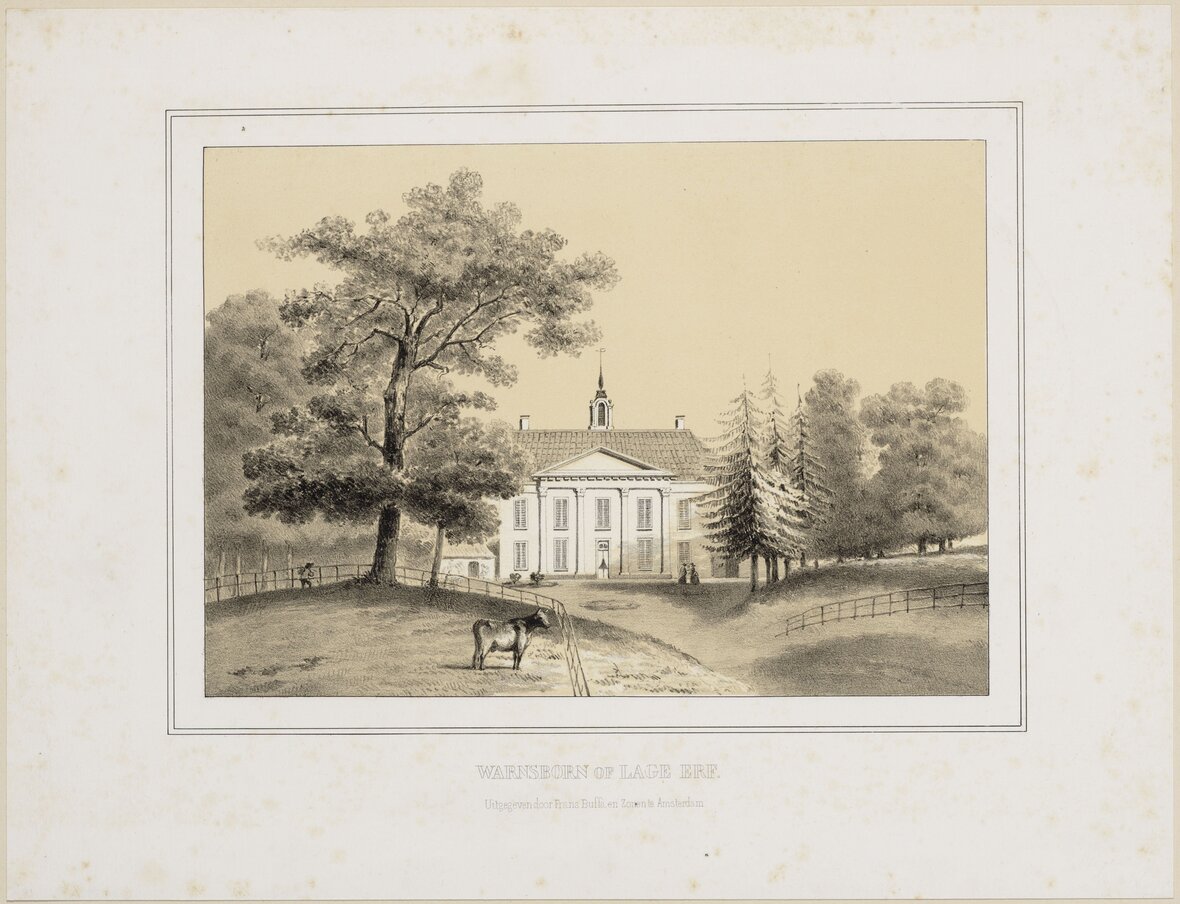
The name Warnsborn was first mentioned in 1428 when it was leased as heathland by Duke Arnold of Guelders to Johan van Postel. In 1465 it was owned by Rykart van Bloylant. The name Warnsborn then referred to the Hoog Erf, which, like the Vijverberg, was owned by the Mariënborn monastery. The Laag Erf adjacent to the northwest was owned by the Agnietenconvent. In 1648, the Hoog Erf and the Laag Erf were sold to Everhard Everwijn, mayor of Arnhem. From that time on, the name Warnsborn is used for the two yards together.
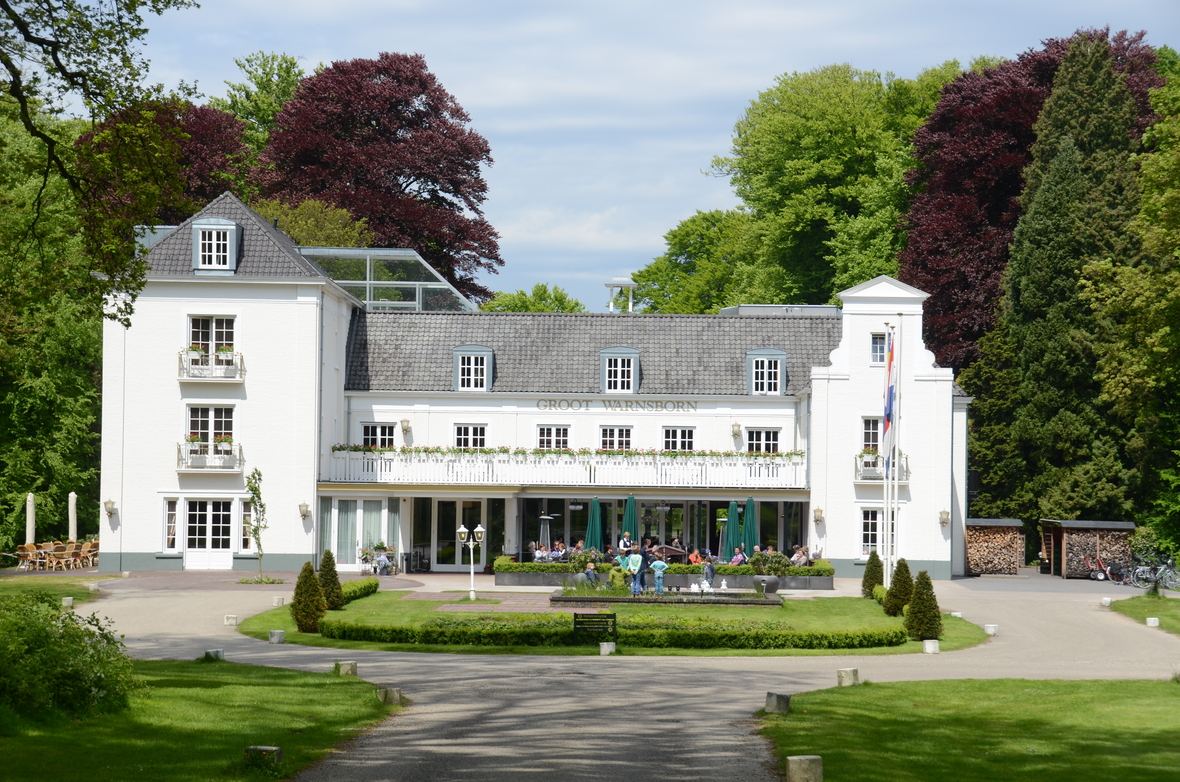
After Everwijn, the lands were sold several more times over the generations, and the estate has survived for almost 600 years to this day, where you can visit, stay, and dine (see the pictures). It will be a destination for us the next time we visit the Netherlands!
ANCESTOR- JANSZOON AND THE SACK OF BALTIMORE
 ANCESTOR- JANSZOON AND THE SACK OF BALTIMORE
Continuing with the life of Jans Janszoon
Having sailed for two months and with little to show for the voyage, Janszoon turned to a captive taken during the voyage, a Roman Catholic named John Hackett, for information on where to make a profitable raid.
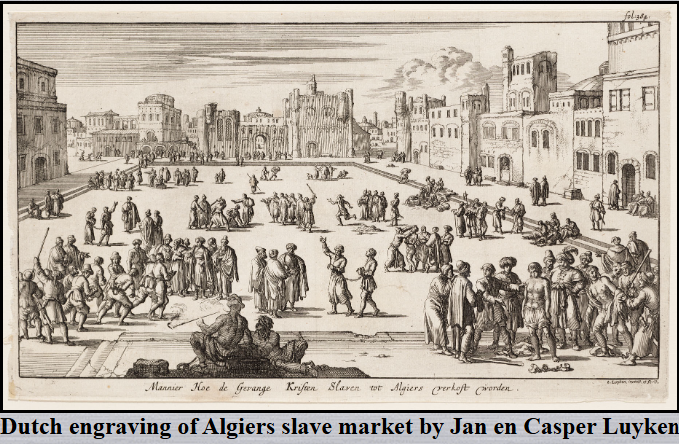
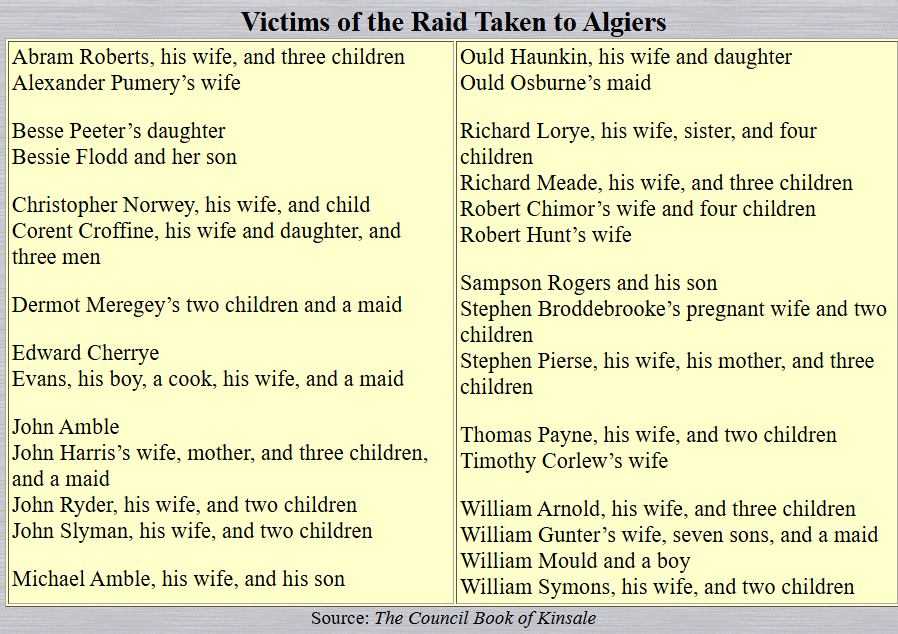
The English Puritan residents of Baltimore, a small town in West Cork, Ireland, were resented by local Gaels because they were settled on lands confiscated from the Clan O’Driscoll and, far more importantly, they had ceased paying black rent in return for living on Clan territory. Hackett directed Janszoon towards this town and away from his own. Janszoon sacked Baltimore on 20 June 1631, seizing little property but taking 108 captives. The villagers were put in irons and taken to the slave markets in North Africa, such as Algiers (pictured above). Janszoon was said to have released the Irish and taken only English captives.
Shortly after the sack, Hackett was arrested and hanged on the clifftop outside the village for his crime. “Here was not a single Christian who was not weeping and who was not full of sadness at the sight of so many honest maidens and so many good women abandoned to the brutality of these barbarians”.
Some prisoners were destined to live out their days as galley slaves, rowing for decades without ever setting foot on shore, while others would spend long years in a harem or as laborers. At most, only three of the slaves ever returned to Ireland. One was ransomed almost at once, and two others in 1646. In the aftermath of the raid, the remaining villagers moved to Skibbereen, and Baltimore was virtually deserted for generations.
ANCESTOR- WHAT THE POLK HOME TOUR DIDN’T TELL US
In 2022, we visited James K. Polk’s early days home in Columbia, TN- Columbia One part of the story intrigued me. James was the last U.S. president from a Southern state before the Civil War, serving almost 20 years earlier. Besides residing in a slaveholding state, I was curious if he himself was a slaveholder. There were slaves who moved between Polk’s residences, the White House, and his plantation. In the White House, there were Henry Carter Jr., Paul Jennings, Milly, and Elias Polk. Of course, you might wonder if Elias was JK Polk’s descendant, but JKP was too young to be his father, and since Elias came from his parents’ plantation, another Polk could have been his father, though that’s unknown.
However, in a common arrangement, Milly belonged to his nephew, J. Knox Walker, and Paul Jennings was owned by the former First Lady Dolley Madison (see the last picture on the page) which was covered in June 2024- Dolley After James Madison’s passing, Dolley appears to have still owned about 100 slaves. It is not known if she leased or loaned other slaves.
On a grander scale, James K. Polk’s emergence as a large-scale Mississippi cotton planter was closely connected to one of the most consequential—and devastating—episodes of nineteenth-century American expansion. Following the passage of the Indian Removal Act of 1830, the federal government forced Indigenous peoples from large portions of the Southeast. Among those displaced were the Choctaw, whose removal opened millions of acres of land in Mississippi to white settlement, speculation, and cotton cultivation.
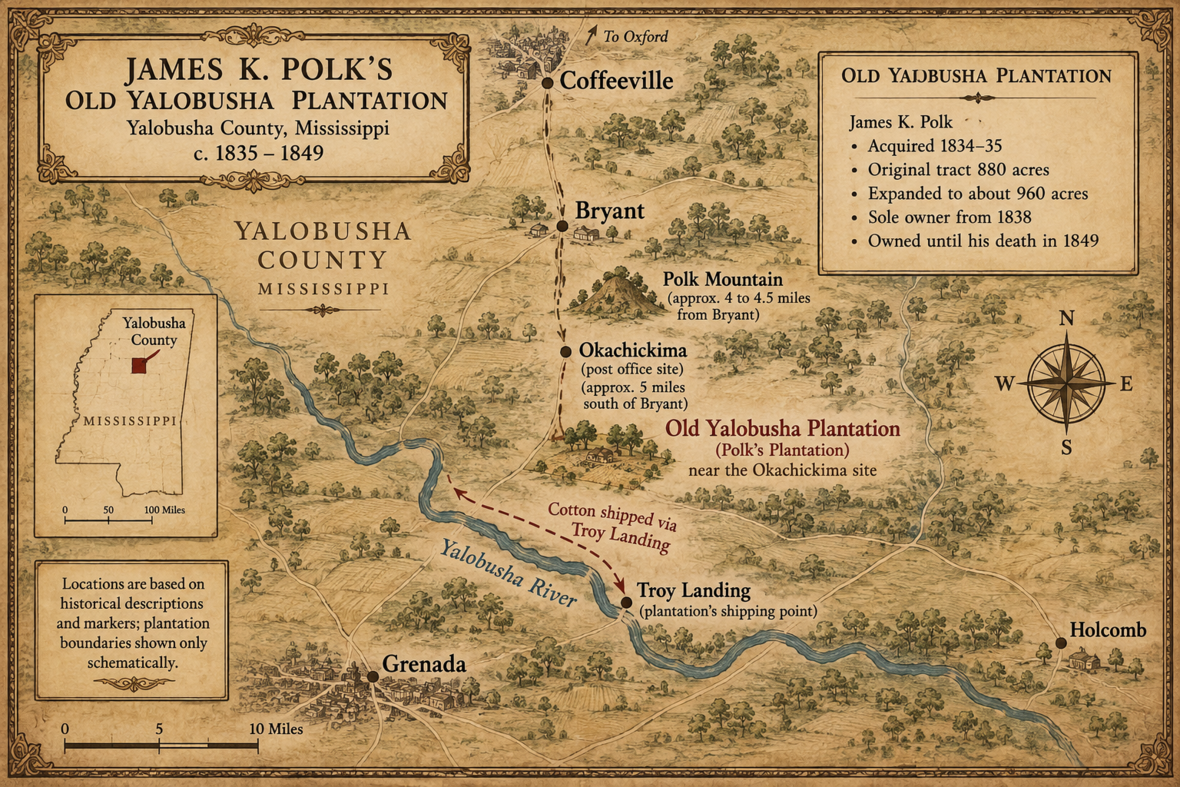
Polk recognized the economic opportunity created by this land transfer. He sold his existing property interests in Tennessee and joined the rush of planters and speculators moving into the newly available Mississippi cotton country. In 1835, he purchased approximately 920 to 1,000 acres in Yalobusha County, Mississippi, an area whose fertile soil offered the potential for highly profitable cotton production.
The land itself, however, was only one part of Polk’s investment. Cotton cultivation on the scale he envisioned depended upon enslaved labor. Polk transferred enslaved people from Tennessee to Mississippi and continued purchasing additional enslaved men, women, and children, totaling over 50 people, as he expanded the operation. Over time, what had begun as a new investment developed into a substantial plantation enterprise. During his presidency, plantation profits financed purchases of another 19 people, and Polk instructed agents to keep those purchases confidential.
The Mississippi plantation became an important source of Polk’s personal wealth even as his political career carried him from Tennessee politics to Congress, the governorship, and ultimately the presidency. Much of the plantation’s day-to-day operation therefore took place while Polk was physically elsewhere. Overseers supervised the property and the enslaved workforce, while Polk remained involved in the plantation’s finances and management from a distance.
By the time he was elected president in 1844, Polk had developed a profitable cotton enterprise. His financial success as a planter cannot be separated from the forced removal of Native peoples that made the Mississippi land available to him or from the labor of the enslaved people who produced its cotton. By the time of Polk’s death in 1849, his slaveholdings at the plantation had grown to approximately 56 people.
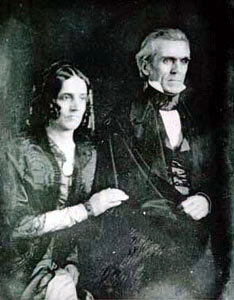
James K. Polk’s presidency ended in March 1849. The Polks (pictured above) began a long journey from Washington to Nashville, where well-wishers greeted them enthusiastically along the way. When they arrived at New Orleans, word of a cholera outbreak reached them. They concluded their journey from Kentucky by land in the face of shipboard cases of the dreaded disease. They finally arrived at their new home, Polk Place, in Nashville. A debilitated James K. Polk spoke before a gathering in his honor at Nashville on April 1, 1849. Although his health improved initially, he died on June 15 of cholera, leaving Sarah Childress Polk a widow at the age of 45. She inherited responsibility for the couple’s property and financial affairs, including the Mississippi plantation (see the map below).
Sarah was unusually well-educated for a woman of her era and had spent years closely involved in her husband’s political life. After his death, those administrative abilities became important in managing the estate. Rather than immediately disposing of the Mississippi plantation, Sarah continued operating it while living at Polk Place, her home in Nashville. Because she did not reside permanently on the plantation, she depended upon overseers in Mississippi to supervise its daily operations and cotton production.
The distance between Polk Place and the plantation did not lessen Sarah’s financial dependence upon enslaved labor. By the late 1850s, Sarah’s circumstances were changing. Sectional tensions over slavery were becoming increasingly dangerous, while her own financial position required adjustment. Rather than continuing the Mississippi operation in its existing form, she began disposing of much of the property. Before the outbreak of the Civil War, she sold most of the plantation land and many of the enslaved people associated with it.
The Civil War finally destroyed what remained of the plantation economy upon which the Polks had depended. Sarah adopted a publicly neutral position at Polk Place and received both Union and Confederate military figures at her Nashville home. Events in Mississippi, however, were beyond her control. Cotton crops and property were lost during the war, while enslaved people on lands in which she retained an interest escaped bondage as Union forces advanced and sought freedom behind Union lines. Emancipation ultimately extinguished the remaining value that Sarah’s estate had assigned to ownership of human beings.
Sarah never remarried. She survived James by 42 years, spending much of the remainder of her life at Polk Place and carefully preserving his papers, possessions, and political reputation. She died in 1891.
ANCESTOR- A SCRAP OF CLOTH AND A CONTRITE HEART
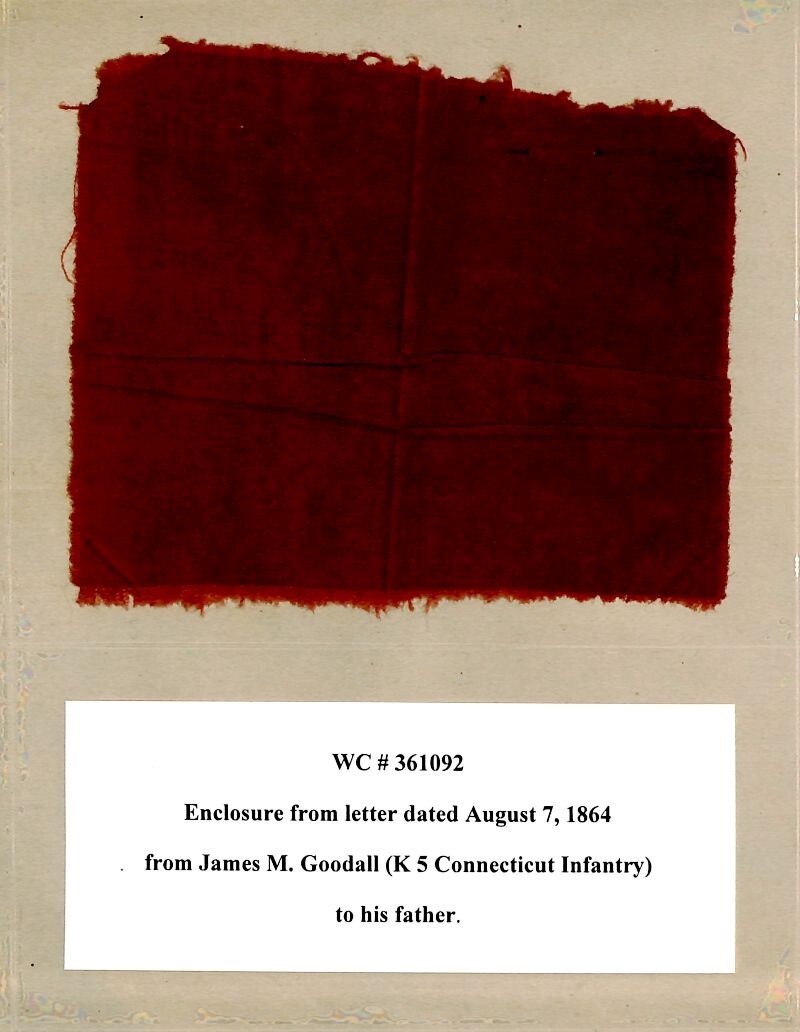
While Brian at Civil War Records () was researching the pension file of James M. Goodall of the 5th Connecticut Infantry, he found a small piece of fabric carefully preserved inside archival sheets. It wasn’t just any piece of cloth. It was a fragment of a Confederate battle flag, tucked inside the file for more than 160 years.
The mystery was solved in one of James’s letters home. Writing to his parents on August 7, 1864, he explained that he had enclosed a piece of the battle flag his regiment captured during the fighting on June 22, 1864. His parents kept the letter with the fabric still inside, and when they later submitted his letters as evidence for their pension claim after his death, the tiny souvenir went with them. It remained hidden in his pension file for generations.
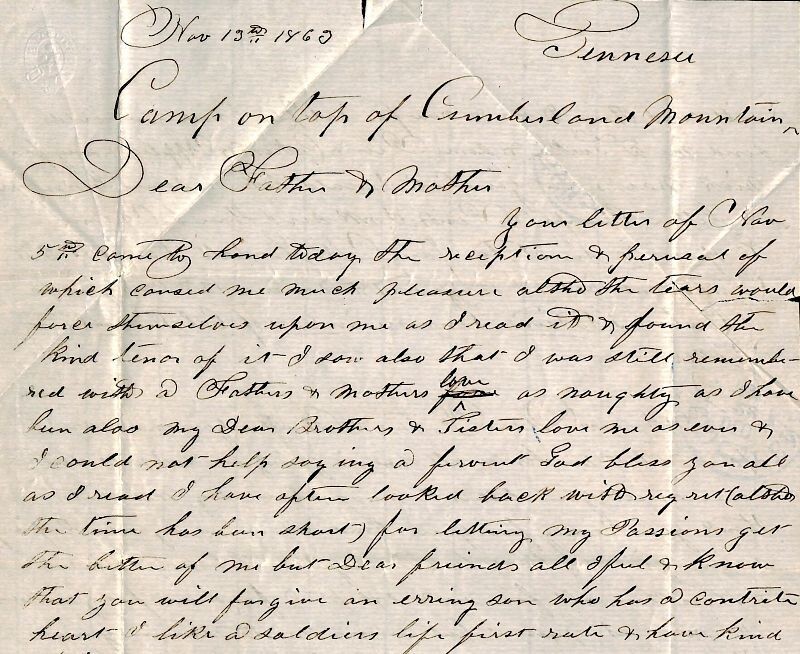
The letters revealed an even more personal story. James had left home after a disagreement with his father, but while serving in the army, the two reconciled through heartfelt correspondence. In one letter, James wrote that reading his parents’ forgiveness brought him to tears and asked them to forgive “an erring son who has a contrite heart.” Tragically, just three weeks after mailing the piece of the battle flag home, James died of fever near Atlanta.
The official records listed James as 22 years old, but census records, his gravestone, and affidavits in the pension file told a different story. He had actually enlisted after running away from home at just 14 years old and died shortly after his 16th birthday.
It’s a powerful reminder that pension files are much more than military records. They preserve personal letters, family relationships, and sometimes even physical artifacts that tell stories impossible to find anywhere else.

ANCESTOR- PORPOISES, FOG, AND NO WHALES YET STARBUCK’S JOURNEY CONTINUES
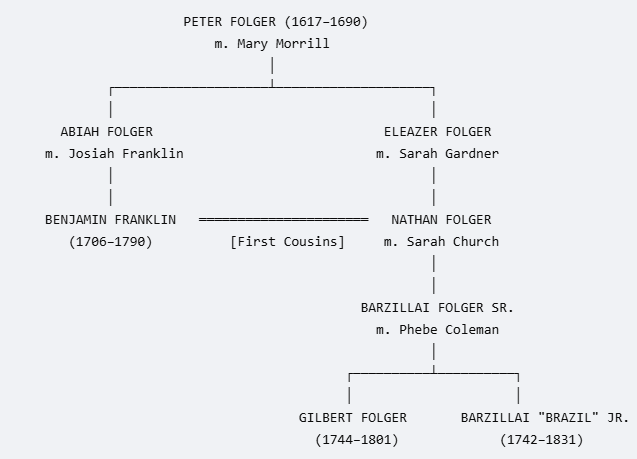
More on Hezekiah Starbuck’s Journey
April 20 to 23 1770
Manuscript page 2
Friday April ye 20th in the year 1770 the fore Part of this 24 hour was attended with fresh winds, but clear weather saw Plenty of Porpoises ye latter part of ye 24 hours. We had small wind and fine weather, made Sail & stood off to ye Southward Spook with a brigantine from Pool Bound to New York; he gave us some newspapers, so ended with fine weather and no whales.
Saturday April ye 21st the first Part of this 24 hour was attended with fine weather and small winds at N E Saw nothing ye latter part of ye day. Still fine weather. Saw nothing, so I concluded this day’s work.
Sunday, April ye 22nd, the foregoing part of ye 24 hours, we had fresh winds at W S W. But a smooth sea saw plenty of Finfish & Sulphur Bottoms [blue whales, they were looking for sperm whales] at 7 o’clock; hove two under our trysail ye Later Part of ye 24 hours was attended with a rugged sea & the wind at W S W & thick fog at this time we implore ourselves in raising our Goose Neck (see picture). Saw a schooner bound to ye N N E but did not speak with her. So. I conclude this day’s remarks still in company with Gilbert Folger.
Monday April ye 23rd, the first part of this 24 hour was attended by small breezes from the west, and some fog also lay. Saw nothing ye later part of ye day had small winds and variable at 6 of clock made sail & stood to ye Eastward & at 10 of Clock gibed and stood to ye S E with ye wind at Sw Saw some Porpoises So ends this day’s remarks in good health at present.
ANCESTOR- PRESERVE YOUR FAMILY HISTORY, TODAY
Reach out to Dancestors Genealogy. Our genealogists research, discover, and preserve your family history so those stories don’t disappear. Ancestry only gets tougher as time diminishes recall.
No one is getting any younger, and memories fade every year, eventually slipping beyond our ability to recover them. Paper gets thrown in the trash; books survive.
We offer:
Ready to embark on your family history journey?
Call Dan Nelson at 214-914-3598 and get your project started today.
