

08 Aug Ancestry- Newsletter- August 8, 2026
ANCESTRY- HEROES AND VILLAINS:
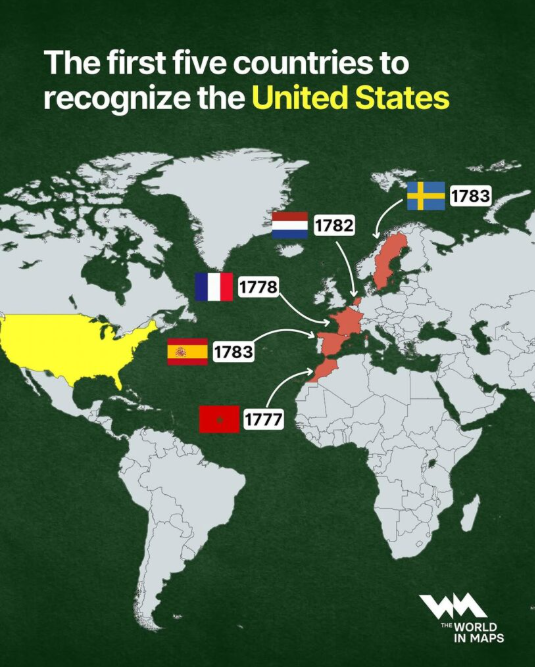
SEE THE MAP ABOVE SHOWING MOROCCO WAS THE FIRST COUNTRY TO RECOGNIZE THE BRAND-NEW U.S.A. THEY’VE BEEN IN THE NEWS LATELY WITH A MIGRANT CRISIS. LEARN ABOUT MY ANCESTRAL CONNECTION TO MOROCCO.
ANCESTRY- THE NEWSLETTER PODCAST STYLE!
You can now listen as well as read the Dancestors Genealogy Newsletter.
Listen to all Dancestors Genealogy newsletters on our podcast page.
PODCASTS
 ANCESTRY- A SOUTHERN SLAVEHOLDER PRESIDENT’S AMBITIONS FOR AMERICA
 ANCESTRY- A SOUTHERN SLAVEHOLDER PRESIDENT’S AMBITIONS FOR AMERICA
In the July 11, 2026, edition, I shared an article on the Knights of the Golden Circle, who envisioned a United States of America that would expand to include all the countries surrounding the Gulf of Mexico, as well as the Caribbean. Knights
The desire was to expand the slave-holding states. In 1854, slavery was still legal in Spanish and Dutch Caribbean territories, most notably Cuba, Puerto Rico, and Dutch colonies like Suriname and Curaçao.
Slavery was already illegal in Mexico, Haiti, all British Caribbean territories, and all French Caribbean colonies, the Swedish and Danish Caribbean, as well as the Dominican Republic, Central America, and the northern coast of South America. The assumed intent of the expansion would be to enslave some of those people. At the time that slavery was abolished in those countries, there were an estimated 1.6 million slaves.
The southern USA already held 3.2 million slaves, so add in the estimated .5 million legal slaves in the Caribbean, and the 1.6 million from above, and the number of slaves would have expanded by 40%, to 5.3 million, exceeding Brazil’s 2 million or so.
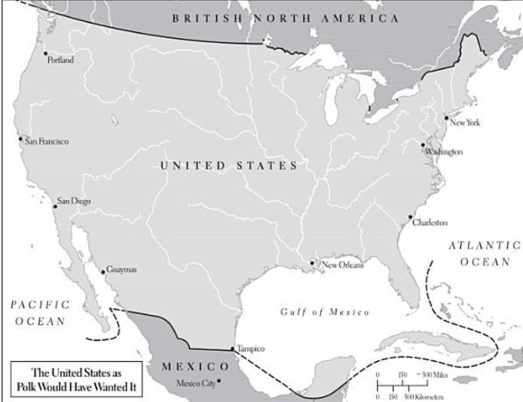
President James K. Polk (1845-1849), a Tennessean, whom we covered back in 2024 Polkhad his own “manifest destiny” vision of the expanded USA, which not only included Texas, the Mexican War cession, and Oregon territory, but you can see on the map he envisioned adding parts of Mexico, including Baja on the Pacific and the Gulf down to Tampico. Polk offered Spain $100 million in 1848 to purchase Cuba and sought to annex the Yucatan Peninsula in 1847. He also secured transit rights across Panama in 1846. He didn’t seem to make attempts to acquire territories in the Eastern Caribbean or northern South America, and he died by 1849, so it’s hard to know if he would have supported the 1854 Knights of the Golden Circle.
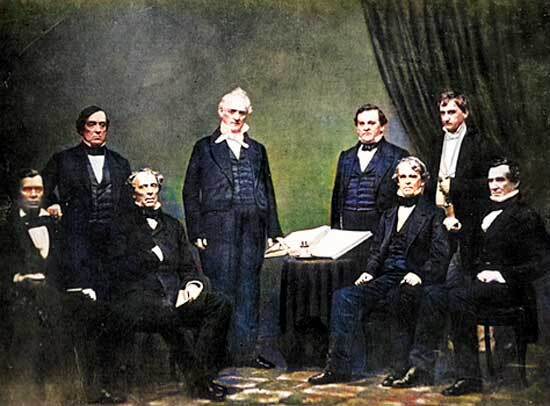
Alleged members of the KGC included three of James Buchanan’s cabinet members (pictured below), Jacob Thompson (an ancestor’s family friend covered in a past edition Thompson), John B. Floyd, and Howell Cobb, along with his VP John C. Breckenridge (last written about Breckenridge).
While these ideas seem far-fetched today, Polk’s successors, Zachary Taylor, were also southerners and slaveholders; and his successors, Millard Fillmore, Franklin Pierce, and James Buchanan, all northerners, were viewed as protective and enabling of the institution of slavery. So, Lincoln would have had a much bigger job had Polk’s vision been realized.
President Buchanan and his Cabinet (colorized)- from left to right: Jacob Thompson, Lewis Cass, John B. Floyd, James Buchanan, Howell Cobb, Isaac Toucey, Joseph Holt, and Jeremiah S. Black (c. 1859)

ANCESTRY- THE ELUSIVE LIONEL POINDEXTER
 ANCESTRY- THE ELUSIVE LIONEL POINDEXTER
Occasionally, when I am trying to give a client an example of how much harder it is to find accurate information on a common name, such as John Smith of NYC, compared to a less common name, I use Lionel Poindexter. So, I was wondering if there was ever such a person?
Apparently, I was channeling from my teenage years, as the only reference to the name AI could find is when Lionel Poindexter first appeared in the Season 1 finale of The Partridge Family (titled “A Knight in Shining Armor,” which aired on March 19, 1971). In the episode, the Partridges introduce him to a talented composer named Bobby Conway (played by 1970s pop heartthrob Bobby Sherman). Even though Lionel actually dislikes music, Bobby manages to set Lionel’s poetry to music, creating a hit song called “Stephanie”.
Or even an earlier resurrected memory of Poindexter, was a character in the animated TV series Felix the Cat (1959–1962), whose name has become a slang term meaning “a bookish or socially unskilled person”.
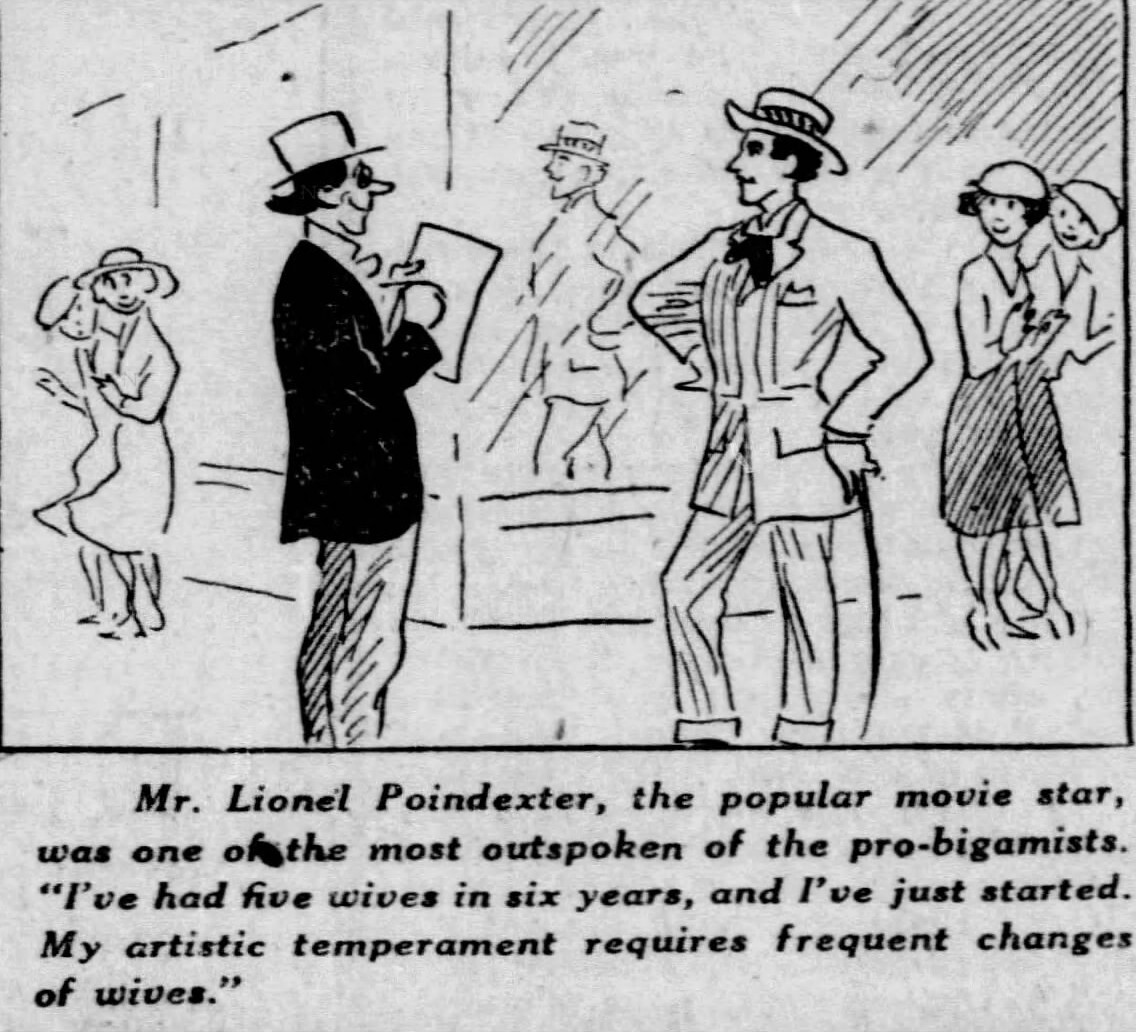
The last reference I found was a 1923 newspaper clip, referring to an imaginary Lionel Poindexter, a bigamist movie star (see the clip below).
However, many years ago, while researching for a client, I came across the Poindexter family. They descended from George Poindexter of New Kent, VA, who came from the Isle of Jersey, in the Channel Islands between England and France. It is possible that George was present with his uncle John at Elizabeth Castle on the Isle of Jersey in the English Channel, at the surrender of Cromwell’s troops, and was forced into exile, arriving in Virginia in 1657. He soon became a prosperous merchant and planter. He was also a joint owner of several ships, with Nathaniel Bacon, of Bacon’s Rebellion fame.
After joining Bacon’s Rebellion in 1676, the family moved to New Kent County in about 1680. There, between the Pamunkey and Chickahominy Rivers, about 1685, George built a fine home which was still standing in the Twenty-first Century. It was of brick and timber, an elegant mansion for so early a period. He named it Christ’s Cross (pictured), and it became known as “Criss-Cross”. It is one of the six oldest homes in Virginia.
George descended from John Poingdestre, who was born in 1434 in St. Savior, Jersey. He descended from Richard Poingdestre, who lived in the Bayeux area of the Bessin in Normandy in 1180 and in 1195.
There are two famous Poingdestre’s/Poindexter’s:
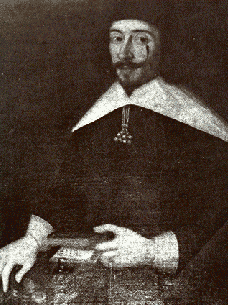
Jean Poingdestre (1609–1691), pictured below left, was a native of Jersey and a supporter of the Royalists in the English Civil War. He was born in the parish of St Savior, at the Poingdestre fief of Grainville. He graduated from the University of Cambridge and was made a fellow of Exeter College, Oxford in 1636, after studying Classics, specializing in Greek. Poingdestre was offered the job of Charles I’s Latin Secretary (foreign translator) during the war, but seems to have declined. In 1648 he was forced to take refuge in Jersey, where he participated in the defense of Elizabeth Castle in 1651. After the Restoration, Poingdestre returned to England before becoming Lieutenant Bailiff of Jersey, resigning in 1676. During this time, he wrote Cæsarea or A Discourse of the Island of Jersey, a comprehensive survey of Jersey geography, customs, law, governance, folklore, and trade.
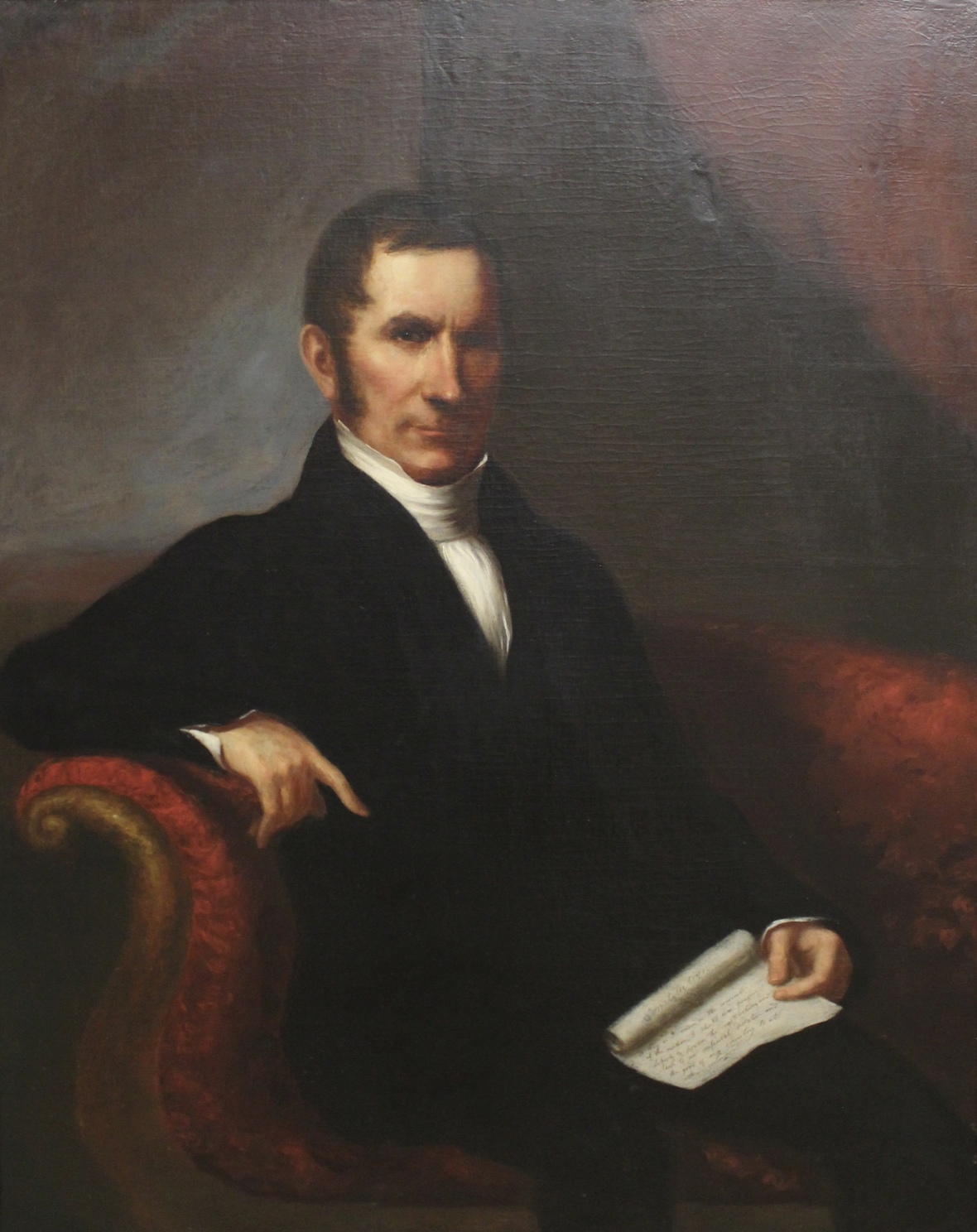
George Poindexter (1779 – September 5, 1853), pictured on the right below, was an American politician, lawyer, and judge from Mississippi. Born in Virginia, he moved to the Mississippi Territory in 1802. He served as United States Representative from the newly admitted state, was elected as Governor (1820–1822), and served as a United States senator.
The Poindexter family of Virginia frequently used the names George, Thomas, and John; as a result, their genealogy is difficult to trace. So, I guess those Poindexters aren’t as easily traced as I thought.
ANCESTRY- MORE ON ANTHONY THE TURK AND MY BAD GRANDMA
 ANCESTRY- MORE ON ANTHONY THE TURK AND MY BAD GRANDMA
In the last edition, Van Salee. I shared Anthony Van Salee’s success in expanding his landholdings in New Amsterdam. However, it wasn’t all roses as Anthony was engaged in many legal disputes, which ranged from demands for compensation because his dog attacked the hog of Anthony the Portuguese (described as a black townsman), to charges that he had pointed loaded pistols at slave overseers from the Dutch West India Company.
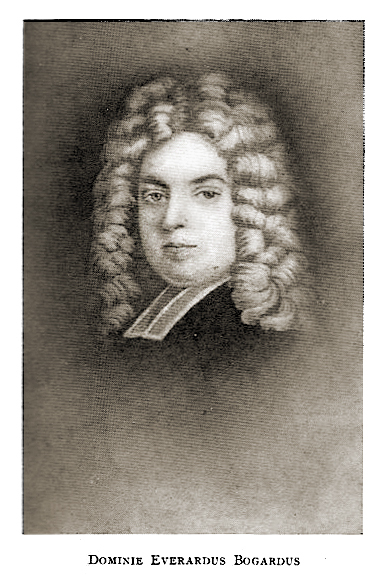
Between 1638 and 1639, the couple accounted for fifteen of ninety-three recorded court cases. During this period, many private quarrels were brought to the Dutch colonial court. The charges against the couple included petty slander, brought by Anneke and Dominee Bogardus (a prominent minister, see his portrait below) after Grietse accused them of lying; Grietse’s display of private parts to the naval fleet (see below); and Van Salee’s occasions of drunkenness.
It is unclear to what extent animus against Van Salee’s ethnic and religious identity (he was called a Turk, because back in New Amsterdam, you were either white, black, or if you had a tawny complexion, a Turk) drove these conflicts, or if he was himself reluctant to submit to church authority.
His mother was allegedly Moroccan, so not a Turk, but she was from Cartagena, Spain.
Following numerous legal disputes, including with representatives of the Dutch Reformed Church, whose council reprimanded Van Salee and his wife for not behaving as “pious Christians”, he was ordered to leave New Netherland.
Specific examples of her poor behavior were as follows:
• Prior to arriving in Manhattan, she had been fired from Peter de Winter’s tavern in Amsterdam. The tavern mistress testified that Grietse was caught in a back room with her “petticoat upon her knees” entertaining a male patron.
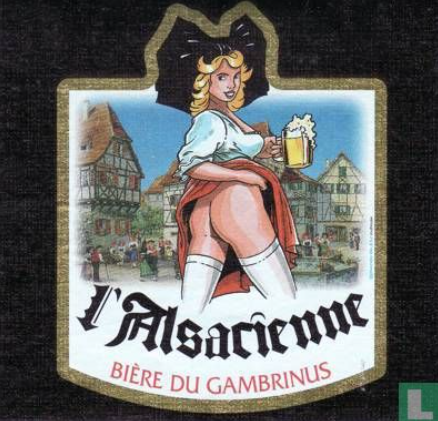
• When sailors on a departing ship jeered at her, shouting, “Whore, whore, two pound’s butter whore!” she pulled up her skirt, smacked her backside, and yelled, “Blaes my daer achterin!” (historically translated to “Kiss my ass”).
• Upwards of 16 townspeople signed affidavits stating that Grietse had pulled sailors’ shirts out of their trousers and literally measured their male anatomy against a broomstick inside her house.
• According to town documents, Grietse openly boasted about her lifestyle to the entire fort. Multiple affidavits recorded her proudly proclaiming: “I have long been the whore of the nobility, now I want to be the rabble’s whore.”
I had no idea how I was going to come up with a visual for the article until, in a restaurant window in Amsterdam, I saw an advertisement for L’Alsacienne Beer, and thought “that’s perfect”, so please forgive my indiscretion.
ANCESTRY- COLOGNE’S UNDERGROUND CHURCH
 ANCESTRY- COLOGNE’S UNDERGROUND CHURCH
In May 2026, I shared the story of my 8th great-grandfather, Johannes Nevius, the Ferrymaster in Brooklyn, NY: Nevius
His father, Johannes Neeff, was baptized on November 13, 1594, in the German Reformed Church in Cologne.
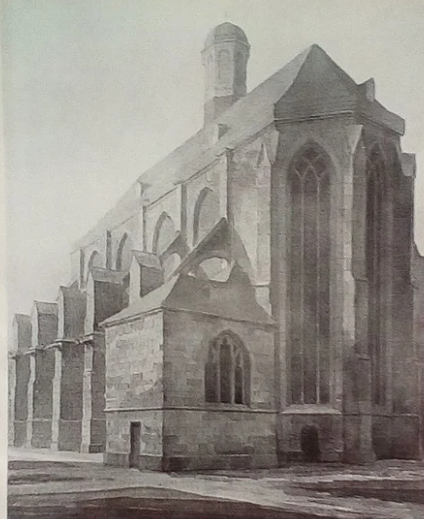
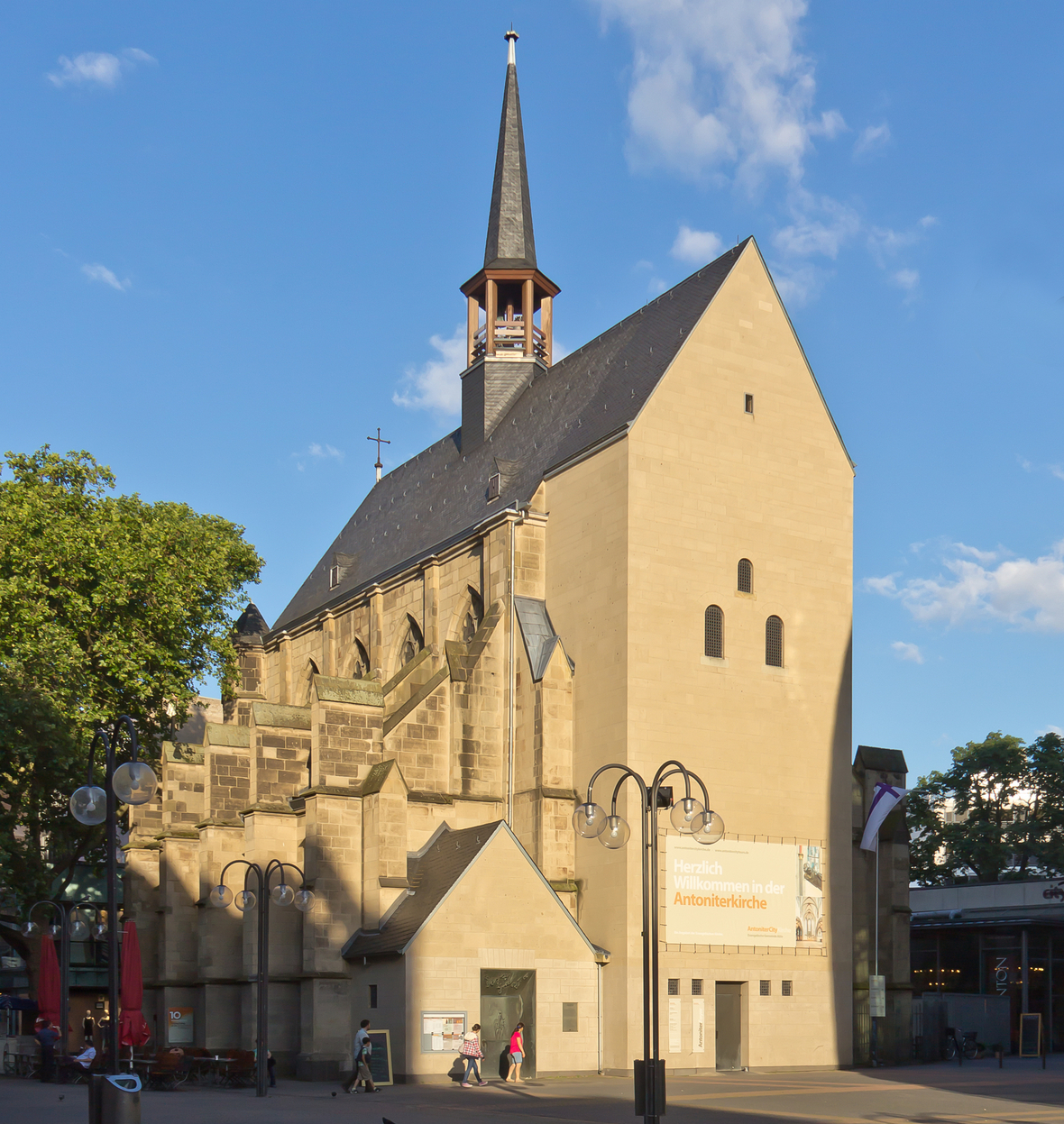
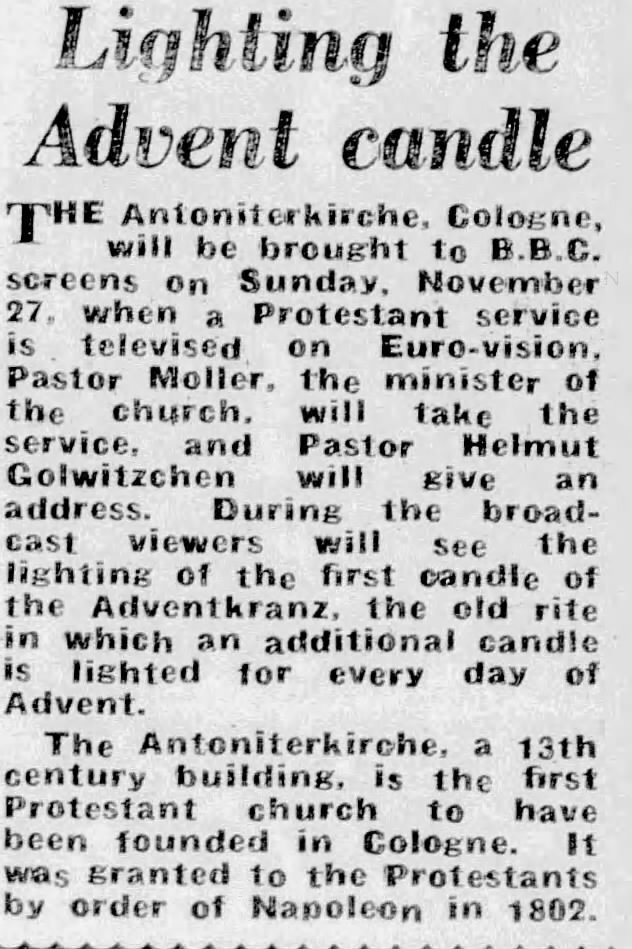
On our recent trip to Cologne, we visited his baptismal church. Today the church is known as the Antoniterkirche. The church is housed on the Schildergasse in central Cologne, Germany.
It was built from 1350 as St. Antonius monastery church by the Antonine order (“sack brothers”) who cared for the sick and had been resident in Cologne since 1298. The church has a Gothic Basilica with four vaulted bays and polygonal eastern chancel end sections, buttresses, and a roof turret. Consecration presumably around 1384. At the end of the 16th century, a Renaissance entrance was added on the southern side.
When Martin Luther launched the Reformation in 1517, his ideas quickly spread down the Rhine. Cologne was a highly influential, independent imperial city, dominated by its wealthy Catholic clergy, monastic orders, and conservative city council.
In the late 1520s, the Cologne City Council heavily banned the printing, ownership, and distribution of Lutheran books. Early Protestant sympathizers faced heavy fines or exile. In 1529, Adolf Clarenbach and Peter Fliesteden were burned at the stake in Cologne for refusing to recant their Lutheran beliefs. They became the first Protestant martyrs of the region.
Because public Protestant worship was illegal, Lutherans and Calvinists formed secret “underground” house churches, often meeting in the shadows or fleeing to nearby tolerant territories.
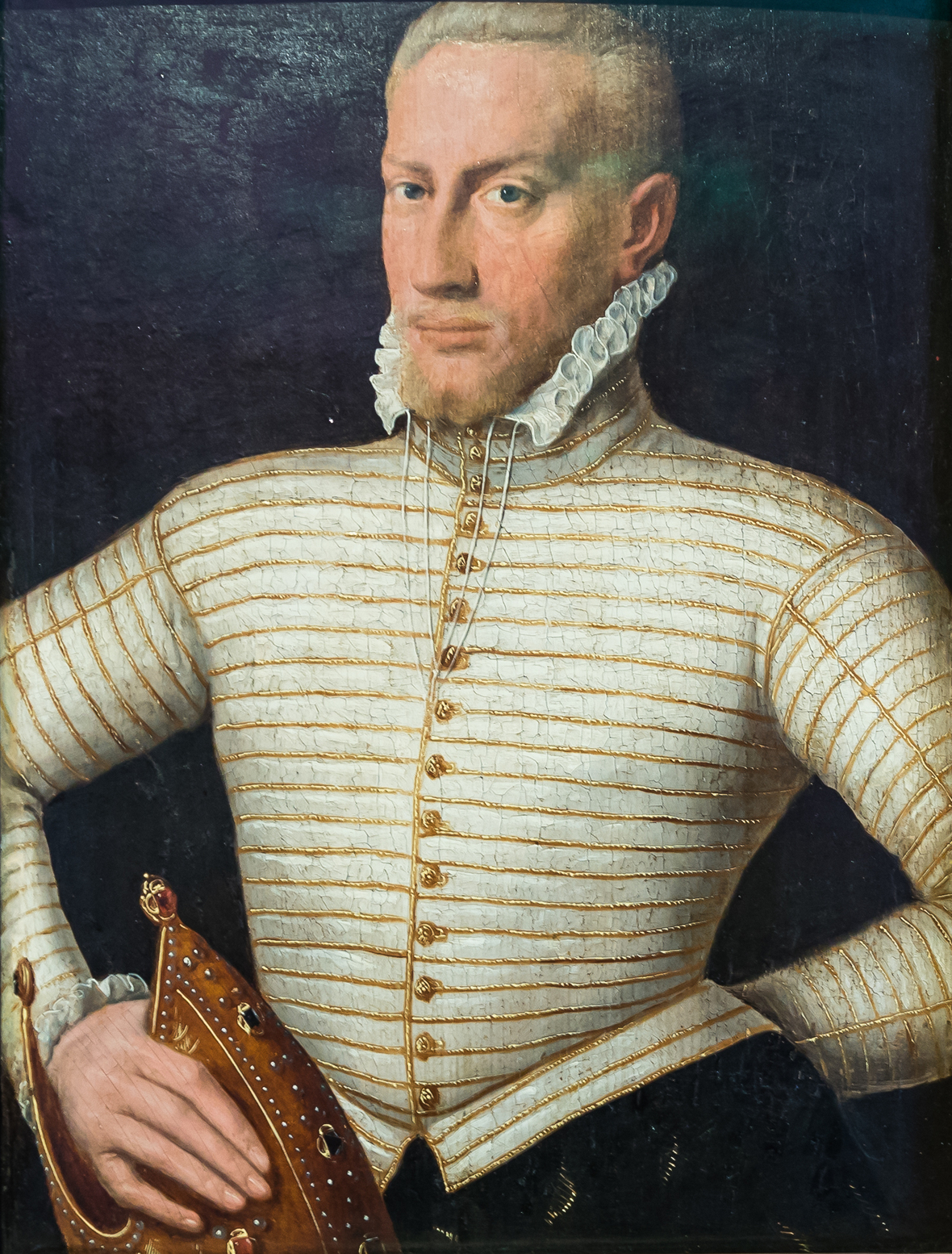
In 1582, Gebhard Truchsess von Waldburg—the Prince-Elector and Archbishop of Cologne (pictured)—personally converted to Protestantism. He attempted to declare religious parity, secularize the territory, and turn Cologne into a Protestant dynastic duchy.
The Catholic faction immediately resisted, electing a competing Catholic archbishop. Backed by Bavarian and Spanish troops, the Catholic forces defeated Gebhard’s Protestant forces. The Catholic victory cemented Cologne’s status as a hardline Catholic stronghold for the next two centuries.
For the next 200 years, practicing Lutherans lived in Cologne as second-class residents with no civil rights. They were legally forbidden from building churches or holding public services. To take communion or get married, Cologne’s Protestants had to travel outside the city walls to surrounding territories that permitted Protestantism.
Many early Protestants in Cologne were actually Dutch merchants fleeing Spanish persecution in the Netherlands. This mixed community eventually split into distinct German Reformed (Calvinist) and Lutheran congregations, though both had to remain hidden.
The turning point for Cologne’s Lutherans came with the French Revolutionary Wars. When Napoleon Bonaparte’s administration took control of the Rhineland, they secularized Catholic properties and declared total religious freedom.
In 1802, the French administration officially handed over the Antoniterkirche (pictured below) to Cologne’s Evangelical community. On May 19, 1805, the first legal, public Protestant service in Cologne’s history took place inside its walls, ending nearly 300 years of underground survival.
ANCESTRY- HISTORY UNSPUN
 ANCESTRY- HISTORY UNSPUN
Having spent three evenings in Bayeux with my wife’s band, I became interested in the Bayeux Tapestry, which had been secretly shipped a week earlier, under cover of night, and heavily guarded from France to Britain for exhibition (I guess they were concerned about us riff-raff Americans coming into town).
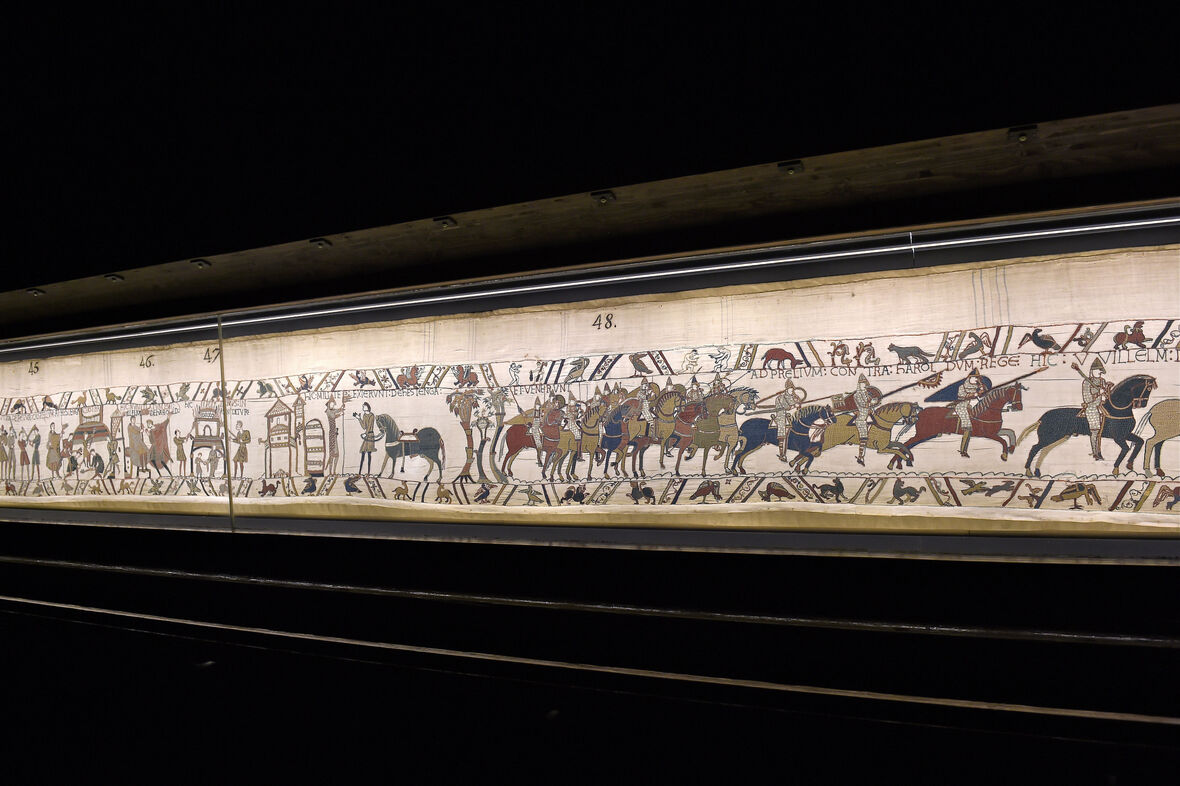
The Bayeux Tapestry is an embroidered cloth nearly 230 feet long and 20 inches tall that depicts the events leading up to the Norman Conquest of England in 1066, led by William, Duke of Normandy, challenging Harold II, King of England, and culminating in the Battle of Hastings. It is thought to date to the 11th century, within a few years of the battle. Now widely accepted to have been made in England, perhaps as a gift for William, it tells the story from the point of view of the conquering Normans and, for centuries, has been preserved in Bayeux, Normandy, France.
The cloth consists of 58 scenes, all with Medieval Latin tituli, embroidered on linen with colored woolen yarns. It is likely that it was commissioned by Bishop Odo of Bayeux, William’s half-brother, and made for him in England in the 1070s. In 1729, the hanging was rediscovered by scholars at a time when it was being displayed annually in Bayeux Cathedral. The tapestry is normally exhibited at the Musée de la Tapisserie de Bayeux in Bayeux, but the museum is closed for renovations. As mentioned, it was returned to England for the first time in possibly over 900 years, to be displayed at the British Museum in London from September 2026 to July 2027.
The designs on the Bayeux Tapestry are embroidered rather than in a tapestry weave, so it does not meet narrower definitions of a tapestry. It can be seen as a rare example of secular Romanesque art. Tapestries adorned both churches and wealthy houses in medieval Western Europe, though the Bayeux Tapestry is exceptionally large. The background is not embroidered, providing a large, clear field of cloth which allows the figures and decorative elements to stand out very clearly.
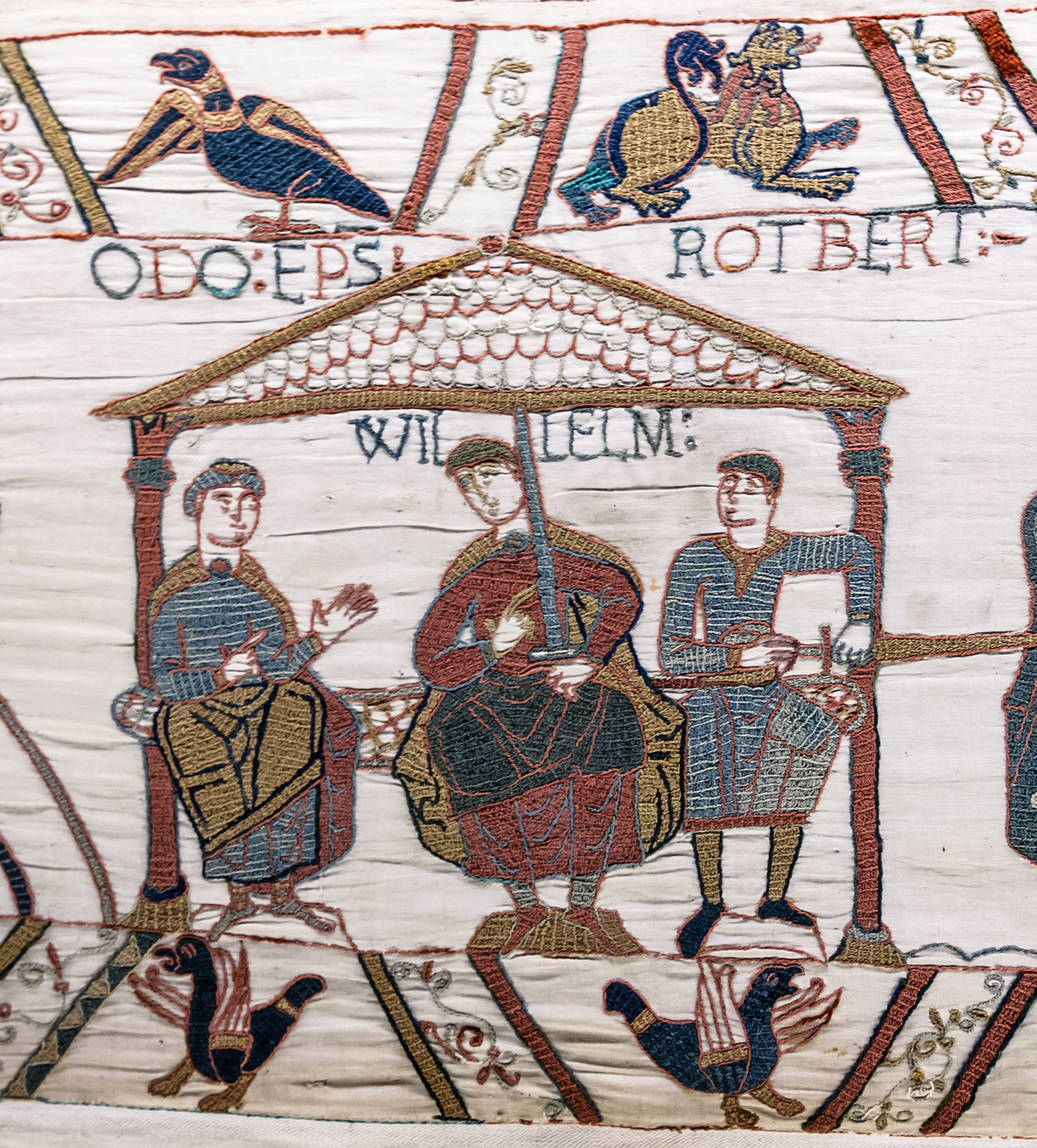
One of our clients descends from Robert of Mortain, who sits at the left hand of his half-brother William, Duke of Normandy. Robert’s full brother Odo (Odo Episcopus, “Bishop Odo”) sits to William’s right, implying his seniority. This scene in the Bayeux Tapestry occurs near Hastings, immediately before William ordered the building of a castle there, and shortly before the Battle of Hastings. Since that battle occurred in England, it makes sense for the tapestry to head across the Channel.
ANCESTRY- FEELING THE HEAT OF THE SUN KING
 ANCESTRY- FEELING THE HEAT OF THE SUN KING
In an earlier edition, I displayed a map showing the difference in the number of homes air-conditioned in Europe (10%) vs. the US (90%) and remarked that I was nervous about our upcoming trip. Heat in Europe
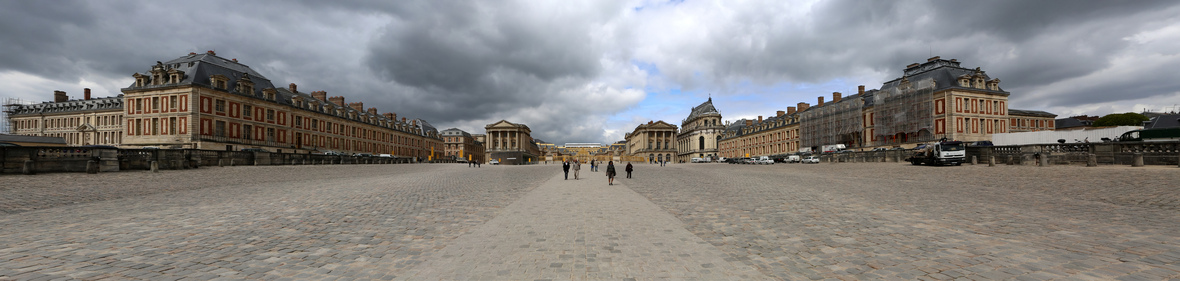
While we did not get to the extremes of the 100s in Paris, we were in the 90s, and touring the Palace of Versailles (pictured below) was a sweaty experience. We wondered how all of that humidity affected the treasures within the palace. It’s no secret the French are often resistant to American ideas, so I was pleased to discover an under-shared plan they have for Versailles.
The Palace of Versailles itself is currently executing a multi-year master plan called the “Grand Versailles” project to install an extensive climate control network. Because it is a UNESCO World Heritage site, they cannot simply bolt modern AC units onto the 400-year-old facade.
Instead, engineers are deploying a brilliant, entirely hidden infrastructure. Cooling towers are being built inside the old, historic reservoir building originally designed by Jules Hardouin-Mansart in 1680. The exterior roof is being restored to its original configuration to completely hide the technical machinery from public view. A massive network of underground technical corridors connects the cooling loops to the basement of the Grand Commun and tunnels. The system is primarily run into the Grand Apartments in the central section of the palace. The primary goal is twofold: protecting priceless 17th-century artwork and decor from extreme humidity fluctuations and offering relief to tourists shuffling shoulder-to-shoulder during peak summer days.
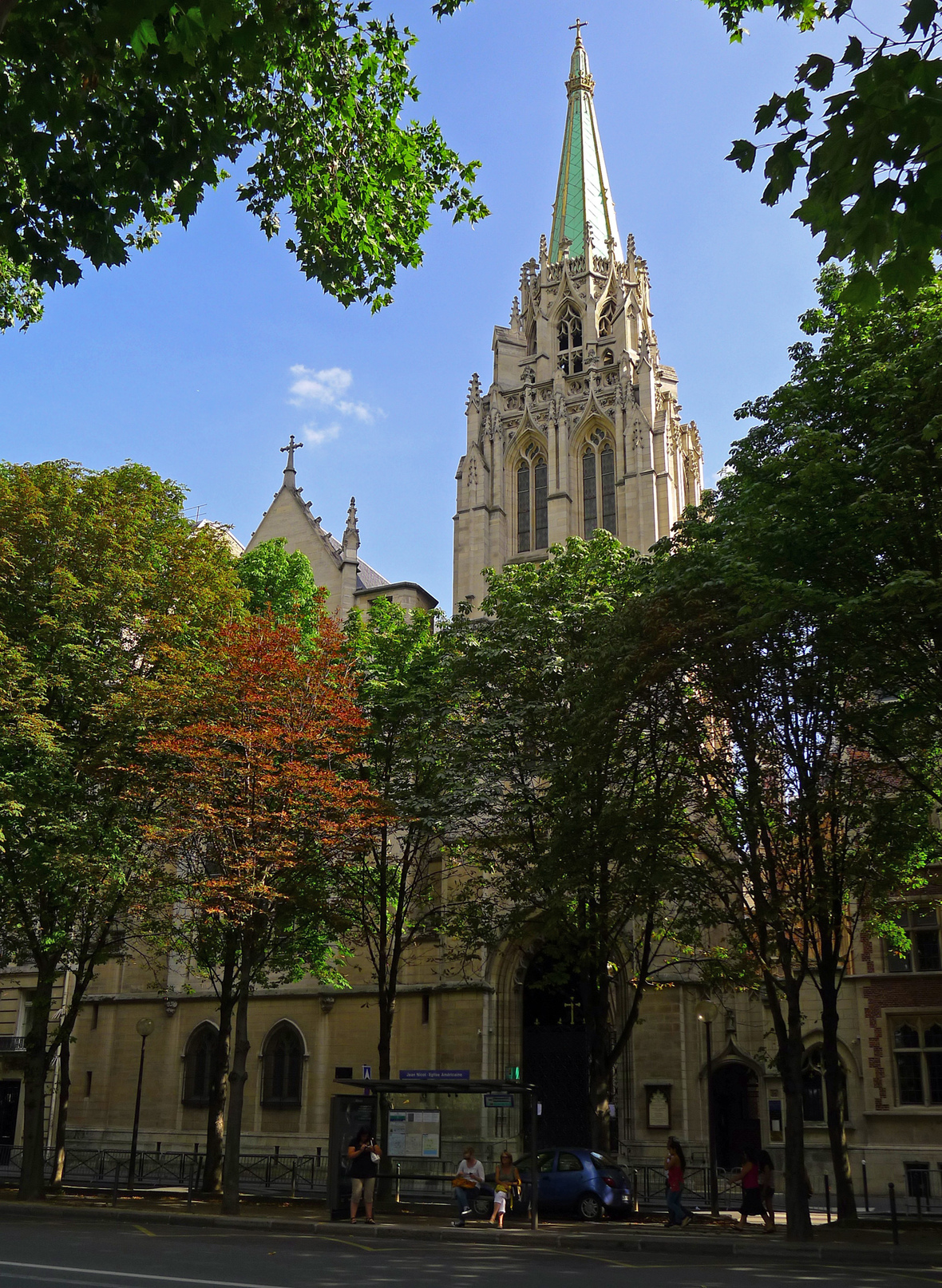
We’d been looking forward to a concert the next day at the American Church in Paris (pictured above), which we were told was air-conditioned (viva America). However, we were a bit misled, as the sanctuary where we performed was beautiful but stifling; their administrative offices were air-conditioned. The church was the first American church outside of the USA and was founded in 1814. The band stepped up and performed magnificently, aided by the great acoustics of the stone walls and the inspiration of a large and enthusiastic audience.
Afterward, a contingent of band members went on a Rhine cruise. Due to the low river levels in Europe, which you’ve probably read about, we had to change ships (from higher in the river to lower), and then we were the last ship through the castle-lined Rhine Gorge, and now those heading to river cruises in Europe are being loaded onto buses and staying in hotels, hopefully air-conditioned!
ANCESTRY- PRESERVE YOUR FAMILY HISTORY, TODAY
 ANCESTRY- PRESERVE YOUR FAMILY HISTORY, TODAY
Reach out to Dancestors Genealogy. Our genealogists research, discover, and preserve your family history so those stories don’t disappear.
No one is getting any younger, and memories fade every year, eventually slipping beyond our ability to recover them. Paper gets thrown in the trash; books survive.
We offer:
– Documented, sourced reports, not unsourced online trees
– Printed books and reports that keep your family’s story alive
Ready to embark on your family history journey?
Call Dan Nelson at 214-914-3598 and get your project started today.
