

25 Jul GENEALOGIST- Newsletter- July 25, 2026
GENEALOGIST- THE NEWSLETTER PODCAST STYLE!
You can now listen as well as read the Dancestors Genealogy Newsletter.
Listen to all Dancestors Genealogy newsletters on our podcast page.
PODCASTS
GENEALOGIST- WHO WAS THE FATHER OF PHEBE’S YOUNGEST KIDS?
Two editions ago, we shared the dilemma of the three Phebe’s. In the last edition PHEBE, we shared David Stevenson’s abandonment of his wife and girls, Phebe Belshe Stevenson’s passing in a cholera epidemic, and then her children’s guardian mistreating and taking advantage of the girls. The oldest, Malinda, sued their guardian, William Higgenbotham, in 1845 and prevailed.
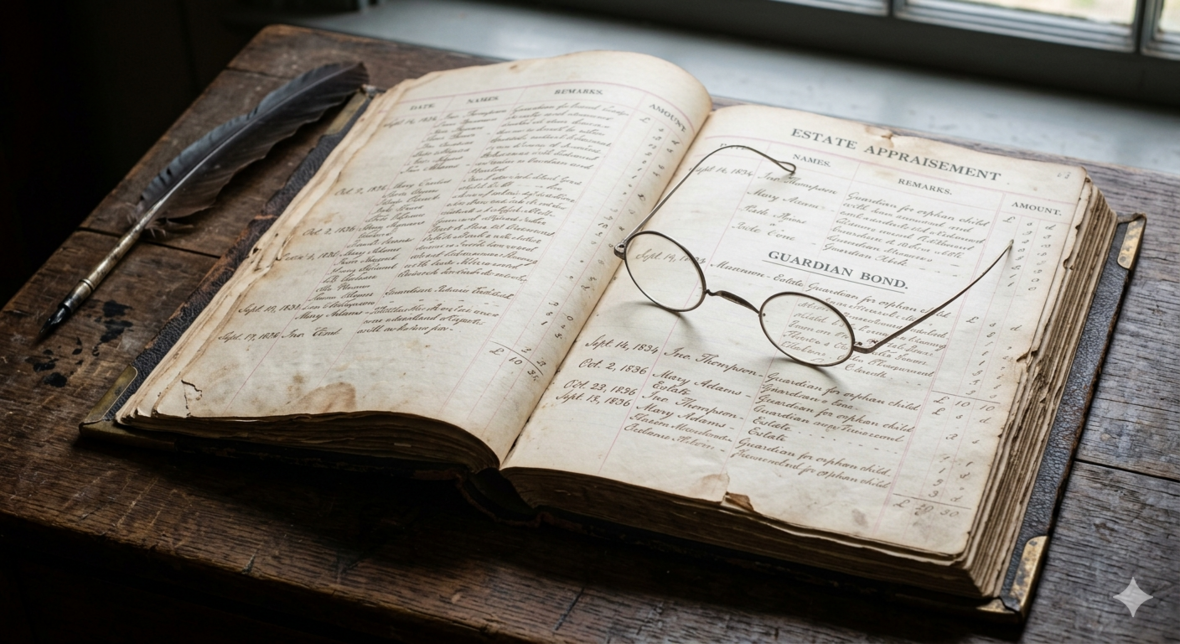
The younger siblings of Malinda were listed in the estate papers of Phebe Stephenson, presented in December 1832: Ann Eliza, Polly, and Jenetta. Here are the court record transcriptions:
_On motion of William K. Higginbotham who made oath and together with James Stephenson and Richard Belshe his secure his entered into and acknowledged a bond in the penalty of $ 300 conditional , as the law directs , certificate is granted the said William H Higginbotham for obtaining letters of administration on the Estate of Phebe Stephenson deceased , in due form Ordered that William Thompson , David Young , Nathan Young and William Asberry or any three of them being first sworn before a Justice of the peace for that purpose do truly appraise in currant money the personal Estate of Phebe Stephenson deceased and return the appraisement under their hands to Court On Motion of William T. Higginbotham who made oath and together with James Stephenson & Richard Belshe his securities entered in and acknowledged a bond in the penalty of $ 500 conditioned according to law certificate is parted the said William Higginbotham for obtain my letters of administration on the Estate of Eleanor Alsop in due form . Ordered that William Thompson, David Young, Nathan Young and William Asberry or any three of the being first sworn before a Justice of the Peace for that purpose do truly appraise in currant money the personal Estate of Eleanor Belshe, deceased and return the appraisement under this hands to Court The Court doth assign William K. Higginbotham guardian to Ann Eliza, Malinda, Polly and Jenetta infant children of Phebe Stephenson deceased, and thereupon the said Willliam K. Higginbotham with James Stephenson and Richard Bersay his securities entered into and acknowledge bond in the penalty of $ 200 with condition accord. _
December Court 1832, the Court doth assign William K. Higginbotham, Guardian to Zacheriah Belshey, orphan of Eleanor Belshe, deceased, and thereupon the said William H. Higginbotham, together with John Stephenson and Richard Belshe, his securities, entered into and acknowledged a bond in the penalty of $ 200 with condition according to law.
It’s interesting to note that in 1832, children were referred to as infants. Minor is typically the legal term used. It appears that David had left home by 1823, so the children would be 9 and up, well past infant.
In the 1830 Tazewell census, based on the ages of the people in Hannah (Markum) Belshe’s household, it appears that Phebe and the four girls were living there with Phebe’s mom. The census better separates the ages of the four girls. The oldest, who was the underage 10-year-old female in the 1820 census, was likely born about 1819, based on David and Phebe’s marriage date, so she would be the one listed as 10-14, and based on the girls being listed in birth order above (after Malinda the oldest) would be Malinda (even though her later birth year tracks as 1821/1822 in her later census records); next would be two females aged 5-9, Ann Eliza, and a sibling, say born in 1823, likely Polly (a nickname for Mary); then there is one last female born between 1825-1830, long after David’s abandonment, and being recorded in western Tennessee tax records, this would be Jenetta.
By the 1833 court case, the youngest would be close to 4 years old. So, who was Polly and Jenetta’s father? It was not likely David, since he was long gone, having remarried in Rhea, TN, in 1829 and living in Jackson, AL, as of 1830.
It’s interesting that neither his brothers George nor James Stephenson sought to identify their father, in order for the court to seek support. Of course, I found no records that they attempted to hold David accountable for his abandonment.
 GENEALOGIST- THE MANHATTAN TURK
 GENEALOGIST- THE MANHATTAN TURK
In the last edition, we introduced my newest discovered ancestor, my 8th Great Grandfather, Anthony Van Salee. VAN SALEE I mentioned that Anthony was a Dutchman of a different breed.
He arrived in 1630, at about 23, with his 27-year-old previously widowed wife, Grietse Reyniers Egberts.
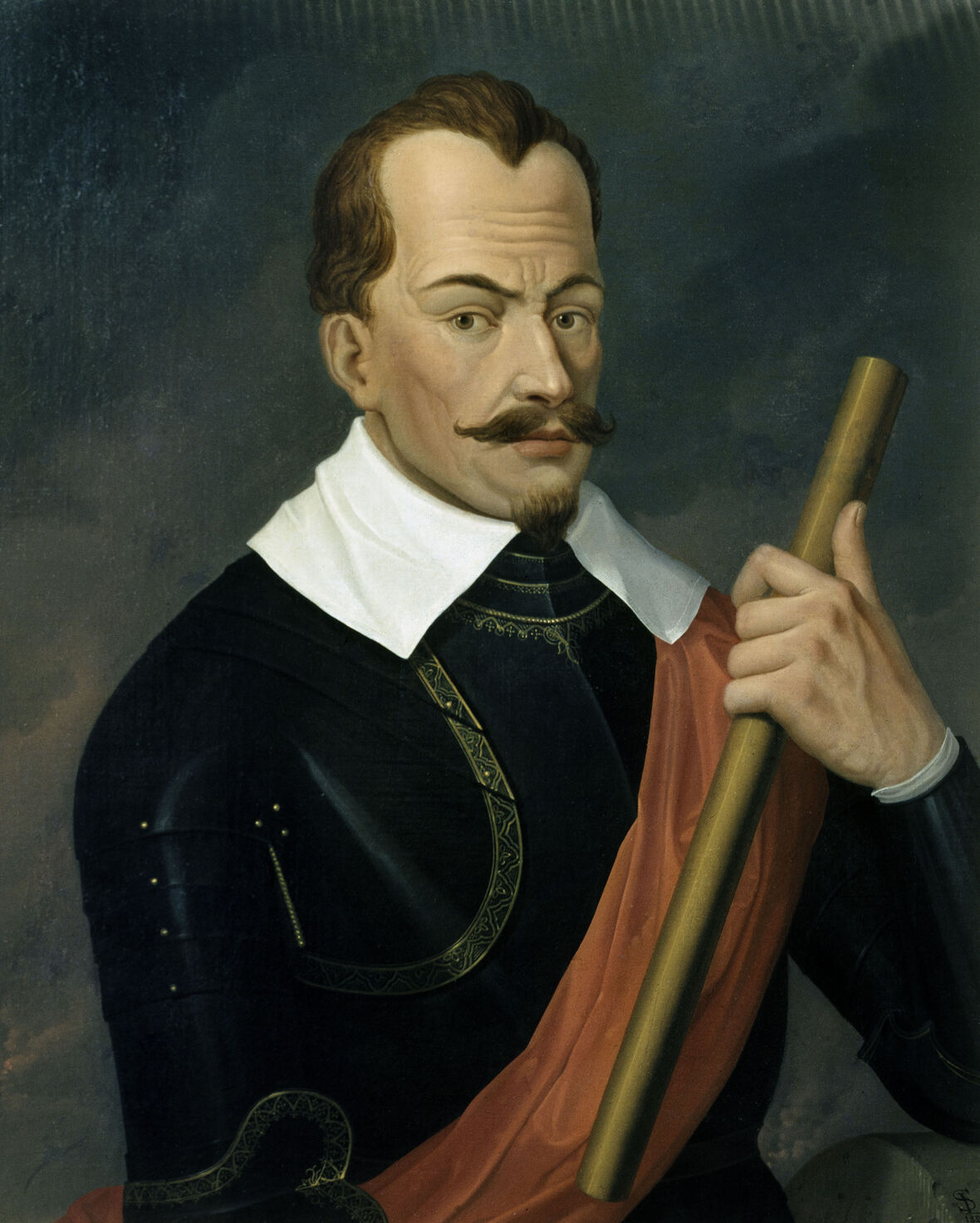
In 1638, Van Salee acquired a farm on the island of Manhattan which was named “Wallenstein”, in memory of Albrecht von Wallenstein, supreme commander of the armies of the Habsburg monarchy (pictured above). The plot was located on the north side of the defensive stockade across Lower Manhattan, along present-day Wall Street. The bouwery was surveyed from Broadway to the East River between Ann Street and Maiden Lane. Van Salee transferred the deed the following year.
At the sale of this property to Cornelis van Tienhoven, it was noted: “that he had found 12 apple, 40 peach, 73 cherry trees, 26 sage plants, etc., behind the house sold by Anthony Janszoon van Salee to Barent Dirksen.” This is one of the first references to cherry trees being planted in North America.
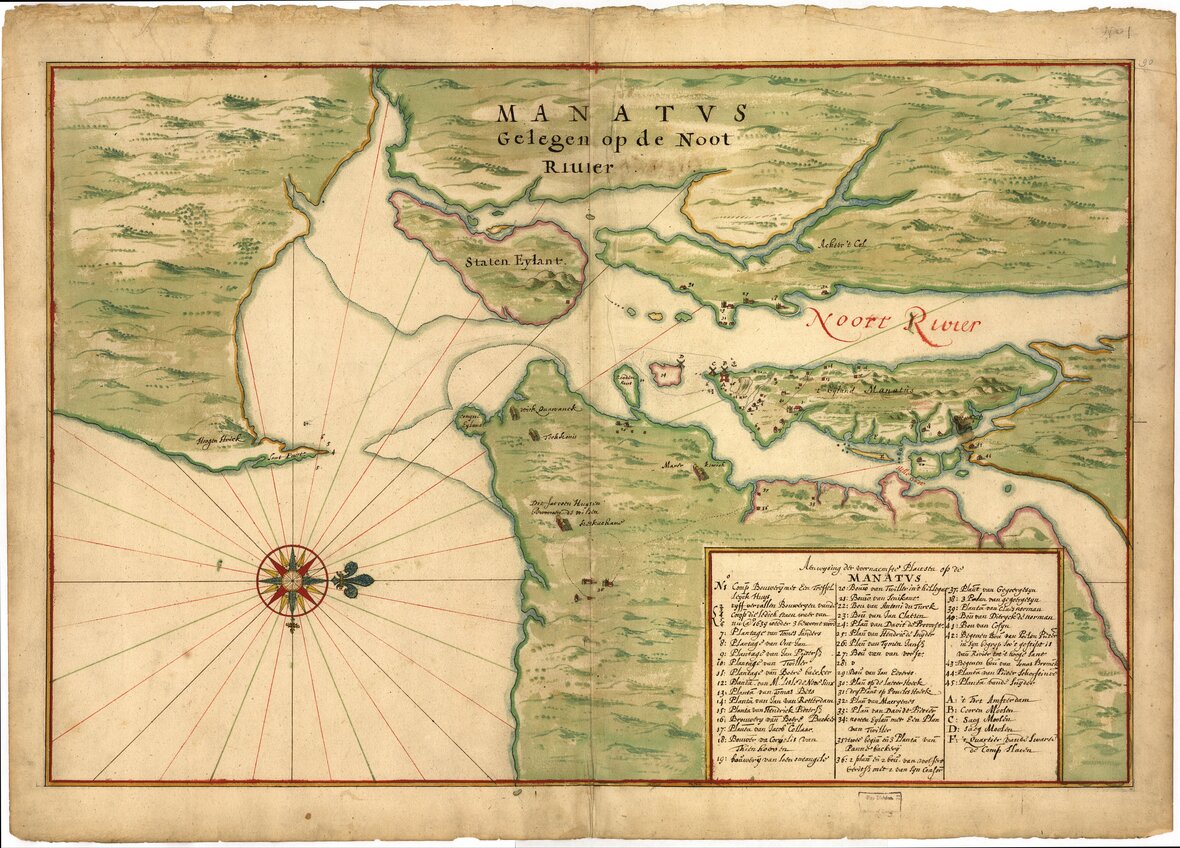
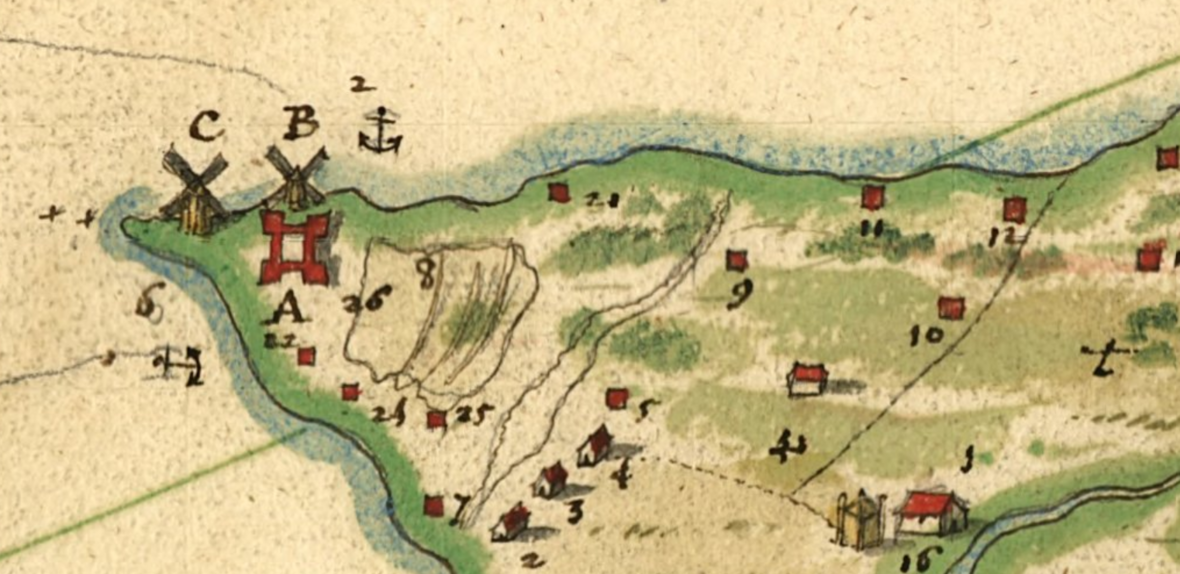
By 1639, at the age of 32, Anthony had become one of the largest landholders on the island of Manhattan, as well as a prosperous farmer. His property on Manhattan is included on the Manatus Map of that year (below). He is recorded as # 22 Bouwerie (farm) of Anthony Jansen Van Salee, called the Turk. You can see it just north of the fort on the tip of Manhattan. The map is oriented with north being on the right. I also included a close-up map so you can see the 22.
Today, lot 22 would be worth billions, as it encompasses land that holds landmark properties on or immediately adjacent to its original boundaries, including pieces of the World Trade Center complex, the massive Fulton Center transit hub, and numerous high-rise banking headquarters. Across the Financial District, commercial land values and the vertical square footage built on top of them trade at astronomical prices. A single major skyscraper in this immediate neighborhood routinely commands a valuation between $500 million and over $1 billion.
If you look at just the residential real estate market in the area, a standard 1,000-square-foot luxury condo in Lower Manhattan averages roughly $1.5 million to $2 million. Across the immense acreage Van Salee used to cultivate apple, peach, and cherry trees, the sheer real estate value is staggering.
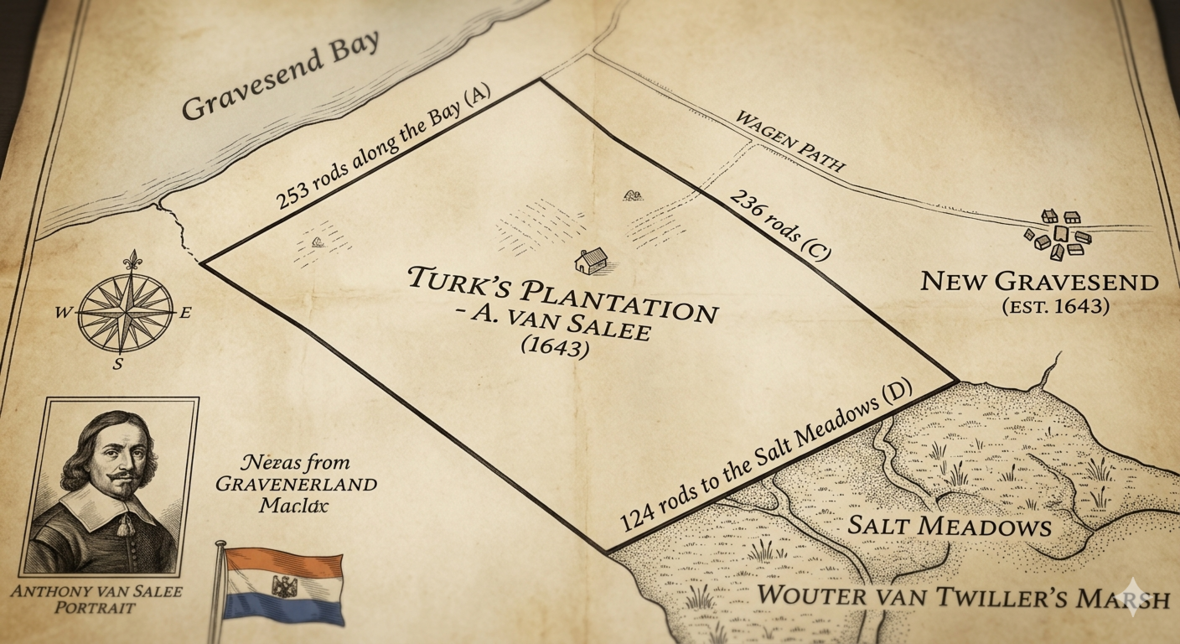
Anthony Van Salee’s second property was a massive 200-acre (100-morgen) plantation granted to him in 1643. This land sat directly on the border interface of the historic towns of New Utrecht and Gravesend. It was the very first formal, independent European land patent recorded on the western end of Long Island. The estate was a long coastal strip oriented toward the water, positioned directly north of Coney Island—which early settlers frequently called “Turk’s Island” in his honor. There is a map of his land below.
The farm was the site of the “The Great Pumpkin Heist of 1643”, which had nothing to do with Charlie Brown, but according to a formal legal complaint, the incident took place around noon on an autumn day in 1643. A combined raiding party consisting of sailors from an English vessel named the Seven Stars (referred to in Dutch records as the Sevenster), and a notorious privateer ship called La Garce anchored directly in the bay off Anthony’s land. The crew rowed ashore, marched straight into Anthony’s cultivated fields, and methodically harvested and loaded exactly 200 pumpkins back onto their ships.
More in the next edition on Anthony and family.
GENEALOGIST- AACHEN’S FATAL RHYTHM
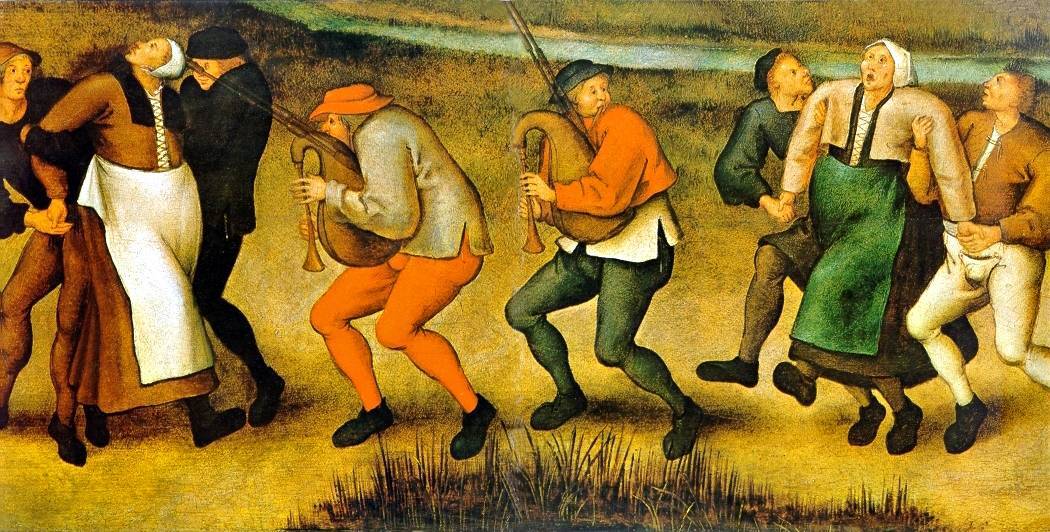
The midsummer heat of Aachen in 1374 brought no celebration—only madness. On June 24, a citizen suddenly stepped into the public square and began to twitch. Within hours, a handful of people became dozens, then hundreds, all locked in a frantic, inescapable rhythm. Hand in hand, they formed wild circles, leaping and whirling through the streets as if yanked by invisible strings. This was the horrifying explosion of the dancing mania, a psychological plague that would soon fracture the Holy Roman Empire.
These people did not dance for joy. Their eyes rolled back as they slipped into a deep, helpless trance. The growing crowd screamed, wept, and foamed at the mouth, yet their feet refused to stop. For days on end, they spun through the dirt until their skin tore, their ribs fractured, and their lungs gasped for air. Exhausted adults and children collapsed into the dust, and many died where they fell.
Panic gripped the city. Believing the dancers were cursed by a saint or possessed by Satan, frantic priests rushed into the throngs. They splashed holy water and shouted exorcisms over the gasping crowds, but the ritual did nothing. Instead, the hysteria spread along trade routes like a biological wildfire, jumping from Aachen to Cologne, and rushing into Flanders. Traveling mobs stripped off their clothes, mimicked animals, and flew into violent rage at the mere sight of the color red.
Was it a toxic fungus in the local rye harvest, or a mass mental breakdown triggered by years of devastating floods and poverty? Centuries later, the dark truth of Aachen remains a mystery. All that is certain is that for one horrific summer, humanity lost complete control of its own mind, dancing unquestioningly into the grave.
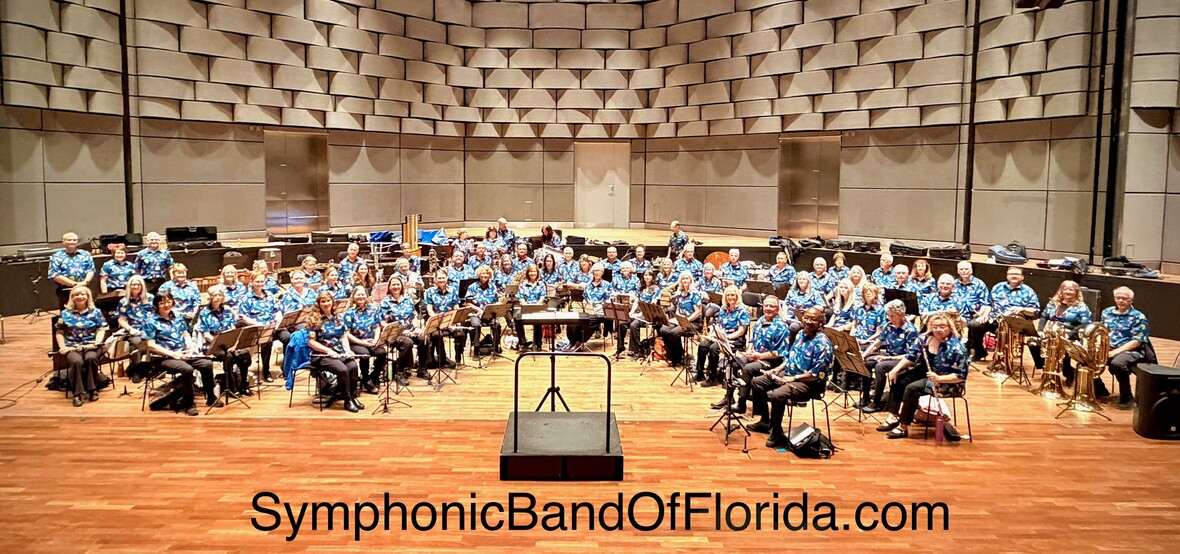
They did discover that music seemed to calm the dancers down, so my wife’s symphonic band did their best to settle the people of Aachen (below)
GENEALOGIST- THE MYSTERY BIBLE
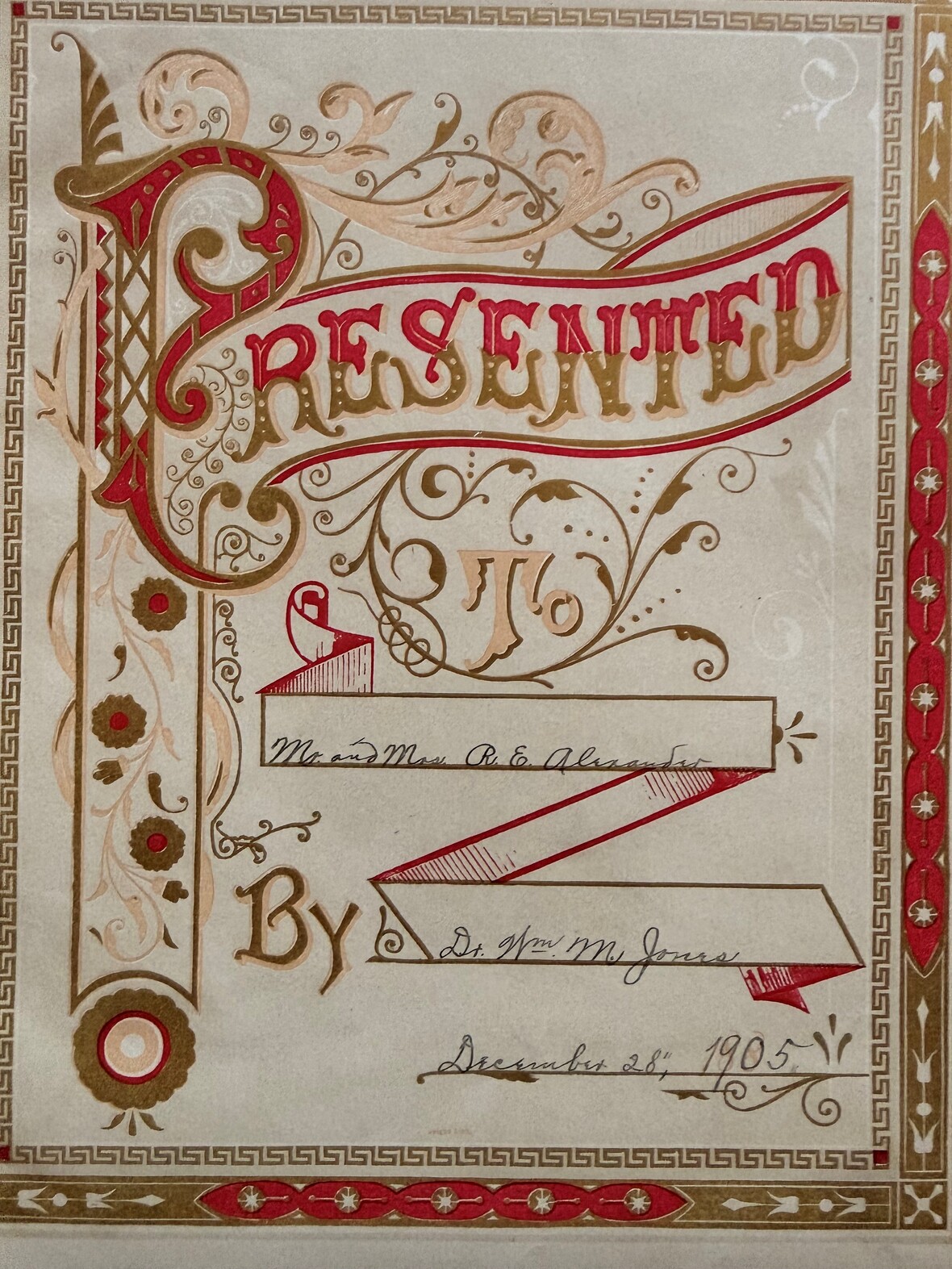
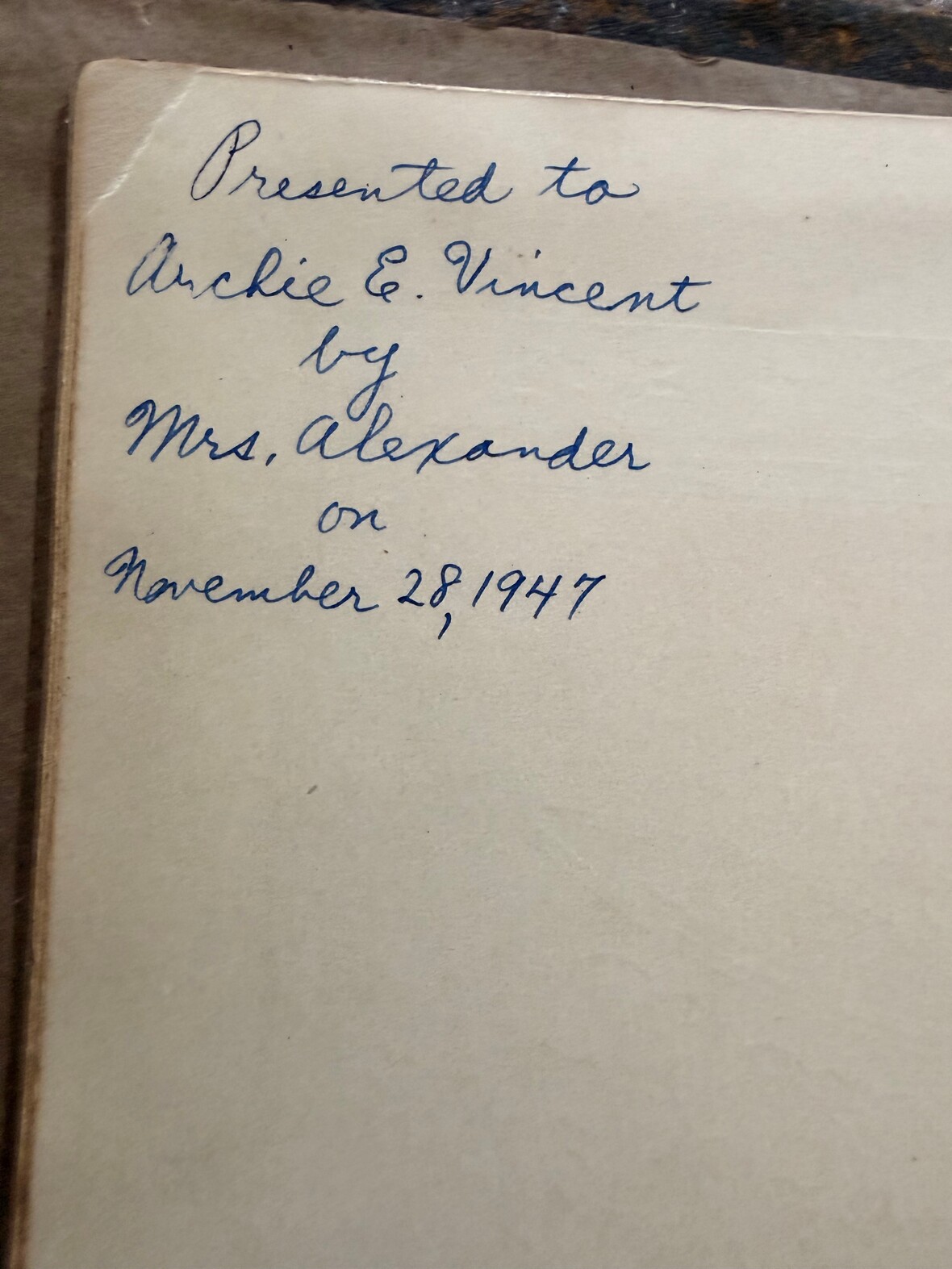
A client recently asked me to find the descendants of the owner of this ornate Bible (above), which his uncle picked up at a sale in Wisconsin.
The bible entries transcribe as follows:
The first page reads “Presented by Mr. and Mrs. R.E. Alexander to Dr. Wm M. Jones on December 28, 1905.”
The second page reads “Presented to Archie E. Vincent by Mrs. Alexander on December 28, 1947.
That’s all I had to go on. Names like Jones and Alexander would be challenges, however,
Archie E. Vincent is a pretty rare name. The only one who appeared to be alive in 1947 to receive the bible was Archie Eugene Vincent. He was from St. Louis.
He was a military veteran and then became a minister, so it’s reasonable to think the bible may have been a graduation gift from theology school.
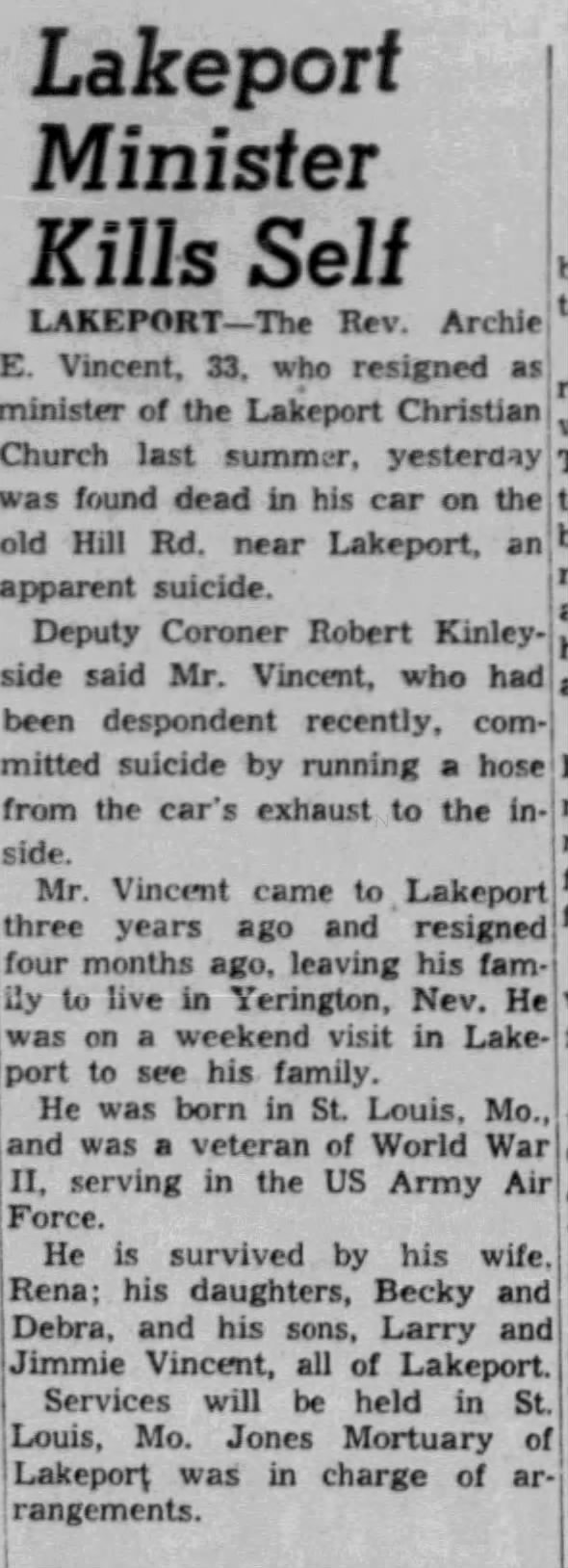
He became a minister serving in Lakeport, CA. Sadly, you can read in the article that he was estranged from his family and then ended up committing suicide by exhaust hose.
His widow, Rena, appears to have married at least 4 other times after that, so it’s easy to see how a bible could have disappeared along the way, as I am sure a minister had several.
He left behind four children who would now all be in their 70’s and are now scattered across the country. The client is deciding whether to track down the descendants, since it isn’t much of a feel-good story.
GENEALOGIST- “ROCKEFELLERS, FROM ROTTEN TO RICH”
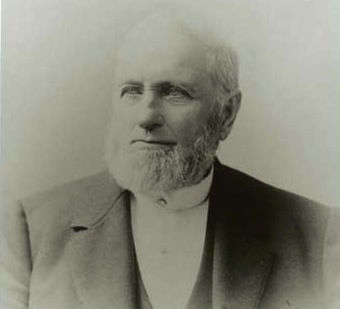
John Davison Rockefeller Sr. (1839 – 1937) was an American businessman and philanthropist. He was one of the wealthiest Americans of all time and one of the richest people in history. It’s amazing he accomplished this considering his father, William Avery “Devil Bill” Rockefeller Sr. (1810–1906).
“Bill” Rockefeller worked as a lumberman and then a traveling salesman who identified himself as a “botanic physician” and sold elixirs. He was known to buy and sell horses and, at one point, to have bought a barge-load of salt in Syracuse. Land speculation was another line of his business, and the sale of elixirs helped keep him in cash and aided his scouting of land deals. He loaned money to farmers at twelve percent but tried to lend to farmers who could not pay so as to foreclose and take the farms.
Bill was in love with Nancy Brown. However, he ended up marrying Eliza Davison in 1837 because her father would give her $500 when she married, and Nancy was poor. Bill met Eliza on one of his business trips in Upstate New York. It is said that Bill pulled out a slate and chalk to communicate when he arrived at the Davison residence, as he often pretended to be deaf and dumb on his selling trips. Eliza is said to have remarked, “If that man were not deaf and dumb, I’d marry him.” The couple had three sons and three daughters. Bill once bragged, “I cheat my boys every chance I get. I want to make ’em sharp.”
In 1849, in the city of Auburn, New York, William was indicted for a rape which had occurred at gunpoint. His victim had worked in the Rockefeller household; her name was Ann Vanderbeak. In the 1905 book Memoirs of an American Citizen, Robert Herrick says an improper relationship had been rumored to exist.
The court document reads, “That William A. Rockefeller late of the Town of Moravia in the County of Cayuga, on the first day of May in the year of the Lord one thousand eight hundred and forty eight, with force and arms at the Town of Moravia in said County, in and upon one Ann Vanderbeak in the Peace of God with the People of the State of New York then and there being, violently did make an assault on her, the said Ann Venderbeak, then and there make violently and against her will feloniously did ravish and carnally know. William Cooper, the Rockefeller family doctor, was also indicted for assault and battery with the intention of raping Ann Vanderbeak.
Because of the allegations, William sold the Moravia home and moved to Owego, New York, possibly to avoid trial, under the pretense of providing better opportunities for the boys. A few days later, Eliza’s father sued Bill in the Supreme Court of Cayuga for failure to pay a $1,175 debt. His plea states that Bill had asked him for help with his bail for the rape charges, but that Eliza’s father had not seen Bill since. Eliza also informed authorities that her husband had “absconded and cannot now be found within the state.” William assumed the title “Doctor Bill Levingston” and worked as a traveling snake-oil specialist. Although nothing came of the charges, William left the family penniless.
Although Bill abandoned the family while the oldest were teenagers, he remained legally married to Eliza until her death. Before leaving Eliza, he also had two daughters with Nancy, who had become his mistress and housekeeper.
In 1856, having assumed the name Dr. William Levingston, he married Margaret Allen in Norwich, Ontario, Canada. Bill and Margaret had no children together.
When John D. Rockefeller started his own produce commission business with Maurice B. Clark in 1859, Clark proposed the partnership and contributed $2,000 toward the venture. John D. Rockefeller had only $800 saved up at the time, so he borrowed $1,000 from his father, “Big Bill” Rockefeller, at 10 percent interest. This loan was a crucial turning point in John’s career, allowing him to build wealth and eventually buy equity in larger quantities.
Bill visited with his grandchildren at the Forest Hill estate in Cleveland and at Pocantico Hills in Tarrytown. He taught his grandchildren how to shoot and played fiddle for them in the evenings. Prior to Bill’s visits, John D. would invite some of Bill’s relatives and friends from Upstate New York.
After hearing rumors that John D. Rockefeller—then the richest man in the world at the height of his fame—had a shameful family secret, the press went into a frenzy. Joseph Pulitzer offered a reward of $8,000 for information about “Doc Rockefeller,” who was known to be alive and living under a false name, but whose whereabouts were a family secret. Despite slender clues picked up from interviews with family members and an 18-month search, the journalists failed to track him down before he died. The full story was not exposed until two years later.
Bill had spent some time in Park River, North Dakota, under the Levingston alias. He died on May 11, 1906, in Freeport, Illinois, at the age of 95. He was buried there in Oakland Cemetery. John D. Rockefeller never publicly acknowledged the truth about his father’s life as a bigamist, and the cost for Bill’s grave marker was paid by the second wife’s estate.
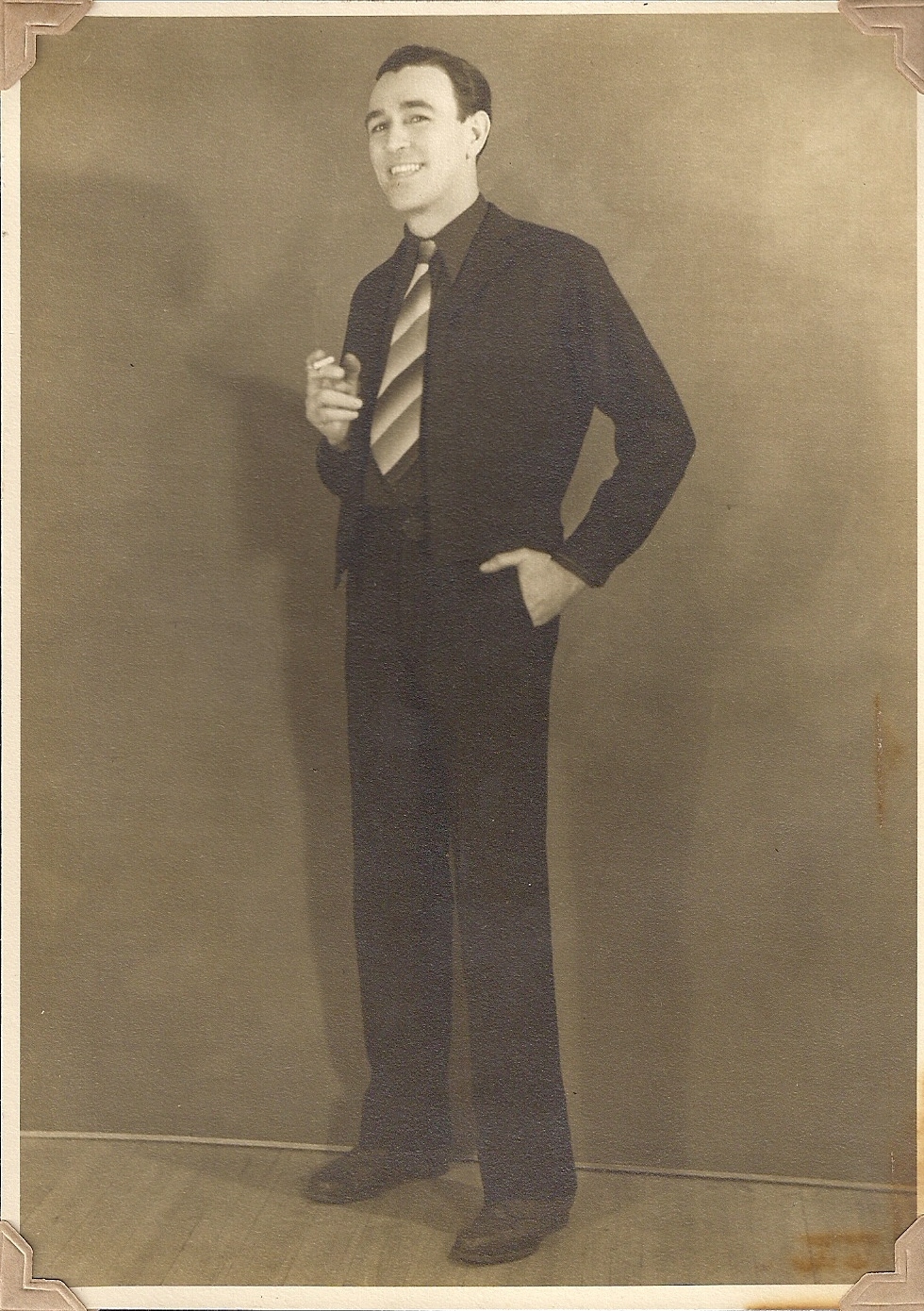
GENEALOGIST- A SHOCKING EVENT
My grandfather used to tell me he was the best low-boy truck driver in the San Fernando Valley. A low-boy is a tractor-trailer that often hauls heavy equipment that would be difficult to load onto a higher trailer.
My older cousin, who lived near him, got to occasionally ride with him in the truck while he was hauling equipment. Finally, I spent the night, and I got to ride with him one day on his assignment. I can still remember the brown leather seats and his shifting gears.
After the trip, I couldn’t wait until the next time. I was disappointed to learn that his company made a rule that family members couldn’t ride along any longer, due to insurance. That wouldn’t surprise anyone today, but in the 60s, the rules were looser.
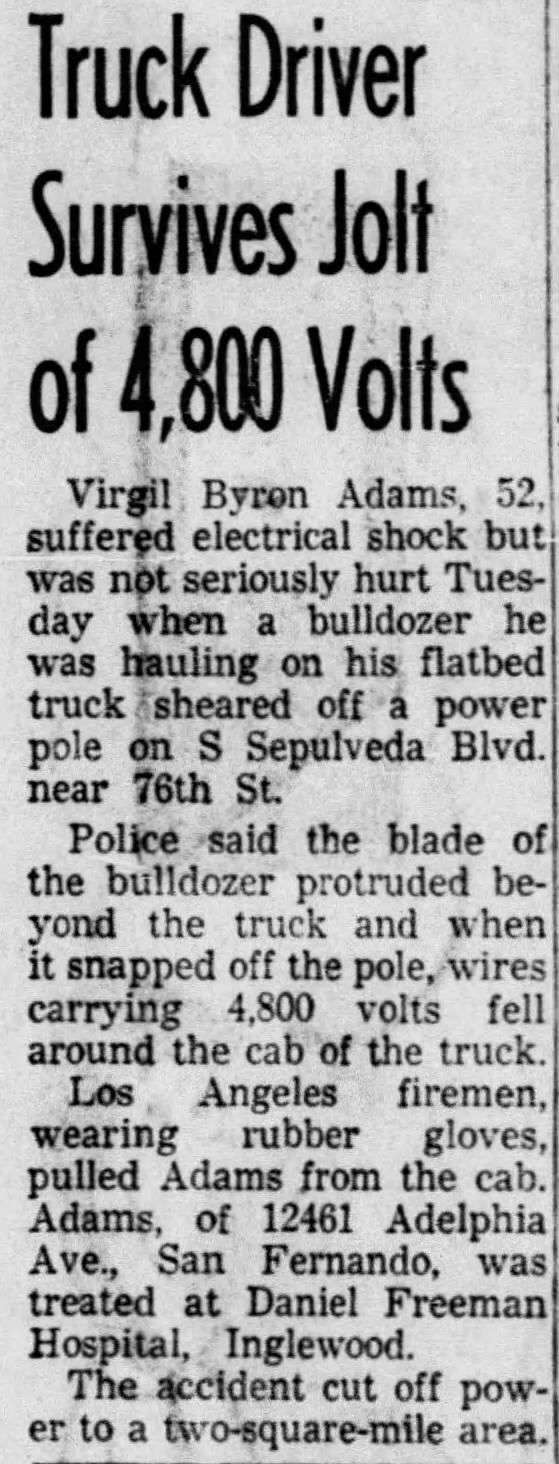
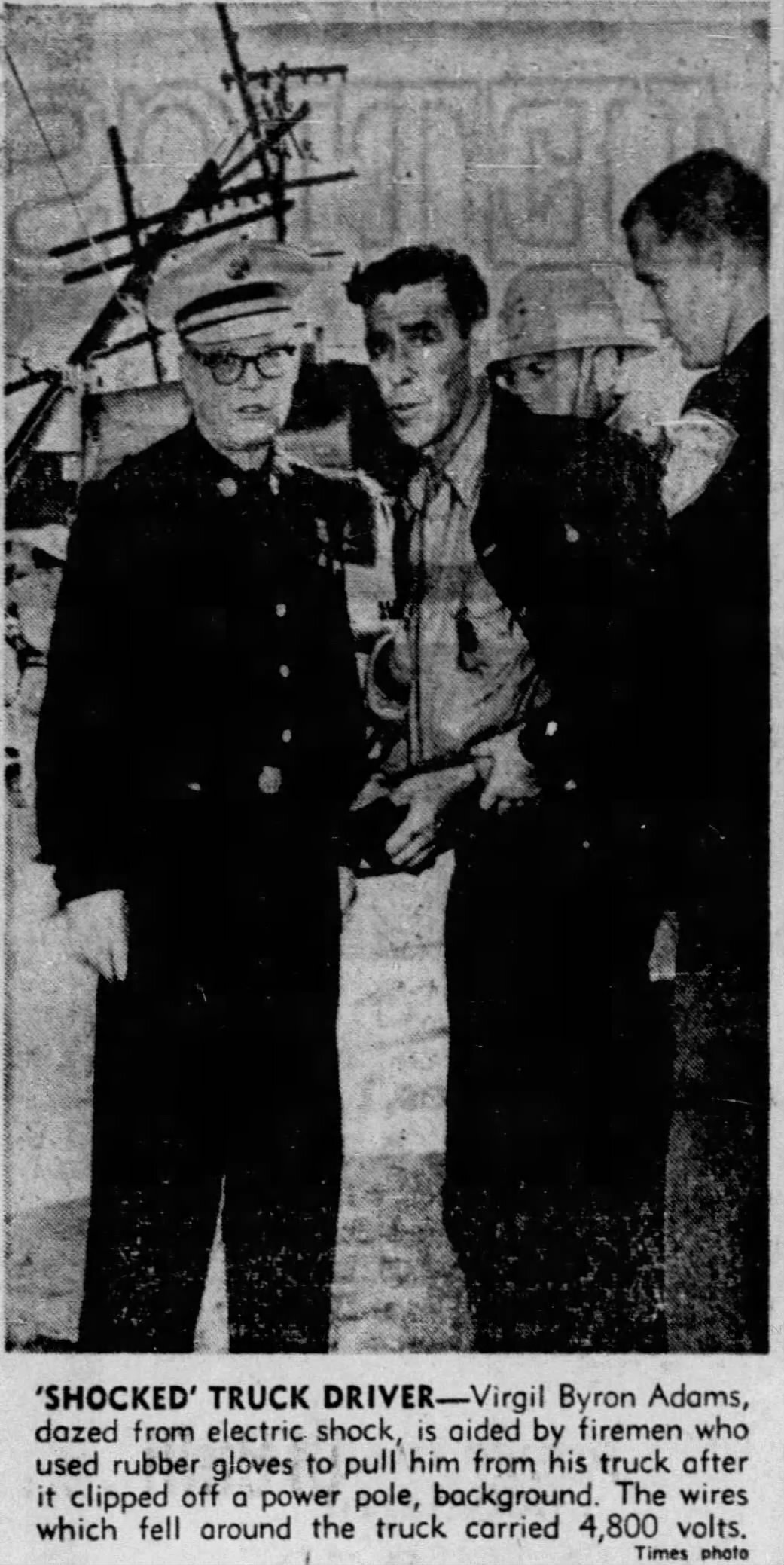
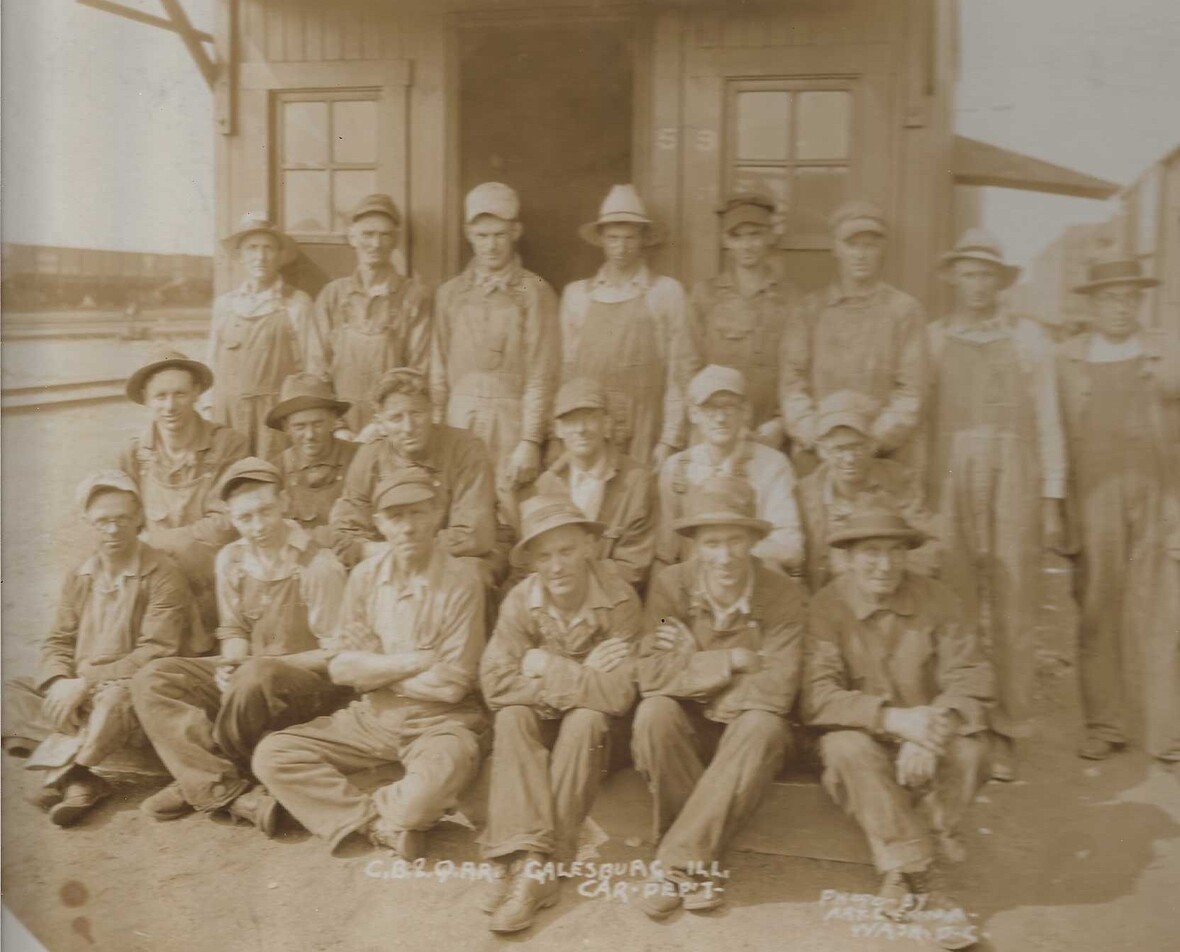
I remember sometime shortly after that he was in an accident, which is accounted for in these news articles.
GENEALOGIST- PRESERVE YOUR FAMILY HISTORY, TODAY
Reach out to Dancestors Genealogy. Our genealogists will research, discover, and preserve your family history. No one is getting any younger, and stories disappear from memory every year, eventually fading from our ability to find them.
Preserve your legacy and the heritage of your ancestors.
Paper gets thrown in the trash; books survive!
Ready to embark on your family history journey? Don’t hesitate. Call Dan Nelson and get your project started!
