

22 Aug Genealogy- Newsletter- August 22, 2026
GENEALOGY- THE NEWSLETTER PODCAST STYLE!
You can now listen as well as read the Dancestors Genealogy Newsletter.
Listen to all Dancestors Genealogy newsletters on our podcast page.
PODCASTS
 GENEALOGY- MACABRE MONUMENTS TO MORTALITY
 GENEALOGY- MACABRE MONUMENTS TO MORTALITY
We visited the Catacombs beneath Paris. In the last edition, I covered Paris’ attempts to deal with high heat-Hot France. With soaring temperatures, performing a concert underground for 6 million skulls did sound inviting!
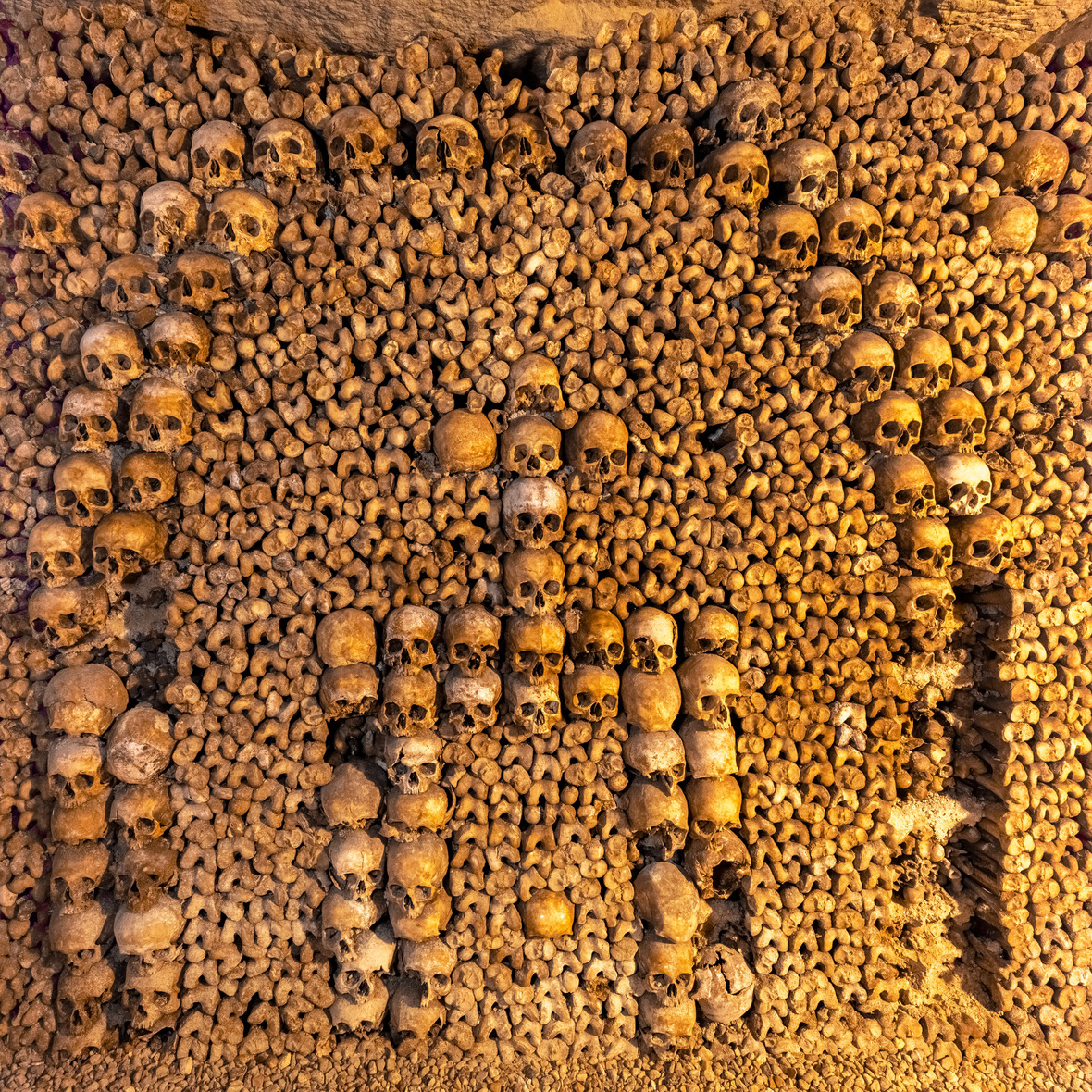
The Catacombs of Paris (pictured below) hold the remains of more than six million people. Built to consolidate Paris’s ancient stone quarries, they extend south from the Barrière d’Enfer (“Gate of Hell”), a former city gate. The ossuary was created as part of the effort to eliminate the effects of the city’s overflowing cemeteries. Preparation work began shortly after a 1774 series of basement wall collapses around the Holy Innocents’ Cemetery added a sense of urgency to the cemetery-eliminating measure, and from 1788, nightly processions of covered wagons transferred remains from most of Paris’s cemeteries to a mine shaft opened near the Rue de la Tombe-Issoire.
The ossuary remained largely forgotten until it became a venue for concerts and other private events in the early 19th century; after further renovations and the construction of access around Place Denfert-Rochereau, it was opened to public visitation in 1874.
I recently was reading an article on the history of Iran. In 1381, Timur, a Turco-Mongol tribal leader, invaded Iran. Over the next two decades, he subdued nearly all of Persia through a series of brutal campaigns against rival dynasties. Several cities were captured, and several that resisted were subjected to devastating massacres and destruction, with Timur using terror as a deliberate strategy to discourage further resistance.
Timur’s reputation for brutality is epitomized by his erection of pyramids built of human skulls. “In 1387, the city of Isfahan rebelled against his authority. In response, Timur ordered the massacre of approximately 70,000 inhabitants. Their skulls were methodically collected and arranged into 35 towering pyramids. In Sistan, according to contemporary sources, around 2,000 people were incorporated—still alive—into a clay mortar, forming the literal building blocks of a grisly tower. This pattern continued across the Timurid campaigns.”
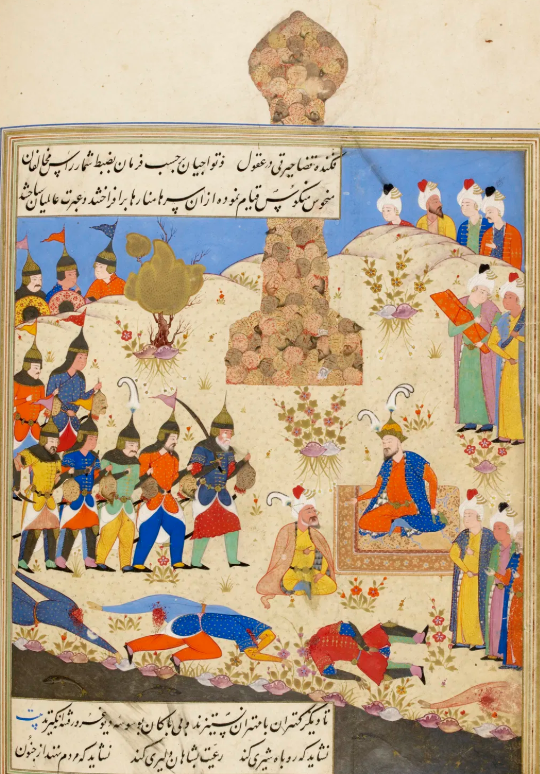
Above is an image of soldiers filing before Timur, holding heads of their decapitated enemies, which they used to build the tower of skulls at Baghdad (1401). A miniature painting from a sixteenth-century manuscript of the Zafarnama.
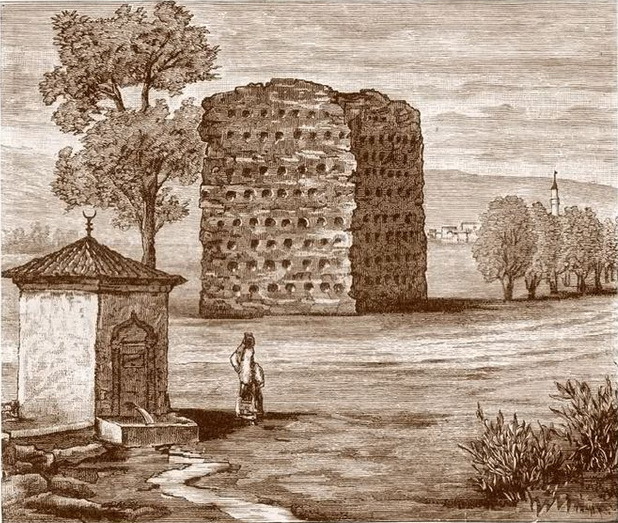
While those towers quickly collapsed, as organic remains are not sturdy building materials, I checked to see if any such towers still existed, which led to the Serbian Skull Tower, a stone structure embedded with human skulls located in Niš, Serbia. It was constructed by the Ottoman Empire following the Battle of Čegar in May 1809. During the battle, Serbian rebels under the command of Stevan Sinđelić were surrounded by the Ottomans on Čegar Hill, near Niš. Knowing that he and his fighters would be impaled if captured, Sinđelić detonated a powder magazine within the rebel entrenchment, killing himself, his subordinates, and the encroaching Ottoman soldiers. The governor of the Rumelia Eyalet, Hurshid Pasha, ordered that a tower be made from the skulls of the fallen rebels. The tower is 15 ft. high and originally contained 952 skulls embedded on four sides in 14 rows (see below).
In 1861, Midhat Pasha, the last Ottoman governor of Niš, ordered that the Skull Tower be dismantled. Following the Ottomans’ withdrawal from Niš in 1878, the structure was partially restored, roofed over, and some of the skulls removed from it were returned. Below is a picture of this Skull Tower as depicted in an 1863 sketch by Felix Philipp Kanitz.
In 1948, Skull Tower was declared a Cultural Monument of Exceptional Importance and came under the protection of the Socialist Republic of Serbia. Further renovation of the chapel occurred again in 1989.
As of 2026, 58 skulls remain embedded in Skull Tower’s walls. The one that is said to belong to Sinđelić is enclosed in a glass container adjacent to the structure. Seen as a symbol of independence by many Serbs, it has become a popular tourist attraction, visited by between 30,000 and 50,000 people annually.

GENEALOGY- A MOST FAMOUS RESIDENT OF THE CATACOMBS, THE SHATTERED SKULL OF ROBESPIERRE
 GENEALOGY- A MOST FAMOUS RESIDENT OF THE CATACOMBS, THE SHATTERED SKULL OF ROBESPIERRE
One of the most famous skulls in the catacombs belongs to Maximilien François Marie Isidore de Robespierre (1758 –1794). He was a French lawyer and statesman widely recognized as one of the most influential figures of the French Revolution. Robespierre fervently campaigned for the voting rights of all men and their unimpeded admission to the National Guard. Additionally, he advocated the right to petition, the right to bear arms in self-defense, and the abolition of the Atlantic slave trade.
A radical Jacobin leader, Robespierre was elected as a deputy to the National Convention in September 1792, and in July 1793, he was appointed a member of the Committee of Public Safety. Robespierre faced growing disillusionment with other revolutionaries, which led him to argue for the harsh measures of the Reign of Terror. Increasingly, members of the Convention turned against him, and accusations of excess came to a head. Robespierre was arrested.
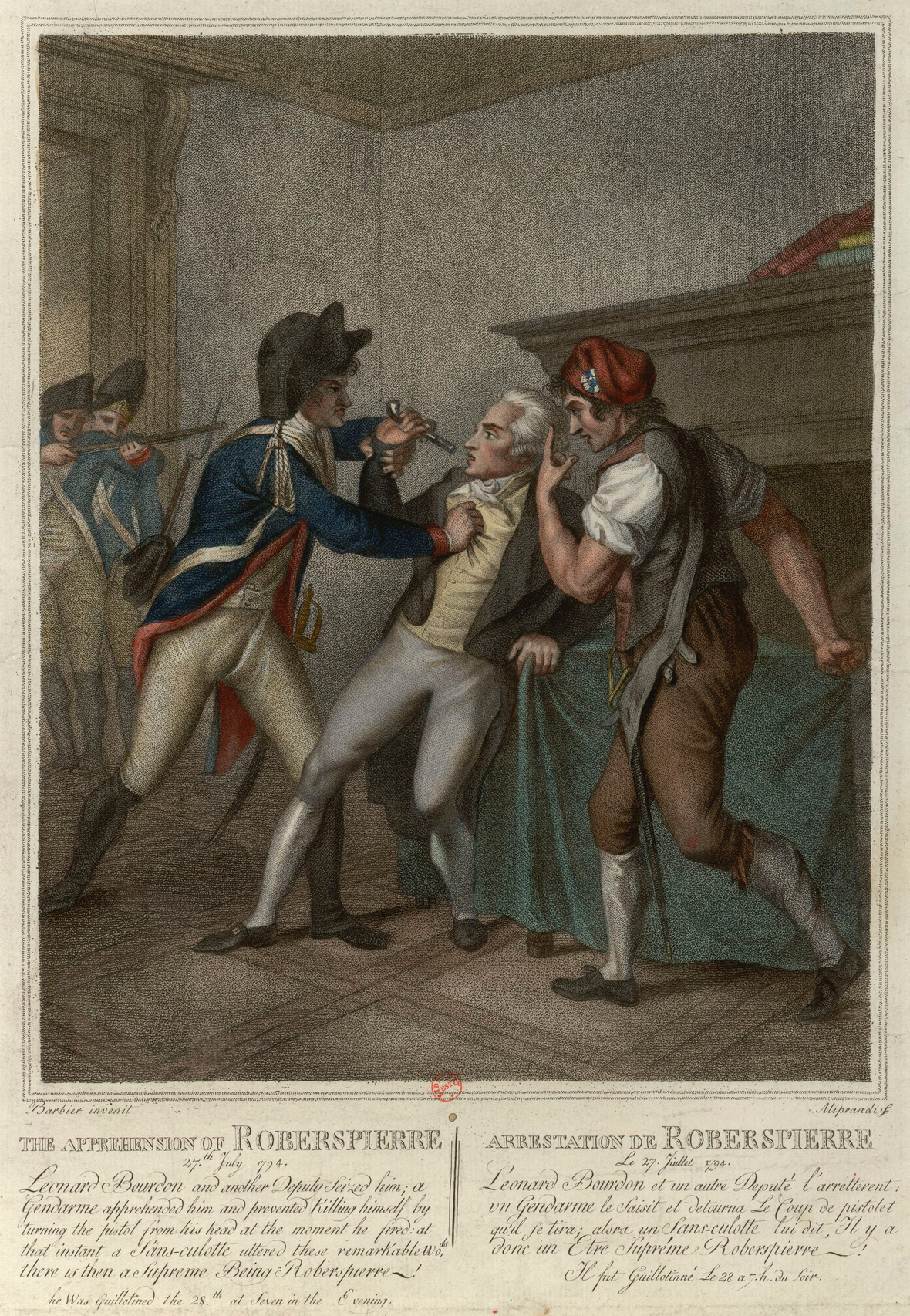
He was one of five prisoners who then escaped, and there are many stories about what happened, but it seems that, in order to avoid capture, Robespierre took off his shoes and jumped from a broad cornice. He landed on some bayonets and a citizen, resulting in a pelvic fracture, several serious head contusions, and an alarming state of “weakness and anxiety”. A companion handed a pistol to Robespierre, then quickly killed himself with another pistol. According to contemporaries, Robespierre wounded himself when he tried to commit suicide by pointing the pistol at his mouth, but the soldiers prevented him from killing himself successfully (pictured above).
Robespierre spent the remainder of the night at the antechamber of the Committee of General Security. He lay on the table, his head on a pine box, his shirt stained with blood. By 5 a.m., his brother and another prisoner were transported to the nearest hospital, the Hôtel-Dieu de Paris. However, they prohibited Robespierre from being taken there. At ten in the morning, a military doctor was summoned and extracted some of his teeth and fragments of his broken jaw. Subsequently, Robespierre was confined to a cell in the Conciergerie. On 28 July 1794, the Revolutionary Tribunal assembled around noon. By 2 p.m., Robespierre and twenty-one “Robespierrists” faced accusations of counter-revolution and were sentenced to death under the provisions of the law of 22 Prairial, although without even a cursory hearing.
At approximately 6 p.m., the condemned were conveyed in three carts to the Place de la Révolution. A furious mob, hurling curses, accompanied the grim procession.
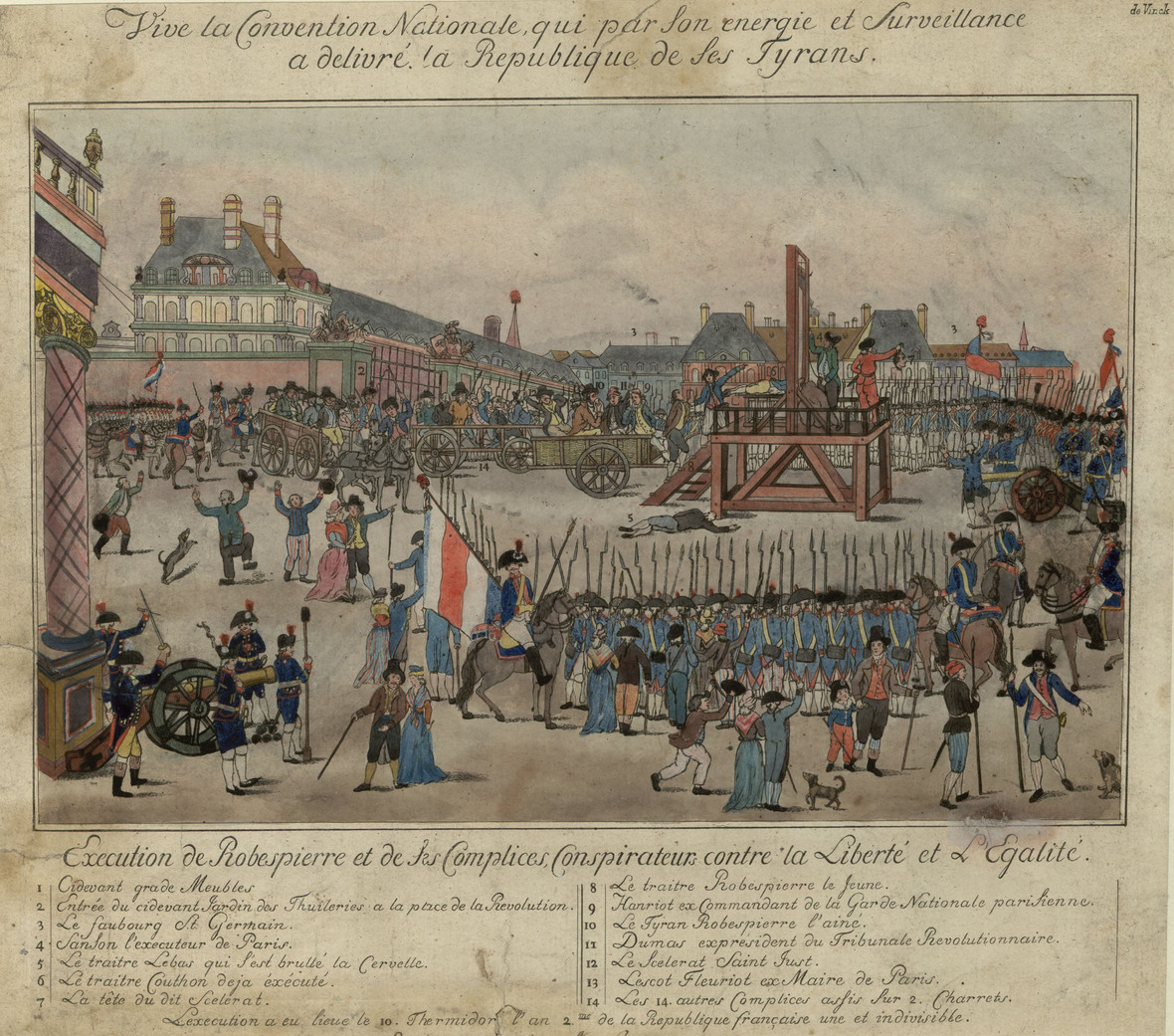
A contemporary print identifies Robespierre as number 10 in the procession to the scaffold (pictured below). During the preparation for his execution, the executioner, Charles-Henri Sanson, dislodged the bandage securing his shattered jaw, eliciting an anguished scream until his demise. Following his beheading, the crowd erupted in applause and jubilant cries, which reportedly endured for fifteen minutes. Robespierre and his associates were interred in a mass grave at the newly established Errancis Cemetery.
Between 1844 and 1859 (likely in 1848), the remains of all those buried there were transferred to the Catacombs of Paris.
GENEALOGY- AMERICA’S FIRST MUSLIM CLAIM, DECONSTRUCTED
 GENEALOGY- AMERICA’S FIRST MUSLIM CLAIM, DECONSTRUCTED
One historical claim was that Anthony Van Salee was the first Muslim in North America. While Van Salee was born in 1607, his father was not captured by the Barbary Pirates and forced under penalty of death to convert to Islam until 1618.
At the age of 11, Anthony would have been under the influence of his father’s religious tilt, and his mother, Margarita, who was believed to be Moorish/Moroccan but born in Cartagena, would likely have been a practitioner of Islam. His mixed heritage likely gave him an appearance that led to the common reference to him as Anthony the Turk and to his owning Turk’s Plantation (even though there were no Turks in Morocco; Turk was a euphemism for brown skin, rather than black or white).
Historical records document that a Quran belonging to Van Salee was preserved and passed down through generations until it was sold in an estate auction in the late 19th century. Specifically, the Quran was preserved through the descendants of Anthony’s daughter, Eva Antonis van Salee. Eva married Ferdinandus van Sycklin, an early Dutch settler in New Netherland (and the namesake for Van Siclen Avenue in Brooklyn).
Over the next two centuries, the holy book remained within allied Dutch American families—specifically the Van Siclen, Gulick, and Rule lines. Around 1886, the Quran was sold at an estate auction following the death of Joachim Rule, a descendant of the Van Siclen family. The history of the Quran and its presence in the family estate was recorded by Robert Bayles, a bank president (Market and Fulton National Bank of New York) and a direct descendant who tracked the book’s ownership.
Accounts from the late 19th century noted that the Quran was kept in remarkably fine condition. Historians point to this care as evidence that even as later generations assimilated into Christian communities in Dutch and English New York, the book was treated with deep respect as a prized ancestral heirloom.
Because 17th-century public records in New Amsterdam rarely explicitly documented non-Christian religious practices, the existence and long-term preservation of this physical Quran could serve as primary historical evidence of Van Salee’s personal faith and Muslim background. Or he may have just inherited the Quran from his father, and, as a unique heirloom in a Christian country, it was preserved as an antiquity.
The identity of the private buyer was not recorded in surviving family accounts or public records. As a result, the current whereabouts and owner of Anthony Janszoon van Salee’s Quran remain unknown to historians today.
In the last edition Bad Grandma we shared Anthony and his wife’s ability to frustrate the Dutch Reformed Church in New Amsterdam. One could infer from his behavior that he was clearly not concerned with the church, other than its influence over state matters. This is why they were banished to Brooklyn in 1639.
Dutch colonial records from 17th-century New Amsterdam do not explicitly document his active personal practice of Islam. Of course, there was no temple or fellow worshipers where he could practice his possible faith.
Anthony’s children, including the family that held the Quran, held to the Christian faith. The official register of the Reformed Dutch Church in New Amsterdam records that Eva was baptized on November 3, 1647, at age 6 by Dominie Johannes Backerus, the pastor in New Amsterdam. The baptism entry lists her father as Anthonij Janszen and names Borger Janszen and Marijken Lievens as witnesses/sponsors. So clearly, Anthony’s intentions were to raise his children as Christians, whether that was because he was a believer or just following the path of least resistance; clearly, he was not trying to raise them as Muslims.
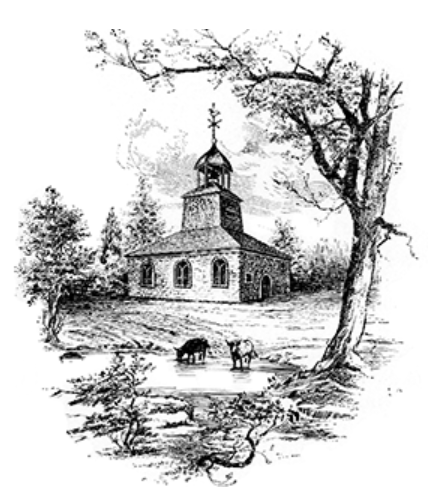
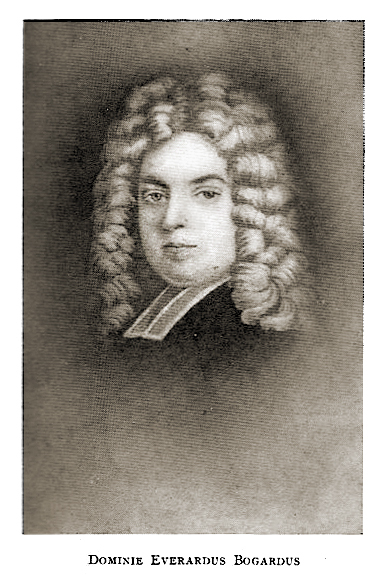
One could wonder if the six-year lag in baptism was an indicator of a delayed decision. However, you have to remember that Anthony was already cast off into Brooklyn for his poor behavior, and that there was not an established Dutch church in Brooklyn until 1654 (see picture), which was coincidentally served by another of my ancestors, Johannes Theodorus Polhemus, who was covered in the June 6th edition. Polhemus. Today, this original congregation is known as Old First Reformed Church, located at Seventh Avenue and Carroll Street in Park Slope (the original church’s sketch above). The more likely reason was waiting until his fierce antagonist, Dominie Everardus Bogardus, had departed the colony (see below).
Subsequent generations and siblings (including his daughters, Sara, Annica, and Cornelia) fully integrated into the local Christian communities of Dutch New Amsterdam and Brooklyn. Their names routinely appear as parents, witnesses, or sponsors in Dutch Reformed baptism registers throughout Kings and New York counties. Descendants of these children include the Vanderbilts, the Whitneys, and, more recently, Humphrey Bogart and Jackie Onassis.
Anthony’s second wife, Metje Grevenraet, was associated with the Quakers, a Christian religious belief. In 1674, Anthony was even brought to court for harboring a Quaker in his home, further showing his distance from the dominant Dutch Reformed Church establishment. Since Quakerism, or any offshoot religion, was suppressed by Peter Stuyvesant, there are no surviving religious records, just civil records.
So, from my perspective, Anthony was more likely not a person of fervent religious beliefs or practice but inherited a religious heirloom that 350 years later could represent something controversial, but was a non-event at the time, and he bowed to the practical power of the Dutch Reformed Church, while developing tolerance for other beliefs.
In the next edition, we’ll discuss Anthony’s brother Abraham.
GENEALOGY- CASTLES, KINGS AND PRESIDENTS
 GENEALOGY- CASTLES, KINGS AND PRESIDENTS
I’d previously written about my Swedish ancestors who lived in the shadow of the beautiful Trolle-Ljungby Castle. There have been several articles written; this is the last one, where I covered our local castle, which, when I ride or drive by, makes me think what a rare view I have.Olana.
Of course, my ancestors were not viewing their local castle as tourists; they were planting and harvesting crops. They likely had a mix of feelings. On the negative side, the castle-owners owned the land and collected rent, often in the form of a share of the harvest. On the positive side, the castle-owner had to offer protection and thwart the efforts of other potential occupiers.
Of course, castles were a more common part of the landscape back then, but the peasant class didn’t have the means to play tourist and head off to view other castles (slotts in Swedish). Within 15 kilometers were Bäckaskog Slott (today a conference center we visited), Råbelövs slott, and Karsholm Castle. However, between thick woods and a lack of a high point to check out the scenery, they may have never seen these places.
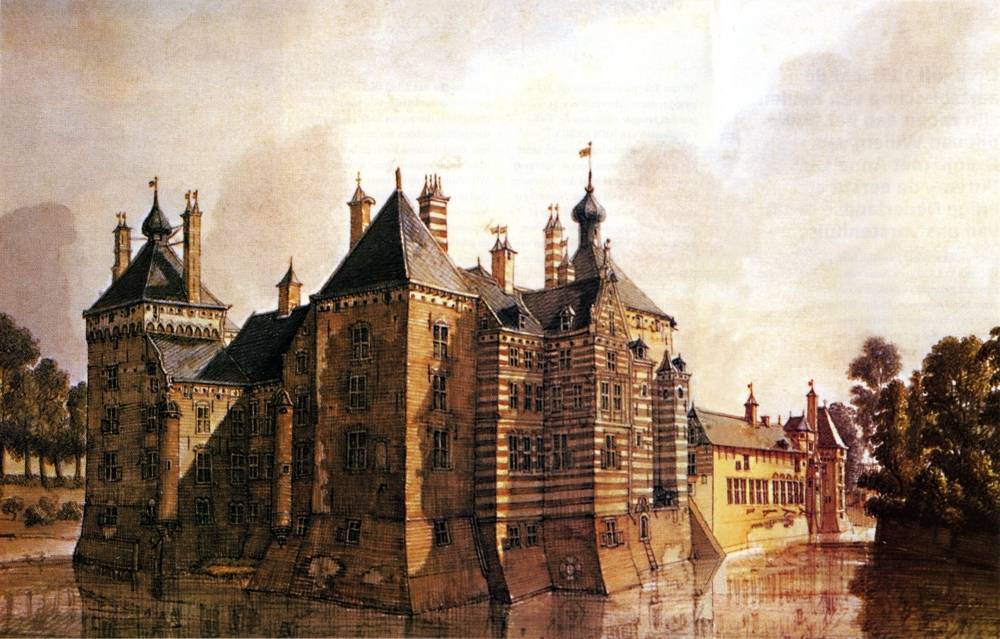
One of my newly discovered ancestors, Jan Vankerck, came to New Amsterdam in 1663 from his home in Buren, Gelderland, the Netherlands. Buren was also famous for its castle (pictured above, in the 16th century).
Originally built by the Lords of Buren, Castle Buren was first mentioned in 1298. The town was granted city rights in 1395 by Sir Alard IV of Buren, which led to the construction of a defensive wall and a moat, significant portions of which still stand. In 1492, the region was elevated to county status (i.e., a territory ruled by a count) but had limited economic influence due to its geographic isolation.
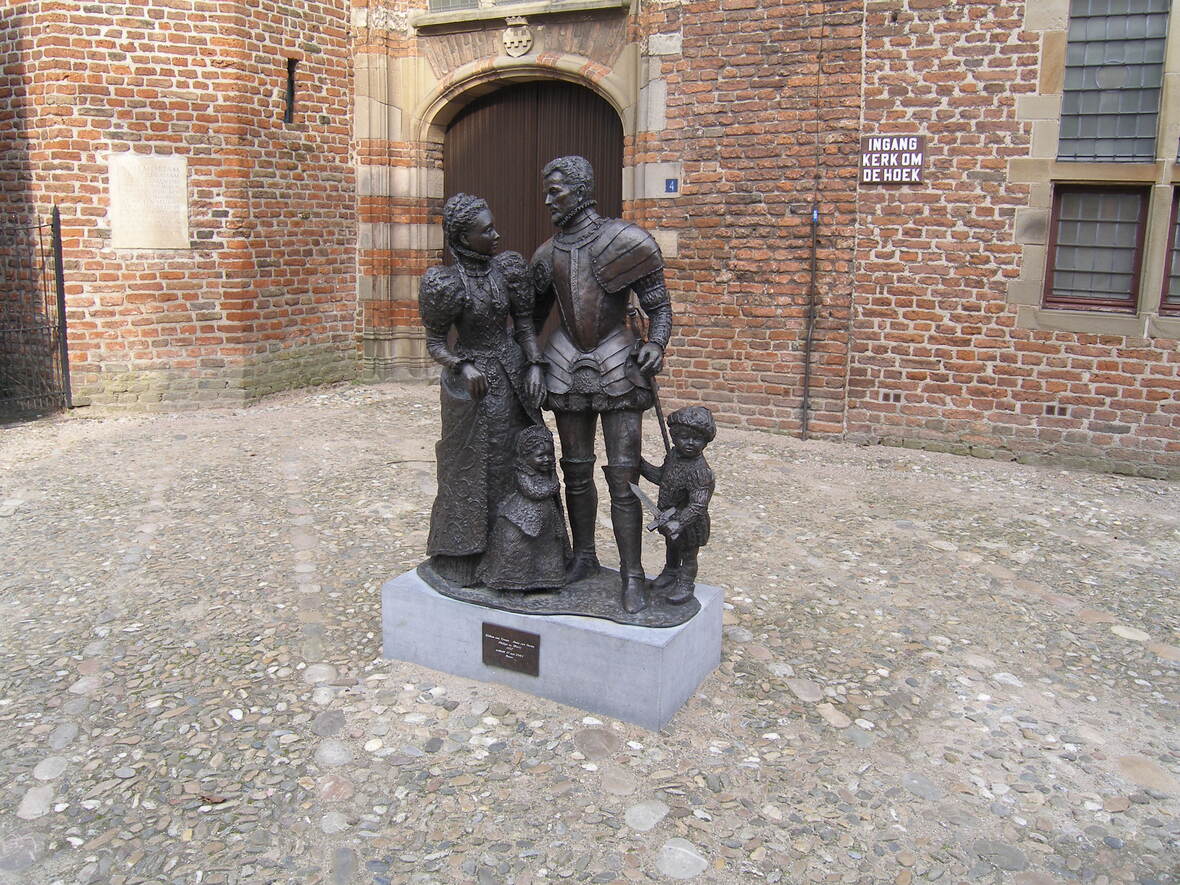
Jan’s hometown became famous from the 1551 marriage of Ann Buren to William, Prince of Orange, the most famous Dutch royal (see the statue of them below left with their son, William II), which brought the castle under the purview of the royal family, the House of Orange. The Dutch royal family has been known to use the name van Buren as an alias to give themselves some degree of anonymity.
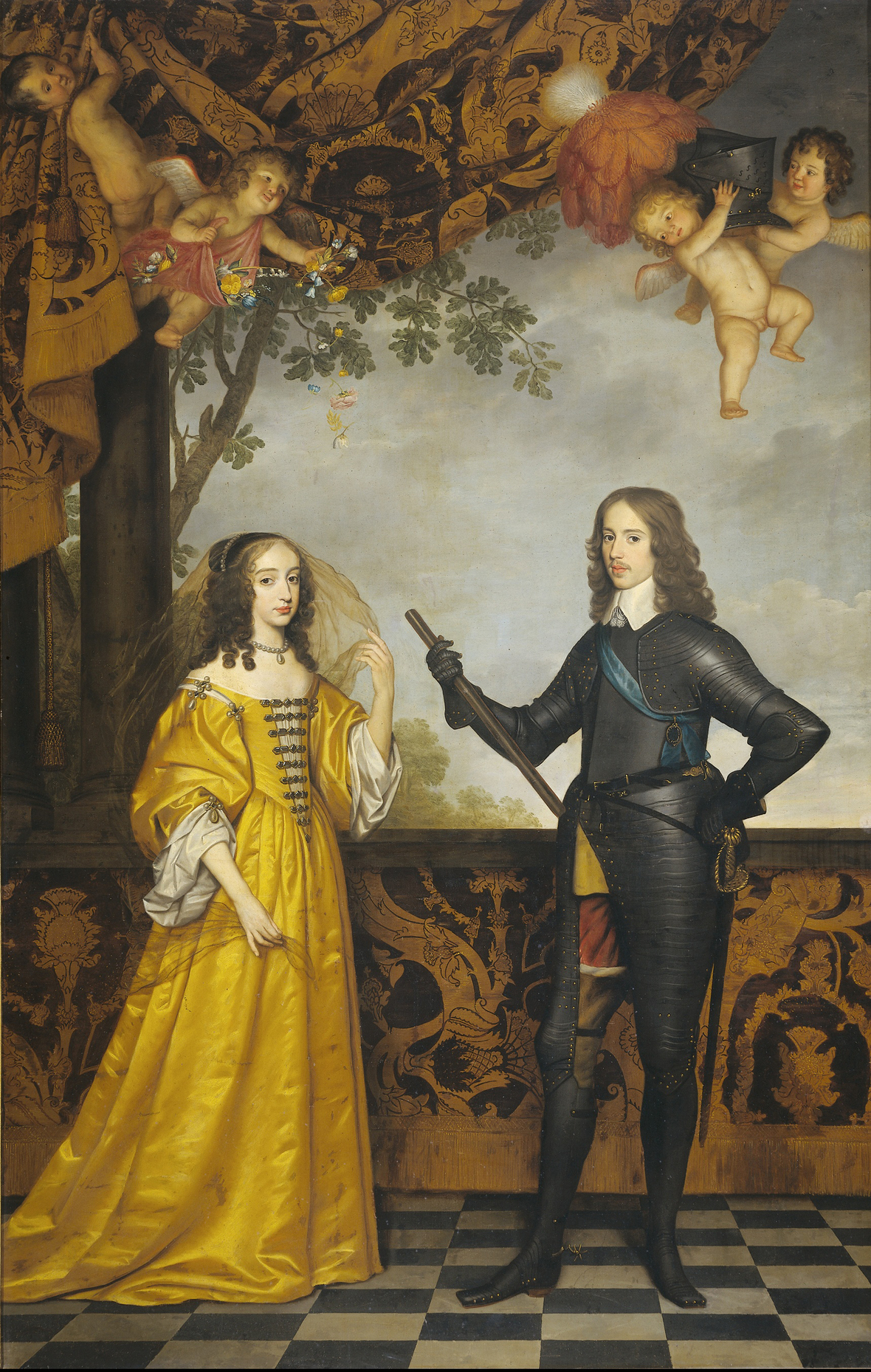
The son of William II, Prince of Orange and ultimately King William III of England of William and Mary fame (see their picture below right), obtained the title Buren in his 1677 marriage to his cousin Mary, Princess Royal, the daughter of King Charles I of England, Scotland, and Ireland. Mary was the elder daughter of his maternal uncle James, Duke of York (later King James II), which united the kingdoms of England, Scotland, and the Netherlands.
Unfortunately, the newly minted kingdom lasted only 13 years before the young king died in a riding accident, and things unfurled as claimants to the individual thrones led to dissolution.
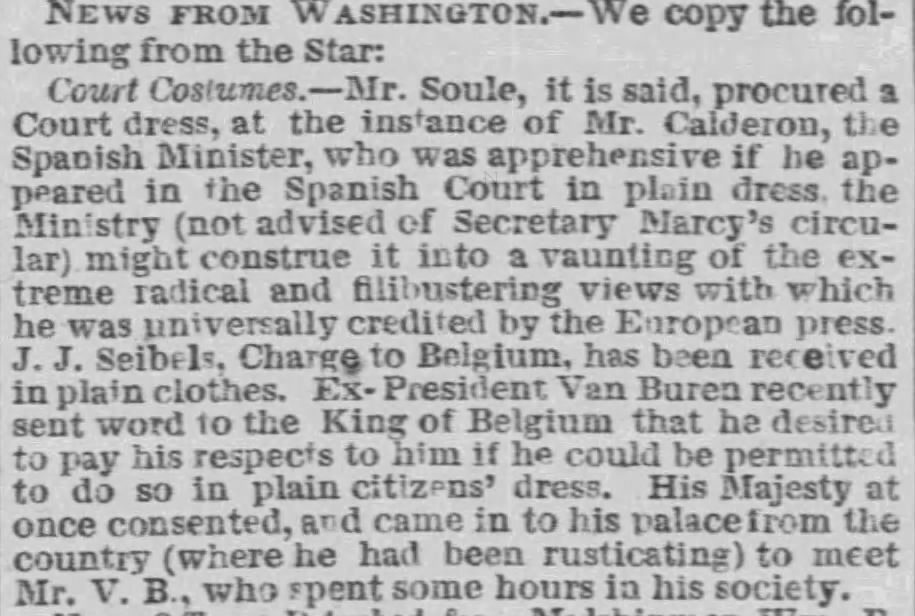
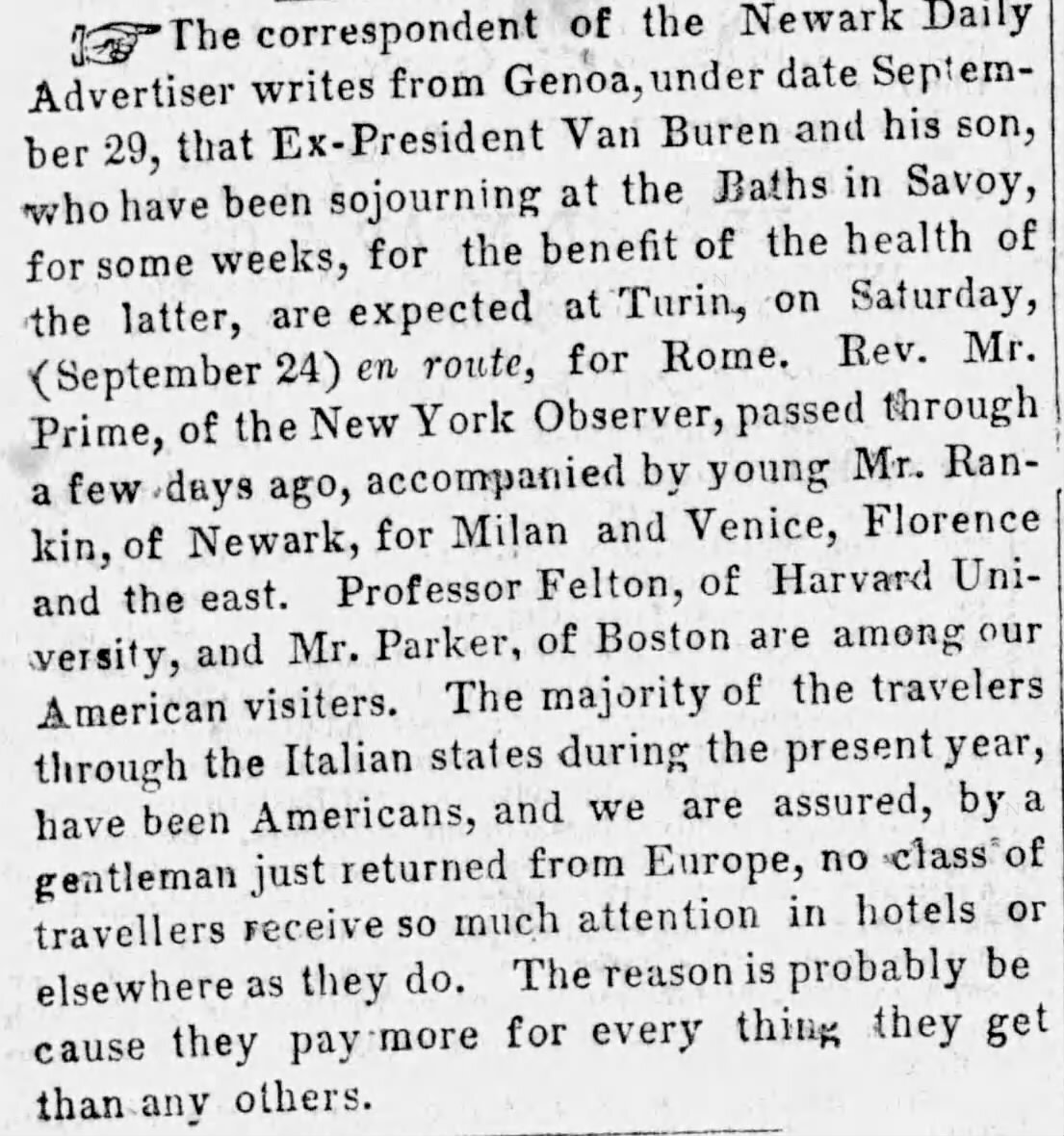
The eighth president of the United States, Martin Van Buren, traced his ancestry to inhabitants of the town, who had taken the surname Van Buren after relocating to the Dutch colony of New Netherlands in what is now the state of New York. In 1853, following the end of his presidency, Van Buren visited the town while on a tour of Europe and reportedly met with several distant relatives.
I wonder whether Jan Vankerck’s descendants were aware of the trip and took any pride in our first U.S. President of Dutch heritage.
GENEALOGY- THE BIRTH OF THE PURPLE HEART
 GENEALOGY- THE BIRTH OF THE PURPLE HEART
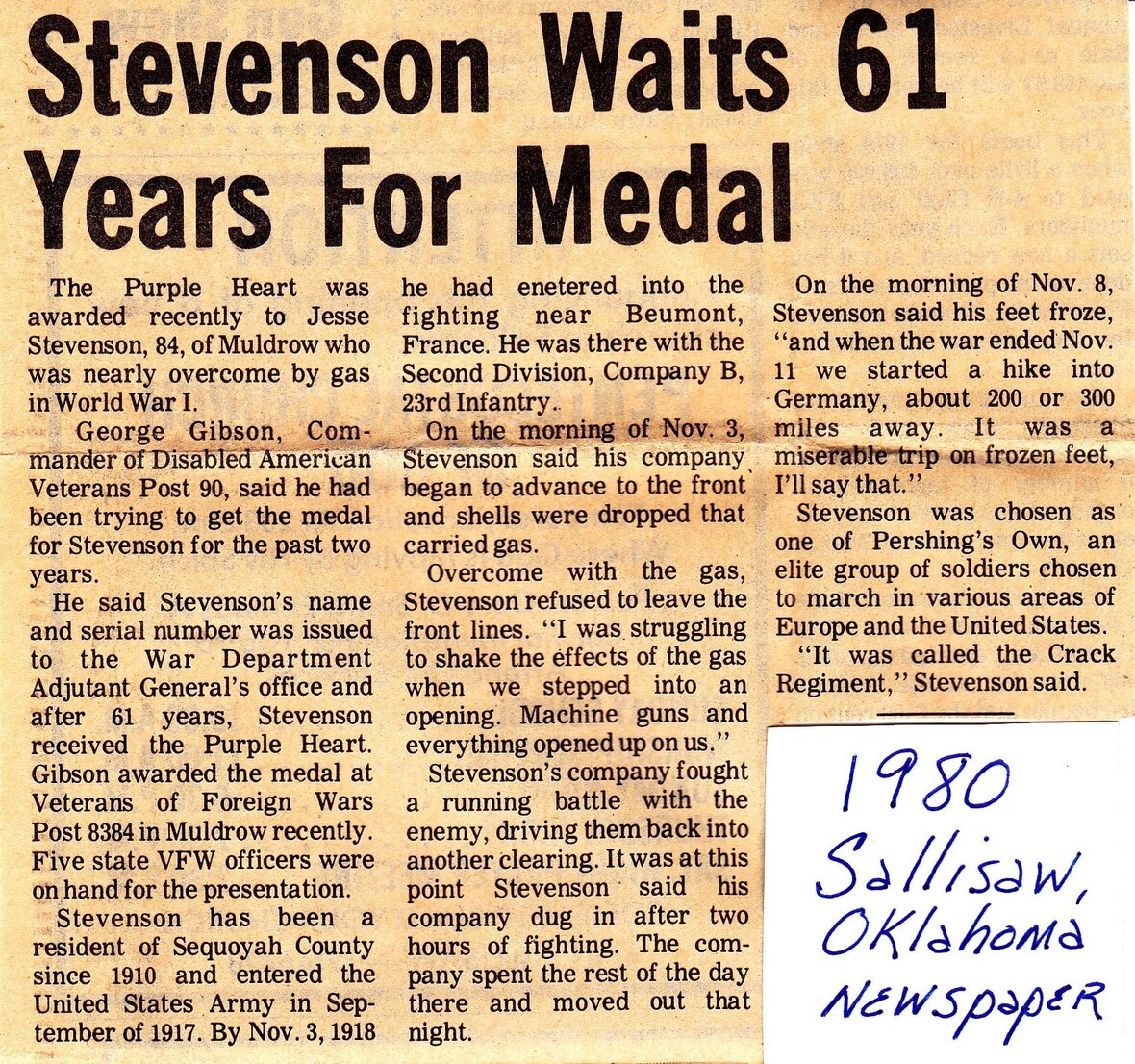
Earlier this year, I mentioned my first cousin twice removed (that means he was my grandmother’s first cousin), Jess Stevenson (read below about the 61-year delay), being awarded the Purple Heart in WWI. Purple Heart
I hadn’t given a lot of thought to the award, other than seeing signs on I-35 near us that said it is part of the Purple Heart Trail and that August 7th is Purple Heart Day.
While I prayed for my niece and nephew serving their country in the present conflict, I was distraught to learn my niece was injured in a missile attack. She’s being awarded the Purple Heart.
Fortunately, she’s recovered, but something close to home, like that, got me wondering how the Purple Heart got its name.
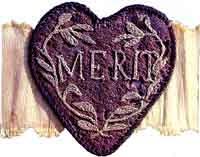
Its roots go back to 1782. The original Purple Heart, designated as the Badge of Military Merit, was established by George Washington – then the commander-in-chief of the Continental Army – by order from his Newburgh, New York, headquarters on 7 August 1782. Washington had the names of the honorees entered into a Book of Merit. Washington explicitly outlined what the physical badge should look like in his general orders. Washington directed that recipients wear “the figure of a heart in purple cloth or silk edged with narrow lace or binding” sewn directly over the left breast of their uniform coat. It also featured the word “Merit” stitched across the front (see adjacent).
Washington awarded the Badge of Military Merit to only three Revolutionary War soldiers himself:
• Sgt. Elijah Churchill (2nd Continental Light Dragoons): He led two daring, successful commando-style raids behind British lines on Long Island, New York. The first was at Fort St. George (November 1780) and the second was at Fort Slongo (October 1781), both resulting in captured enemy troops and destroyed provisions with zero American casualties.
• Sgt. William Brown (5th Connecticut Regiment): He was awarded the badge for his conspicuous bravery during the pivotal Siege of Yorktown on October 14, 1781. Brown led a “forlorn hope” vanguard party that sprinted forward under heavy enemy fire to attack and capture British Redoubt No. 10 using only unloaded muskets and fixed bayonets to maintain the element of surprise.
• Sgt. Daniel Bissell Jr. (2nd Connecticut Regiment): He received his badge for operating as a military spy. Under direct, confidential orders from George Washington, Bissell intentionally “deserted” to British-controlled New York City in August 1781. He spent over a year memorizing enemy troop layouts, fortifications, and naval strength, successfully escaping back to American lines with critical intelligence just as the war was drawing to a close. His medal was lost in an 1813 house fire.
Washington also authorized his subordinate officers to issue Badges of Merit as appropriate. Although it was never abolished, the award of the badge was not officially proposed again until after World War I.
On October 10, 1927, Army Chief of Staff General Charles P. Summerall directed that a draft bill be sent to Congress “to revive the Badge of Military Merit”. The bill was withdrawn, and action on the case ceased on 3 January 1928, but the office of the Adjutant General was instructed to file all materials collected for possible future use. A number of private interests sought to have the medal re-instituted in the Army; this included the board of directors of the Fort Ticonderoga Museum in Ticonderoga, New York.
On January 7, 1931, Summerall’s successor, General Douglas MacArthur, confidentially reopened work on a new design, involving the Washington Commission of Fine Arts. Elizabeth Will, an Army heraldic specialist in the Office of the Quartermaster General, was tasked with redesigning the newly revived medal, which became known as the Purple Heart. Using the general specifications provided to her, Will created the design sketch for the current Purple Heart medal. The new design, which exhibits a bust and profile of George Washington, was issued on the bicentennial of Washington’s birth.
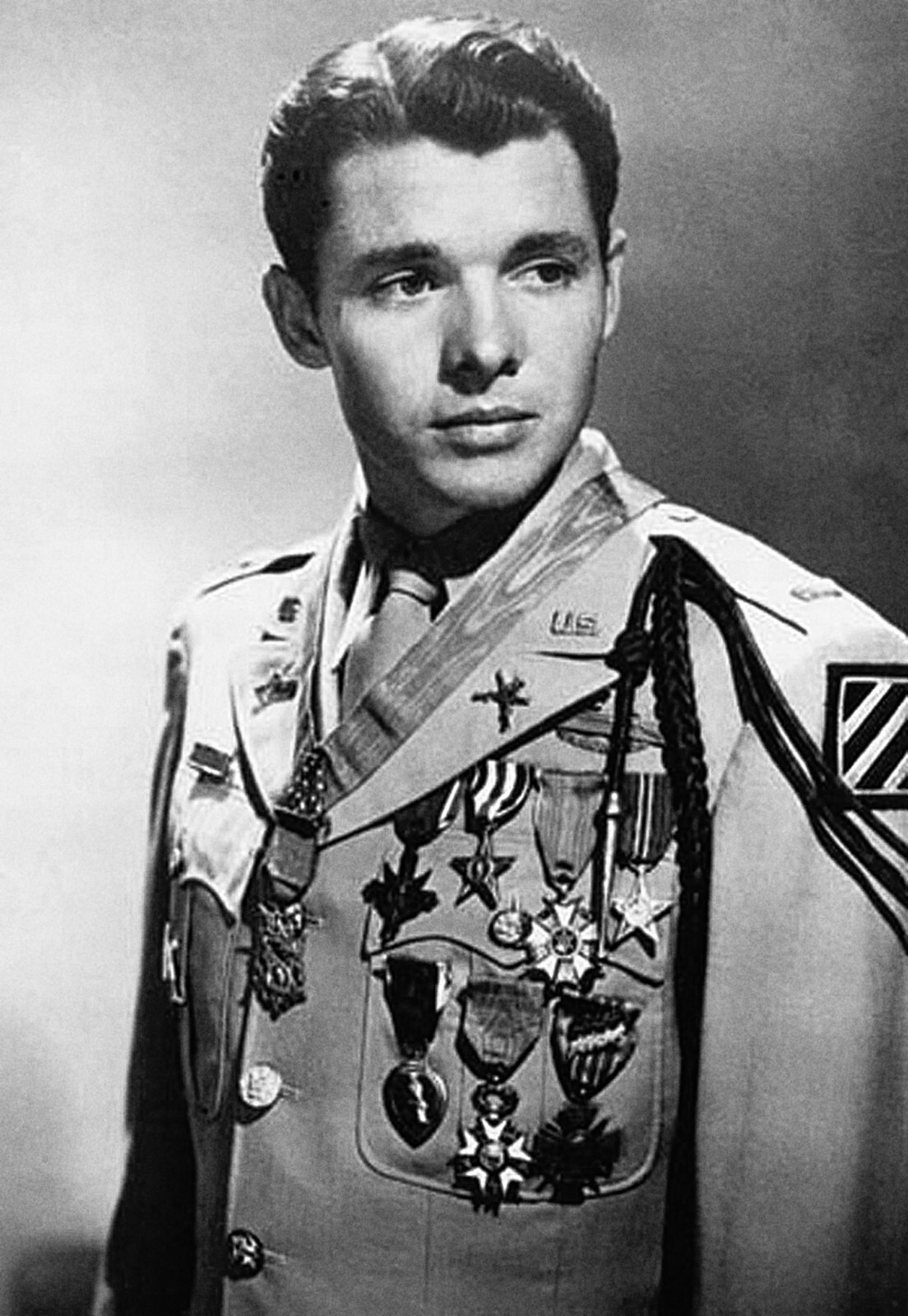
In our recent trip, we visited the Colmar Pocket and learned about Audie Murphy (1925 – 1971) (pictured). He was widely celebrated as the most decorated American combat soldier of World War II and has been described as the most highly decorated enlisted soldier in U.S. history. He received every military combat award for valor available from the United States Army, as well as French and Belgian awards for heroism. Murphy received the Medal of Honor for valor that he demonstrated at age 19 for single-handedly holding off a company of German soldiers for an hour at the Colmar Pocket in France in January 1945, before leading a successful counterattack while wounded.
There have been over 2 million Purple Hearts awarded. In a visit to the new National Medal of Honor Museum in Arlington, TX, I learned that one soldier, Thomas “Tommy” Gwynn, U.S. Army (a recipient of the Distinguished Service Cross), was awarded the most Purple Hearts (12), (7) in World War II, and (5) in Korea. Thank you to all 2 million soldiers for their service!
GENEALOGY- THE GREAT GREENLAND GRAB: A TIMELINE OF PRESIDENTIAL AMBITIONS
In the last edition, we discussed President Polk’s expansion ambitions- POLK
He’s not the only one as Greenland keeps popping up in the news, but it isn’t really new news in the history of U.S. presidents. Here is the chronological history of U.S. presidents expressing interest in Greenland up to recent events.
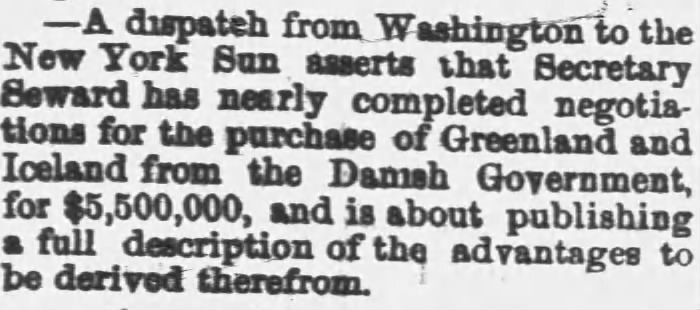
• Andrew Johnson (1867–1868), via Secretary of State William Seward. Fresh off purchasing Alaska from Russia, Seward explored acquiring Greenland (and Iceland) from Denmark. I guess he figured Alaska and Greenland would make nice bookends. He commissioned reports highlighting its resources (fisheries, minerals, coal) and commercial/strategic potential in the North Atlantic. Ideas were floated and some negotiations discussed, but no formal purchase offer advanced due to limited congressional interest and political constraints.
• William Howard Taft (around 1910). U.S. Ambassador to Denmark Maurice Francis Egan proposed a complex land-swap arrangement under which the U.S. would acquire Greenland (and the Danish West Indies) in exchange for territory in the Philippines (such as Mindanao). The idea gained some traction in Washington amid interest in Arctic resources and strategy but ultimately collapsed without success.
That sounds similar to the silly idea that I presented to swap Greenland for Puerto Rico Greenland, but like Taft, my idea ultimately collapsed without success.
• In 1917 (under Woodrow Wilson), the U.S. actually pledged not to object to Danish control of Greenland as part of the deal to buy the Danish West Indies (now the U.S. Virgin Islands).
• During Franklin D. Roosevelt’s administration in World War II, the U.S. assumed defense of Greenland (via a 1941 agreement after Denmark fell to Nazi Germany) and built bases, but this was protective wartime control rather than an acquisition bid.
After Germany occupied Denmark in April 1940, Greenland (then a Danish colony) was cut off. Accurate weather data from the North Atlantic and Arctic was critically important for German military planning—U-boat operations, air campaigns over Europe, and naval movements—because weather systems generally move from west to east. The Allies controlled most existing international weather stations, so Germany tried to set up its own.
The Kriegsmarine (German navy) ran several small expeditions to install manned weather stations:
Holzauge (“Wooden Eye,” 1942–1943): A team was landed (via the ship Sachsen) on Sabine Island / Little Pendulum Island area in northeast Greenland. It operated for nearly a year, transmitting weather reports, until discovered by the Northeast Greenland Sledge Patrol (a small Danish/Greenlandic force of hunters and trappers). The station was later destroyed with U.S. assistance.
Bassgeiger (“Bass Violinist,” 1943–1944): Another station established further north (Germania Land area). It also operated for an extended period before being eliminated.
The only part of North America that technically became under Nazi control was Saint Pierre and Miquelon, which I wrote about earlier. French Islands
Nazi Germany never sent personnel to Saint Pierre and Miquelon. After France fell in 1940, the islands stayed under Vichy French control, raising Allied fears that their radio station and cables might aid German U-boats, but no German troops, agents, or weather teams ever landed there. On Christmas Eve 1941, Free French forces under Admiral Muselier seized the islands in a bloodless 20-minute operation, ending Vichy rule; the islands were never occupied by the Nazis.
• Harry S. Truman (1946) made the most formal and serious offer. His administration proposed buying Greenland from Denmark for $100 million in gold (roughly $1–1.7 billion in today’s dollars, depending on the adjustment method). This came right after World War II, when the U.S. had already defended and operated bases on the island (viewed by the military as a key “stationary aircraft carrier” and strategically vital for the emerging Cold War against the Soviet Union). Secretary of State James Byrnes presented the idea to the Danish foreign minister; Denmark rejected it.
• Under Dwight D. Eisenhower (mid-1950s), the Joint Chiefs of Staff urged another purchase attempt due to ballistic-missile and Arctic defense concerns, but no formal presidential offer was made.

GENEALOGY- PRESERVE YOUR FAMILY HISTORY, TODAY
 GENEALOGY- PRESERVE YOUR FAMILY HISTORY, TODAY
Reach out to Dancestors Genealogy. Our genealogists research, discover, and preserve your family history so those stories don’t disappear.
No one is getting any younger, and memories fade every year, eventually slipping beyond our ability to recover them. Paper gets thrown in the trash; books survive.
We offer:
– Documented, sourced reports, not unsourced online trees
– Printed books and reports that keep your family’s story alive
Ready to embark on your family history journey?
Call Dan Nelson at 214-914-3598 and get your project started today.
