

16 May Ancestry Newsletter- May 16, 2026
Contents
- 1 GENEALOGY- THE NEWSLETTER PODCAST STYLE!
- 2 JESS’ GEORGE WASHINGTON STORY AFFIRMED
- 3 FROM ADAM AND EVE TO THE PALMERS AND FORWARD
- 4 I HAD TO SEE MY ANCESTOR’S LAND
- 5 GUARDING THE ARCTIC
- 6 THE LADY WHO HELPED START THE 1849 CALIFORNIA GOLD RUSH
- 7 A CHILD’S REMEMBRANCE OF AN ASSASSINATION
- 8 PRESERVE YOUR FAMILY HISTORY, TODAY
GENEALOGY- THE NEWSLETTER PODCAST STYLE!
You can now listen as well as read the Dancestors Genealogy Newsletter.
Listen to all Dancestors Genealogy newsletters on our podcast page.
 JESS’ GEORGE WASHINGTON STORY AFFIRMED
 JESS’ GEORGE WASHINGTON STORY AFFIRMED
In March 2025, I wrote about the false trees out there for my third great-grandfather, David Stevenson of Alabama, where folks had decided he was the same David Stevenson who was in Ohio, even though they were both in the 1850 census with different families. STEVENSON
I’d found a third cousin who had taken a Y-DNA test, and I paid to expand the test to more markers. I then assigned the case to one of our genetic genealogists to solve. Unfortunately, there must have been an NPE (non-parental event) between him and David Stevenson, as his Y-DNA showed no links to early Stevensons. However, the genetic genealogist was able to solve the case using autosomal DNA. What she looked for was people with whom my mom (using her DNA) shared DNA, who descended from Stevenson folks further back than David, and we ended up linking back to Jonathan Robert “John” Stevenson/ Stephenson / Stinson and his wife, Phoebe Clancy, of Tazewell, VA. This tied in with where David was supposed to be from, and a record of him being there as he married his first wife in Tazewell in 1818. I also found him in the Tazewell Court Records.
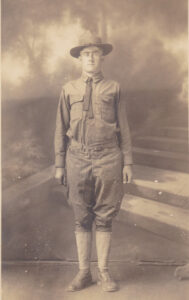
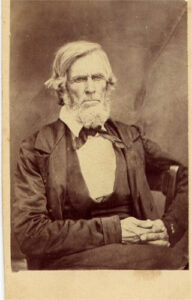
My grandmother’s first cousin, Jess Stevenson (pictured), a Purple Heart recipient in WW1, told me 37 years ago, when he was 94, that our Stevenson ancestors in Virginia played with George Washington as children, and that the Stevenson boys’ mother was a widow. Of course, almost every family with colonial roots has a Washington story. However, I eventually, I found this story:
“The Youth of (George) Washington” by S. Weir Mitchell, M.D., in the May 1904 issue of Century Magazine. The article is written as an autobiography. “In the fall of 1746, I (George Washington) returned to my mother, or rather, as before, I went to board across the Rappahannock at Fredericksburg, in the house of a widow of the name of Stevenson, which she pronounced Stinson. She had, by her two marriages, six sons, two of them Crawfords and four Stevensons. They were all well-grown fellows, and of great strength and bigness.” Later in the article it says “The sons of the widow in whose house I lodged during the week were, as I have said, rough, big fellows who damaged a great deal the pride I had in my strength, because among them, for the first time as concerned lads of near my years, I met my match in wrestling and jumping, and what we called the Indian hug. Almost all of them served under me in the war, and one, William Crawford, rose to be a colonel and perished miserably, being burned at the stake in Sandusky in the war with the Indians, after their cruel way.”
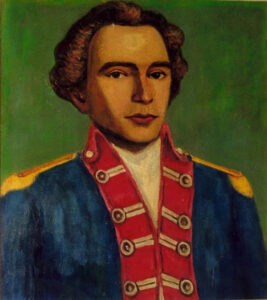
It turns out that these four Stevenson boys were the first cousins of Jonathan Robert, which makes it pretty believable that the story was passed down by him to his great-great-grandson, Jess. The two Crawford boys, along with the Stevenson boys, served under Washington. William Crawford is pictured below.
FROM ADAM AND EVE TO THE PALMERS AND FORWARD
 FROM ADAM AND EVE TO THE PALMERS AND FORWARD
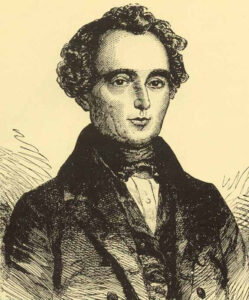
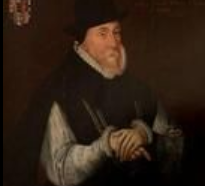
Edward’s daughter married Sir Thomas Palmer (d.1582), of Parham, Sussex (pictured below left), who was a Member of Parliament (MP) for Arundel in March and October 1553, Sussex in 1554, and Guildford in 1559. He was a Justice of the Peace for Sussex from 1547 and was appointed High Sheriff of Surrey and Sussex for 1559–60. He married second, Katherine Stradling, the daughter of Sir Edward Stradling of St. Donats, Glamorgan, with whom he had 1 or 2 sons
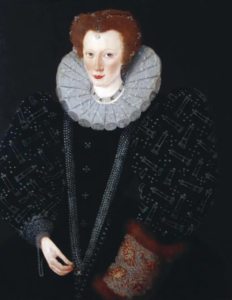
One of those sons was William Palmer, born on 24 Jul 1544 in Parham, Sussex, England. William Palmer was first married about 1575 in Parham, Suffolk, England, to Elizabeth Wheere. He married secondly, in England about 1577, to Elizabeth (Verney) Bromley (pictured below right).
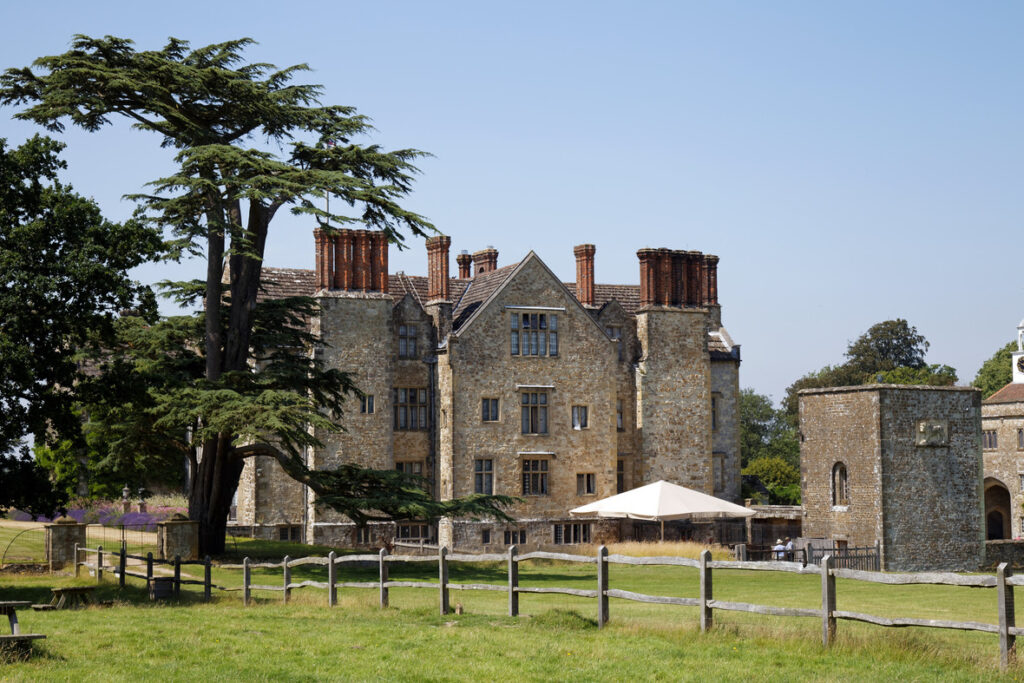
Parham Park (pictured above) has been shaped very strongly by the women who have lived in it and looked after it over the past centuries of its existence. The first mistress of the current House, once the building of it was finished, was Elizabeth Verney of Fairfield in Somerset, a goddaughter of Queen Elizabeth I. She had married William Palmer, whose grandfather Robert had been granted Parham by King Henry VIII after the Dissolution of the Monasteries in the 1540s.
Elizabeth and William lived at Parham after they were married. There is no record of what their house looked like, and it was in all probability a separate dwelling to the one we know now, possibly situated in the area now occupied by the Big Kitchen.
William Palmer owned the manors of Wick, Kingston, and Barpham. He died on December 24, 1586 in Parham, Sussex, England, and left a last Will in which he left a sizable estate and was quite generous.
Will: of William Palmer of Parham esq., dated 24 Dec. 1586
• To be buried at discretion of executors
• £5 to the poor, to be divided at discretion of executors, ‘not to praye for my sowle acknowledging no helpe for the same after my decease but that they shall praye to god to blesse kepe and defend my most gratious Soveraigne Ladye Quene Elizabeth that her dayes maye be longe and prosperous that she maye have victorye over all her enemies that the words of god maye flourishe and dayly increase in the hartes of all people, that god maye blesse my wife and children so that love and unitye maye be amongest them that god maye thereby be glorified’
• 20s. to a learned preacher to preach at my burial
• Two years’ wages each to my good servants to such as were my old servants and are in my house both men and women
• One year’s wages to every one of the rest
• £20 each to my cousins Thomas and Jane Palmer
• £1,000 to my daughter Katherine Palmer at her marriage if she marries with the consent of her mother Elizabeth; £400 if she marries without such consent
• As my wife is now with child: if a son, £100 a year rent from my manors of Wick and Kingston; if a daughter £500 at her marriage if with her mother’s consent, £200 if without such consent
• All my lands to be divided by my overseers into three parts: one part to her majesty; ‘one other part as a second part’ to my wife Elizabeth for life; the third part to my executors to pay my debts and legacies and for the bringing up of my children
• ‘for that my debtes be somewhat greate and the dayes of payment not longe’: manor of Barpham to be sold at the discretion of my friends John Popham (attorney-general), Sir Thomas Palmer, John Caryll esq., Edward Caryll, John Leeds, and Alexander Popham esq.
• All goods and chattels, cattle, movables and immovables to wife
• Elizabeth and son Thomas, whom I make my executors
Witnesses: Thomas Palmer, William Haughton, James Whitney, John Elmes, :John Rymmaston, Richard Burdon minister
Probate 16 Jan. 1587
I HAD TO SEE MY ANCESTOR’S LAND
 I HAD TO SEE MY ANCESTOR’S LAND
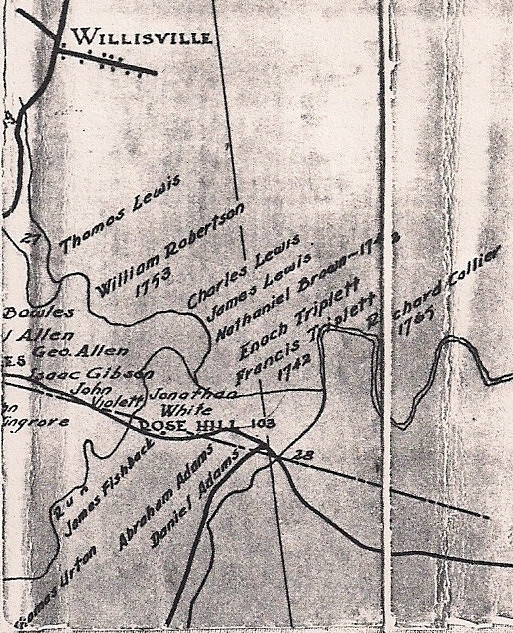
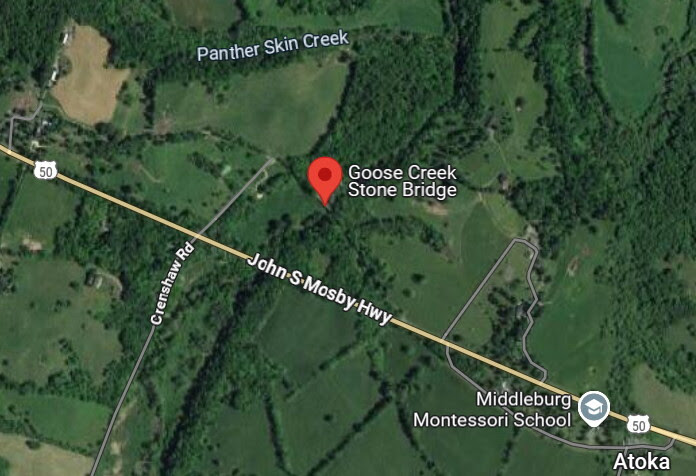
My 6th Great Grandfather, John Adams, moved around 1730 to the area where Pantherskin Run meets Goose Creek in Fauquier, VA. His son, Daniel Adams, my 5th Great Grandfather, continued to live there until before the Revolutionary War, and is represented on the handwritten map right below Rose Hill. The neighbor to the north, Enoch Triplett wrote about the family living there, and Daniel being the last to leave, heading to North Carolina.
I shared the story from May 2025 about our visit to Oatlands, the home of George Carter, the great-grandfather of Robert “King” Carter. CARTER They helped me determine how to get to the land. They showed me how it was near the current parking lot/trailhead for the Battle of Upperville (Civil War) and the Goose Creek Bridge.
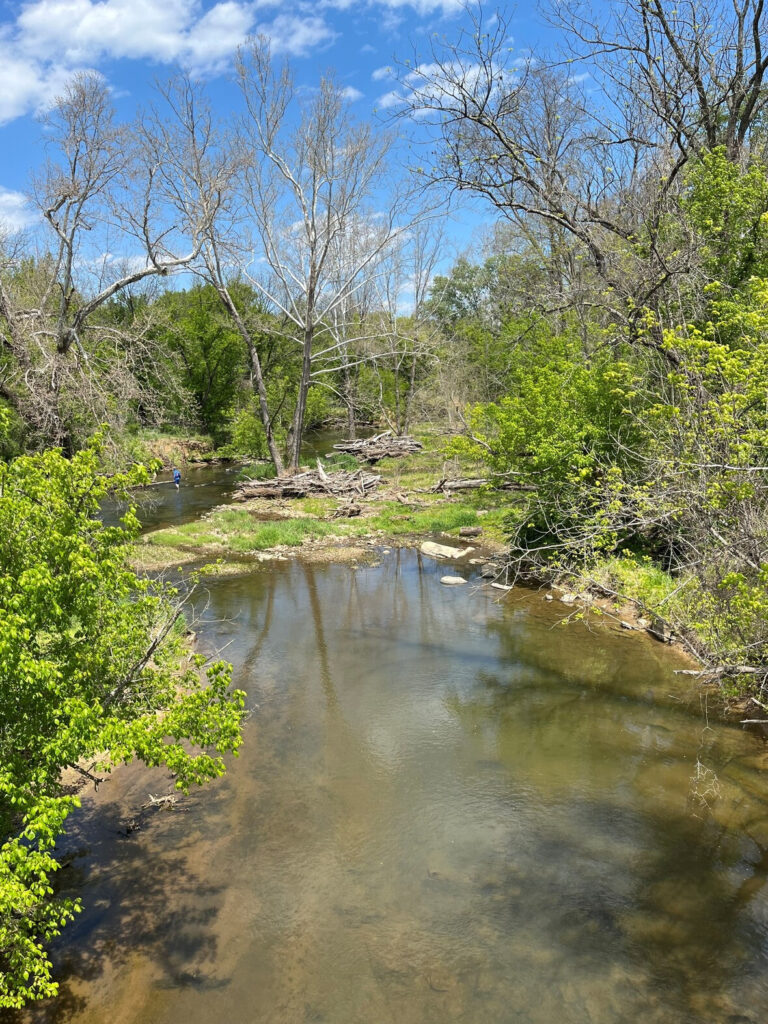
You can see on the aerial map the thick vegetation around Goose Creek (the water under the stone bridge), and Panther Skin Creek (called Pantherskin Run in earlier days). To the left of the bridge is a parking lot, where we went down to the bridge, saw a fisherman, and asked him if we could access the mouth of the Pantherskin where it meets Goose Creek (you can see the fisherman in blue in Goose Creek below left). He said the only way was to walk up the creek, but to get to the creek, you’ll go through bushes full of ticks. So, we passed on that idea.
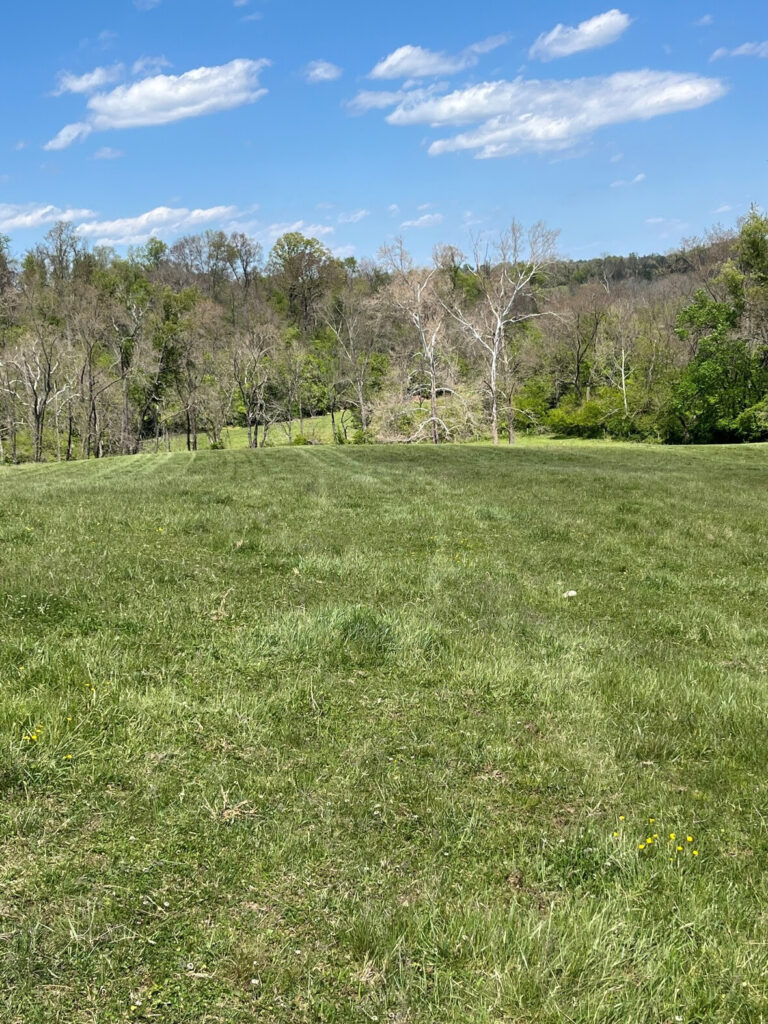
I walked up the hill, to the north of the parking lot, to see the river bottom land that was his (below right). The hill itself was pasture, which I determined by the presence of cowpies. At the top, I could spot the green strip of thick vegetation that would be the Pantherskin, and I also noticed a solar array and a parked tractor, so I turned around, not wanting to be a trespasser (there were no signs, and I was not sure where the park boundaries ended).
It was cool to be on his land, which went from the Pantherskin all the way over to where the Montessori School is located. Today, it is Virginia horse country. The nearby Red Bridge Farm, founded in 1749, recently sold for $7.8 million. It has 107 acres, an 18,000 sq ft main house, along with cottages and horse dressage facilities. So, if Grandpa could have just hung around another 300 years, we’d be living the life!
GUARDING THE ARCTIC
 GUARDING THE ARCTIC
I just read an article about the US Army sending 4000 soldiers to the Arctic Circle for a training battle.
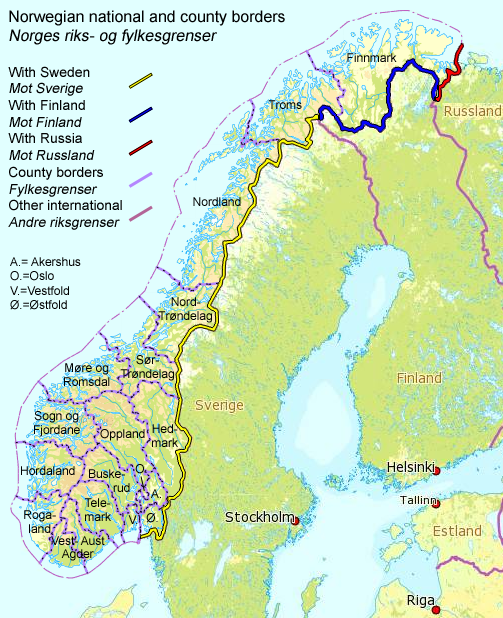
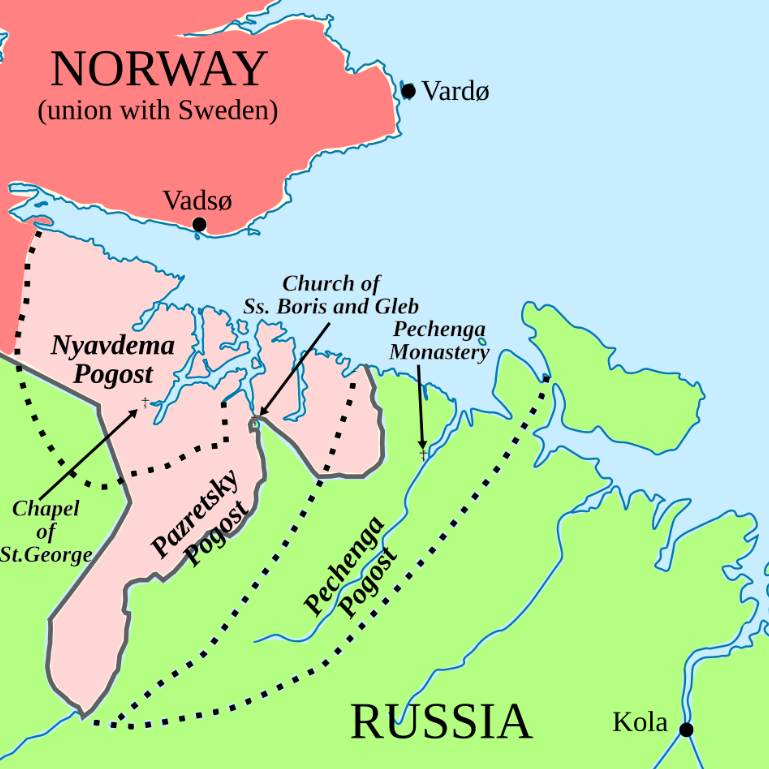
It reminded me of our visit to Norway (one of the wealthiest countries in the world), where our young waiter had served in the military along the Russian border in the Arctic Circle (see map). He said that while it was as cold as he’s ever been, they would go out with their guns to practice, and the gloves were so thin and had holes that their hands would freeze, so they couldn’t operate them. He showed us his frostbite scars on his hands.
In writing the article, I learned that this border dates back to 1826, when Russia ceded land to Norway to formally end centuries of joint ownership of Arctic border areas and secure stable borders following Sweden’s 1809 loss of Finland, which made Russia an immediate neighbor to Norway (see the map below). The 1826 Treaty of Saint Petersburg aimed to resolve land disputes and prevent further conflicts over the taxation rights of the Sami population in the region.
In hindsight, Sweden probably feels pretty smart 200 years after the fact, that they don’t have a land border to defend against the Russian Bear. They do face each other in the Baltic and have plenty of history of fighting with the Russians, to be wary of them.
THE LADY WHO HELPED START THE 1849 CALIFORNIA GOLD RUSH
 THE LADY WHO HELPED START THE 1849 CALIFORNIA GOLD RUSH
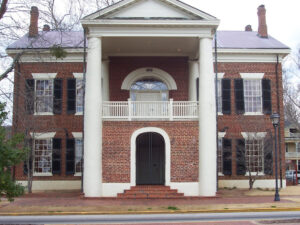
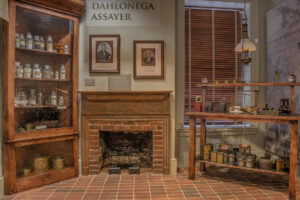
We visited the Dahlonega, GA, Gold Museum Historic Site, a Georgia state historic site that commemorates America’s first gold rush and the mining history of Lumpkin County. The museum is housed in the historic Old Lumpkin County Courthouse (pictured), built in 1836 and located in the center of the town square. It is the oldest surviving county courthouse in the state. The museum houses many artifacts from the 1836 gold rush, including gold nuggets, gold coins, and gold panning equipment, as well as an educational film and a gift shop.
While there, we learned the story of Elizabeth Jane “Jennie” Wimmer, whose family originally lived near the gold mines in Dahlonega, Georgia. She gained experience identifying and panning for gold there as a young girl before moving west. The veterans of the Georgia Gold Rush were called 29’ers as the first gold was found in 1829. In March, we covered the first discovery of gold in California, Southern California. CA GOLD RUSH
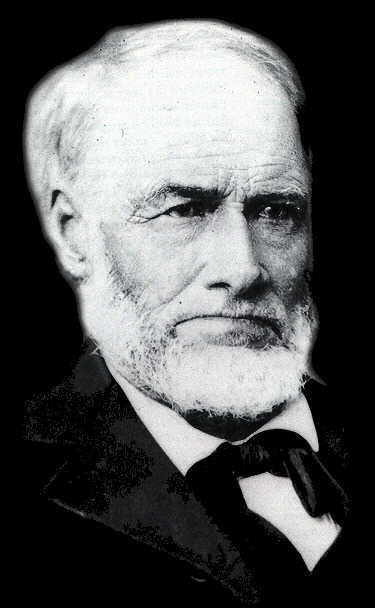
In 1847, her husband, Peter Wilmer, was hired by James Marshall (pictured) and John Sutter to help build a sawmill in Coloma, California. Jennie was hired as the camp cook and laundress for the construction crew.
On January 24, 1848, James Marshall found a shiny piece of metal in the mill race. Because Jennie was the only person at the site who had seen raw gold in Georgia, Marshall gave her the nugget to test.
To prove it wasn’t “fool’s gold” (mica or pyrite), Jennie dropped the nugget into her kettle of boiling lye soap. She knew that caustic lye would corrode other metals but leave gold untarnished. After boiling all night, the nugget came out bright and shining, confirming it was gold. This helped to spark the California Gold Rush.
A CHILD’S REMEMBRANCE OF AN ASSASSINATION
 A CHILD’S REMEMBRANCE OF AN ASSASSINATION
My grandson interviewed me the other day for his 6th-grade class project, which involved interviewing someone of a different generation.
He asked me about the difference in technology from my childhood school years. I explained that, aside from electricity, the biggest marvel we had was the film projector, which kept the techies of the day busy splicing film. He’s never seen a manual pencil sharpener.
He asked me what my most significant childhood memory was. I shared with him my most distinct memory was from 2nd grade, when Mike Xantagus (I guess being good with remembering names is a handy prerequisite for being a genealogist) had returned from the principal’s office and said President Kennedy was shot. Mrs. Oshiro told Mike he would be sent back to the office for that kind of terrible comment and disruption. She called the office and found out he was correct.
I did know who the president was, but I hadn’t had enough history classes to know that at that point, eight of them had been shot at, and three had been killed. I knew it wasn’t good, but it wasn’t saddening.
The assassination was on a Friday, and at that age, Saturday morning cartoons were the highlight of the week. We lived in greater Los Angeles, so while some places only had one or two channels, we had seven stations: (KNXT 2 (CBS), KNBH/KRCA/KNBC 4 (NBC), KTLA 5 (Independent), KECA/KABC 7 (ABC), KHJ-TV 9 (Independent), KTTV 11 (Independent), and KCOP 13 (Independent).
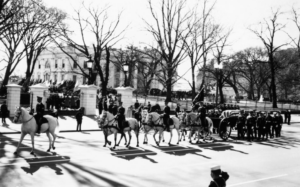
All seven had sad news all day long, as they did until the funeral three days later, so those repetitive black-and-white scenes of the procession and the clip-clopping of the horses on the pavement were emblazoned in my brain, creating a distinct memory.
My dad worked nights, and I remember our mom waking us up some five years later in the middle of the night, because Bobby Kennedy was shot in the area we lived, even though I don’t know that I’d ever been to downtown LA, and certainly not the Ambassador Hotel.
After moving to Dallas, I thought it was odd living in the two cities where the Kennedy brothers had been killed. AI estimates that since 1995, 2.3 million people have moved from CA to Texas, so I figure a million of those have ended up in DFW, so I guess I am only one in a million who has ever thought about that deadly coincidence.
The article had caused me to look up how many presidents had actually been shot, and chronologically, they were Jackson, Lincoln, Garfield, McKinley, T. Roosevelt, F.D. Roosevelt, Truman, Kennedy, Ford (twice), Reagan, and Trump (three times now). Only Reagan had a bullet enter his body and survive. Ex-president and presidential candidate Teddy Roosevelt also had a bullet lodge in his lung.
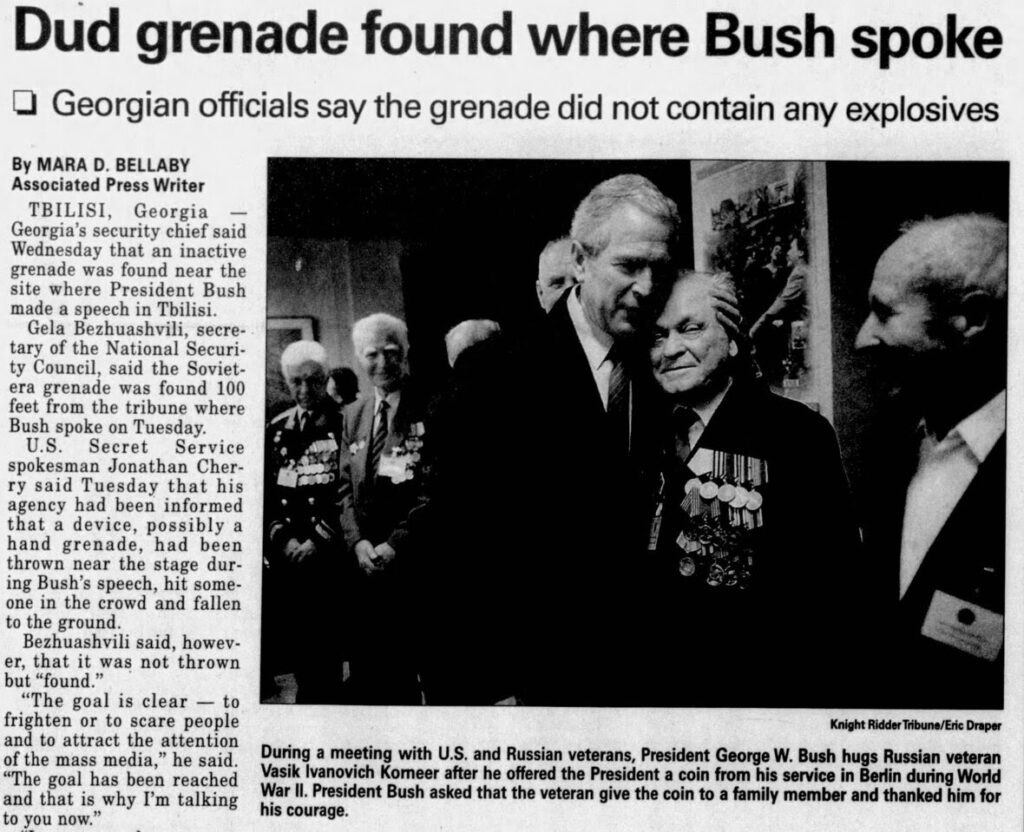
The oddest assassination attempt was George W. Bush having a grenade tossed towards him in Tbilisi, Georgia, in 2005 (read below).
PRESERVE YOUR FAMILY HISTORY, TODAY
 PRESERVE YOUR FAMILY HISTORY, TODAY
Reach out to Dancestors Genealogy. Our genealogists will research, discover, and preserve your family history. No one is getting any younger, and stories disappear from memory every year, eventually fading from our ability to find them.
Preserve your legacy and the heritage of your ancestors.
Paper gets thrown in the trash; books survive!
Ready to embark on your family history journey? Don’t hesitate. Call Dan Nelson and get your project started!
