


11 Jul Genealogist Newsletter- July 11, 2026
Contents
THE NEWSLETTER PODCAST STYLE!
We’re headed to Europe and I am glad the heat wave has passed, but I can attest to the accuracy of the 10% above.
You can now listen as well as read the Dancestors Genealogy Newsletter.
Listen to all Dancestors Genealogy newsletters on our podcast page.
PODCASTS
 MORE ON PHEBE STEVENSON
 MORE ON PHEBE STEVENSON
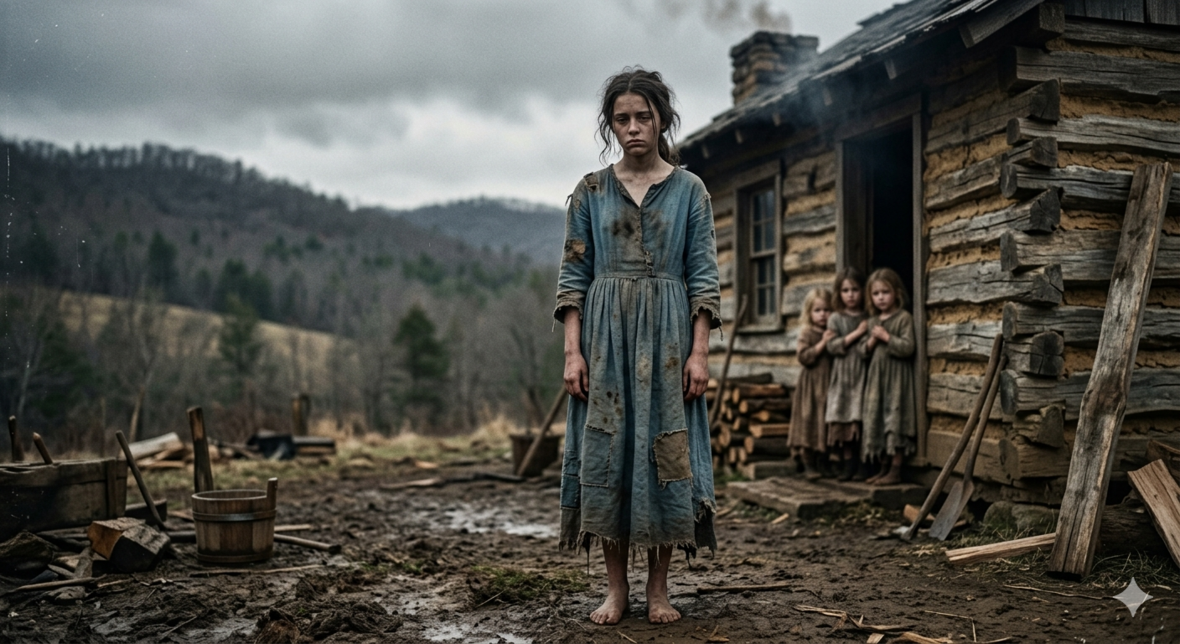
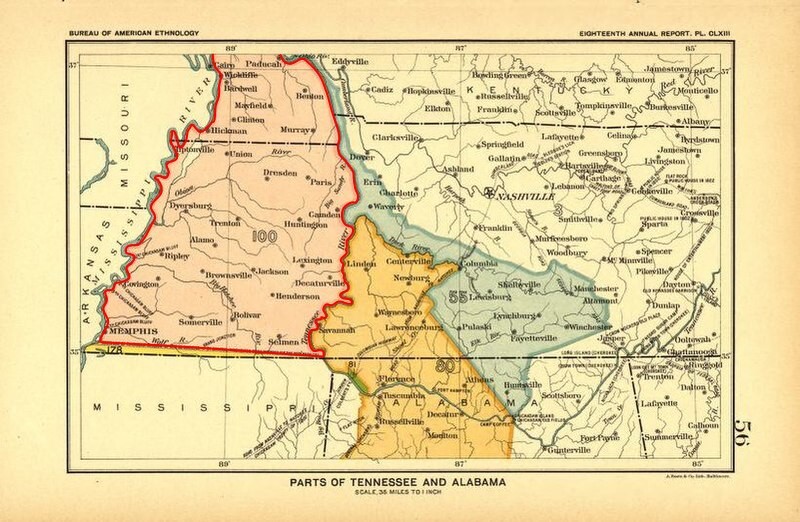
In the last edition, in the Phebe article PHEBE I’d said that there was a story that my David Stevenson had left Phebe and gone west to the Jackson Purchase (shown below), and I’ll tell you more about it in this edition. I determined that it would have happened around 1823, as David was showing up in 1824 and 1825 in Henry County, TN, records, in the “west”.
The breakthrough on the two Phebes also gave me the information I was seeking on the court record that was located in the Tazewell Chancery Court records about David’s abandonment, where Bob Belshe had gotten a copy of the court records, and it’s a sad story, but it shows one young relative’s courage.
David abandoned Phebe and left her with four little girls, and Phebe died of cholera in January 1833, along with her brothers Robert and John. Cholera was sweeping the area, and her sister, Eleanor, died a month later, leaving an infant who died a short while later. So that left the oldest child, Craven as the only remaining sibling.
Uncle Craven refused to have the four little Stevenson girls bound out, and he stayed to “help out”. The surviving eldest daughter, Malinda, appointed William K. Higginbotham as her guardian, and she filed suit against him. Craven seemed to be in charge, so he stayed in Tazewell County for several years, providing marginal care to the four girls for at least two years (1833-1835).
In 1845, Malinda Stevenson filed suit in the Circuit Superior Court of Law and Equity for Tazewell County against William K. Higginbotham. The bill of complaint notes that Malinda’s mother, Phebe Belsher Stevenson, died in 1833 and left Malinda and her three younger sisters as orphans. Malinda’s father, David Stevenson, had “left the country” (meaning to another state) and had not since returned. The bill of complaint further notes that Elenor Belsher died at the same time as Phebe.
Elenor was Phoebe’s sister and Malinda’s maternal aunt. Elenor left an illegitimate son, Zachariah, and the infant survived his mother but a very short time. Two of Phebe’s brothers, John and Robert, also died about the same time. William K Higginbotham was appointed administrator of all four estates as well as guardian of the four little girls. This in itself is curious since there were several Belshees in Tazewell at the time. The bill of complaint notes that Higgenbotham not only wasted the means of various estates, but he also abandoned the little girls to provide for themselves as best they could. Malinda asked the court to order an accounting to determine what Higginbotham owed her.
Several depositions were taken on May 30, 1845.
George Stevenson (brother of David) was asked if William Higginbotham had purchased Phebe’s share of William Belsher’s land from Phebe Stevenson before she died. He responded that Higginbotham proposed paying him, George Stephenson, to find David Stevenson and obtain a deed to the land. George Stevenson was under the impression that Phebe Belsher Stevenson had sold her interest in William Belsher’s land to Higginbotham.
Thomas Davis:
Questioned by plaintiff’s attorney.
How long did Malinda live at your house?
How old was she when she came to live with you?
Did she receive anything from William K Higginbotham?
Did you receive any compensation for her maintenance from William K Higginbotham?
Answer:
She lived with me for some 9 or 10 months. I do not know what age she was when she came to live with me, but I suppose she was 12 or 13. Craven Belsher told me that he had got 2 cotton dresses for Malinda with the money from the estate. I received no compensation from Mr. Higginbotham for maintaining her.
Questioned by plaintiff’s attorney.
What was the nature of her treatment while living with you?
Answer:
She lived in a room at my house with her uncle, Craven Belsher. He furnished her with provisions. I think their fare was hard as to clothing and diet.
Polly Davis:
Questioned by plaintiff’s attorney.
State the nature of the treatment of Matilda while living with you?
Answer:
She lived in a room with her uncle, Craven Belsher, who furnished her with provisions; she was badly clothed and badly fed.
Question by defendant: Did you ever hear Craven Belshee say that he would not suffer her to be bound out?
Answer:
I heard him say he would not like to have them bound out, that he wanted to keep them all together if he could.
Jemima Stephenson: Questioned by plaintiff’s attorney.
State what you know of the treatment of Matilda while living near you with her uncle, Craven Belshee.
Answer:
She lived in a kitchen in my yard with her uncle. She got one new dress during the time she stayed there; their food was tolerably bad, their food and clothing were rough during the time they stayed there.
Questioned by plaintiff’s attorney.
State the nature of the treatment Matilda received from William K Higginbotham when she went to his house for protection.
Answer:
I do not know.
Questioned by plaintiff’s attorney.
State the nature of the treatment she received from her uncle, Craven Belshee, when she left him and went to the house of William K Higginbotham.
Answer:
He treated them badly, and she showed me the bruises on her.
Questioned by William K Higginbotham:
The children were rude and required a good deal of chastisement to keep them in their proper place, were they not?
Answer:
They were.
Questioned by William K Higginbotham:
Did you ever hear Craven Belshee threaten me if I had them bound out?
Answer:
I don’t recall ever doing so, but I heard from them that he did.
Joshua Belshey:
Question by the complainant’s attorney.
How old was Matilda when she came to live at your house? How long did she live with you, and did you receive any compensation for her board during the time she was with you?
Answer:
I did not know her age, exactly, but I suppose she was 10 or 12. I think they were at my place for about a year, part of the time living in my house and part of the time living in the house with their uncle. I received nothing for their board. We all ate at the same table, and their uncle found part of the provisions.
Quest by complainant’s attorney:
Did you know whether or not William K Higginbotham furnished Malinda any clothing during the time she was with you?
Answer:
He employed my wife to make clothing for them, both to weave and to sew, at least she did it, and he paid for it.
Question by William K Higginbotham:
Did you ever hear Craven Belshey threaten me if I had them bound out? _
Answer:
I think I heard him say he would not suffer them to be taken away, but he wished to keep them together._
The response of William K Higginbotham included :
“The children and widow of said William Belsher all lived together on said land for some 12 or 15 years after his death; but being lazy and indolent, they scarcely raised a support, and becoming dissatisfied, they determined to move and applied to your respondent Higginbotham to purchase their land. They were endeavoring for six months to sell to respondents and others, and finally, your respondent, Higginbotham, purchased the said land for $1000. of which $500. were to be paid in cash and the remainder in property; and all the children of William Belsher and also his widow, Hannah, executed the bonds herewith filed, marked A and B, and prayed to be taken as part of this answer. Phoebe Stephenson did not execute a bond with the rest, because her husband, who had run off 8 or 9 years before and was reported to be dead, was much in debt, and remaining heirs said that if they executed a bond with Phoebe, they might be sued with her for some of the debts done by her deceased husband…..The land was conveyed to the respondent by Hannah, the widow of William Belsher, and by John and Craven, and the others died without executing any deed. “
Regarding his administration of the four estates (Phebe, Elenor, John, and Robert), Higginbotham wrote that he had settled and paid off several of the children but had not been able to reach an agreement with Malinda Stephenson.
Settlement:
On September 9, 1845, Malinda and Higginbotham agreed to submit the dispute to arbitration. As part of the settlement, Malinda was to give up any claim to the land, and Higginbotham agreed to pay whatever amount was determined he owed. William M Gillespie was named to make the determination. “…after examining the accounts fully, the undersigned find the said Higginbotham to be indebted as guardian to the said Malinda in the sum of sixty-eight dollars and ninety-seven cents. This 24th day of September 1845. Signed, Wm M Gillespie”
Interpretation:
_Through the eyes of the 21st century, we see many wrongs here. Higginbotham had a conflict of interest. He wanted to complete the purchase of William Belshee’s land, but he had responsibility for four children. Those children have a right to the estate of Phebe and perhaps also Elenor’s estate. The estate should be maximized in value, but Higginbotham was incentivized to minimize the land value. Then we have our now-old but still-in-debt Craven Belsha, who steps in to help out. Craven physically abused Malinda when she went to Higginbotham for help. We don’t know other details about why Malinda went to Higginbotham, but they would be bad. Was she hungry? Were her sisters starving? Were they ill?
Malinda must have been a strong woman to grow up in the circumstances described and still have the determination to take on a prominent citizen in court in 1845 to hold him accountable. She did not get much, but she must have felt some pride in a positive settlement. And then we have one of the root causes of this tragedy: cholera and the death of four young adults who should have been caring for the little girls.
BREAKING THROUGH ON MY VAN KIRK LINE
 BREAKING THROUGH ON MY VAN KIRK LINE
My 4th Great Grandmother, Sarah “Ally” Van Kirk, had long eluded my attempts to determine who her parents were.
All I knew before her marriage to James Carroll (probably about 1792, as their first child was born on March 20, 1793, when she would have been only 14, and he would have been 21), was that she was born on October 28, 1778, in MD, due to the state of birth being recorded in the 1850 and 1860 censuses.
James Carroll was also born in MD, but he died in Kingwood. Oddly, in the 1850 census, she was recorded as a 72-year-old Ally Van Kirk, living with her 79-year-old husband, James Carroll. In the 1860 census, she was also recorded as Ally Van Kirk, as an 82-year-old widow living with the Arns Family.
We also knew that somehow, she was related to Hiram Van Kirk, as indicated in a Preston County, WV history book. He ran a hotel in Kingwood, and was born about 1800 in VA. So age-wise, more like the name of a nephew.
At his 1870 death, he left everything to his wife, but under the care of several Carroll family members. His death certificate listed his father. Alcey is a feminine Dutch name for Alice. Was Hiram born out of wedlock and sent down to PA to have his Aunt Sarah “Ally” watch over her 24-year-younger relative? There were no other Van Kirk’s listed in the 1790 through 1840 Virginia censuses, just Hiram.
All of the Maryland Van Kirk’s were further east, like Baltimore, and they didn’t line up age-wise. However, I decided to look across Maryland into western PA, as the distance to the PA border from Kingwood was only 17 miles.
I found the will of John Van Kirk that was prepared on May 29, 1792, in Washington County, PA, just over the PA line. In his will, he left legacies to his minor daughters, Elizabeth, Sarah, and Catherine. Sarah would go on to be married that year.
This was exciting to finally be on the trail of more Dutch ancestors; my dad’s family already had the Nevius (Neefes) and Van Voorhees lines, and my mom had Van Vliet ancestors. Now I was able to take the Van Kirk’s back to the emigrant Jan VerKerck (1633-1688). He settled in New Utrecht (now part of Brooklyn, New York) in 1675 under Dutch colonial rule. He was a prominent magistrate and landowner who helped lay out the early grid maps of Brooklyn. He is on the Assessment Rolls of New Utrecht in 1675, 1676, 1683, and 1693. He was a magistrate in 1678 and 1684. He was on Dongan’s Patent in 1686. He was in the 1688 Census and took the Oath of Allegiance to the British in 1687.
In following John Van Kirk’s maternal line, his mother was Dorothy Morgan, her mother was Sarah Emmons, and her mother was Sarah Antonise Van Salee, the daughter of Anthony and Grietse Reyniers Van Salee. Anthony was a Dutchman of a different breed.
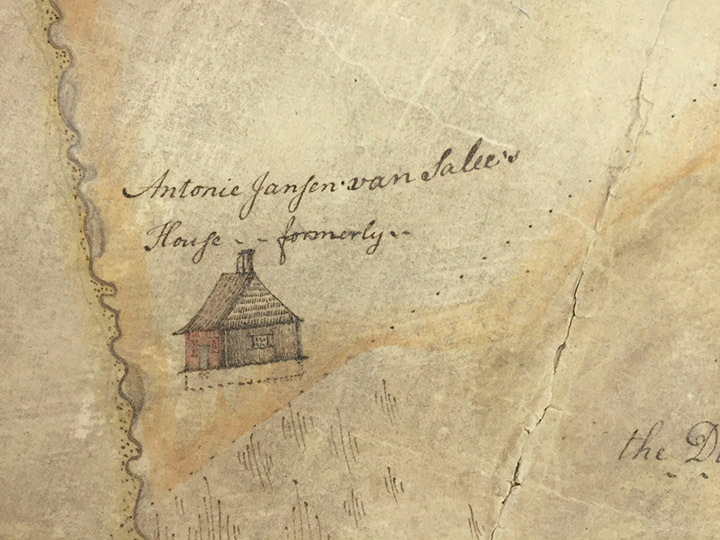
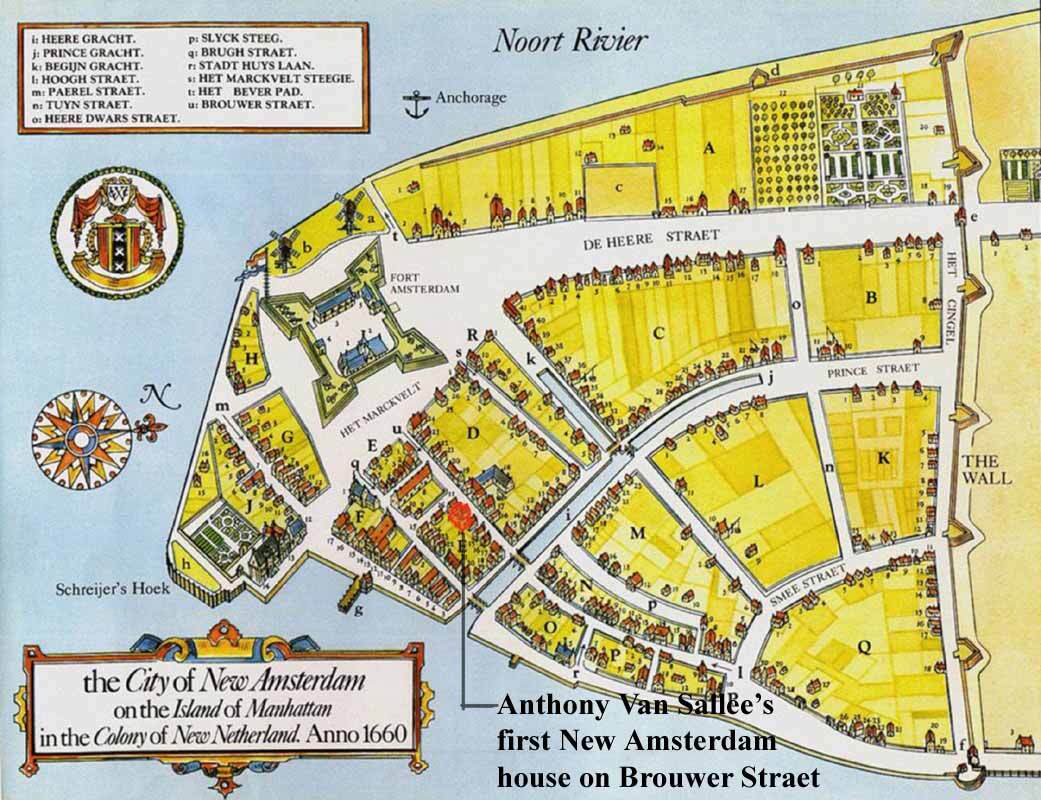
Anthony Janszoon van Salee (1607–1676) was an original settler of and prominent landholder, merchant, and creditor in New Netherland, a 17th-century colonial province of the Dutch Republic located on the East Coast of what is now the United States of America. Van Salee, commonly known as Anthony the Turk. His plantation, called Turk’s Plantation, is shown on a map tied to a 1788 lawsuit, adjacent to a 1660 recreation below.
More on Anthony and others in the next edition.
KNIGHTS OF THE GOLDEN CIRCLE
 KNIGHTS OF THE GOLDEN CIRCLE
While working on the article on the Two Moon Sisters from the last edition I came across the Knights of the Golden Circle.
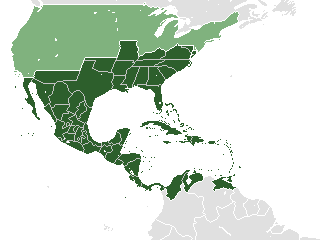
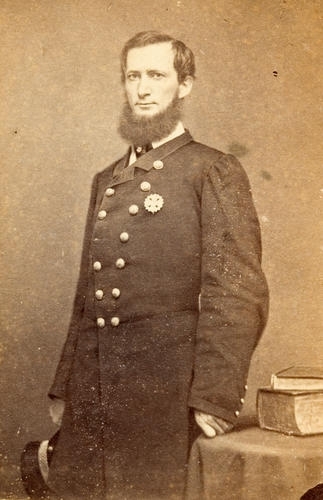
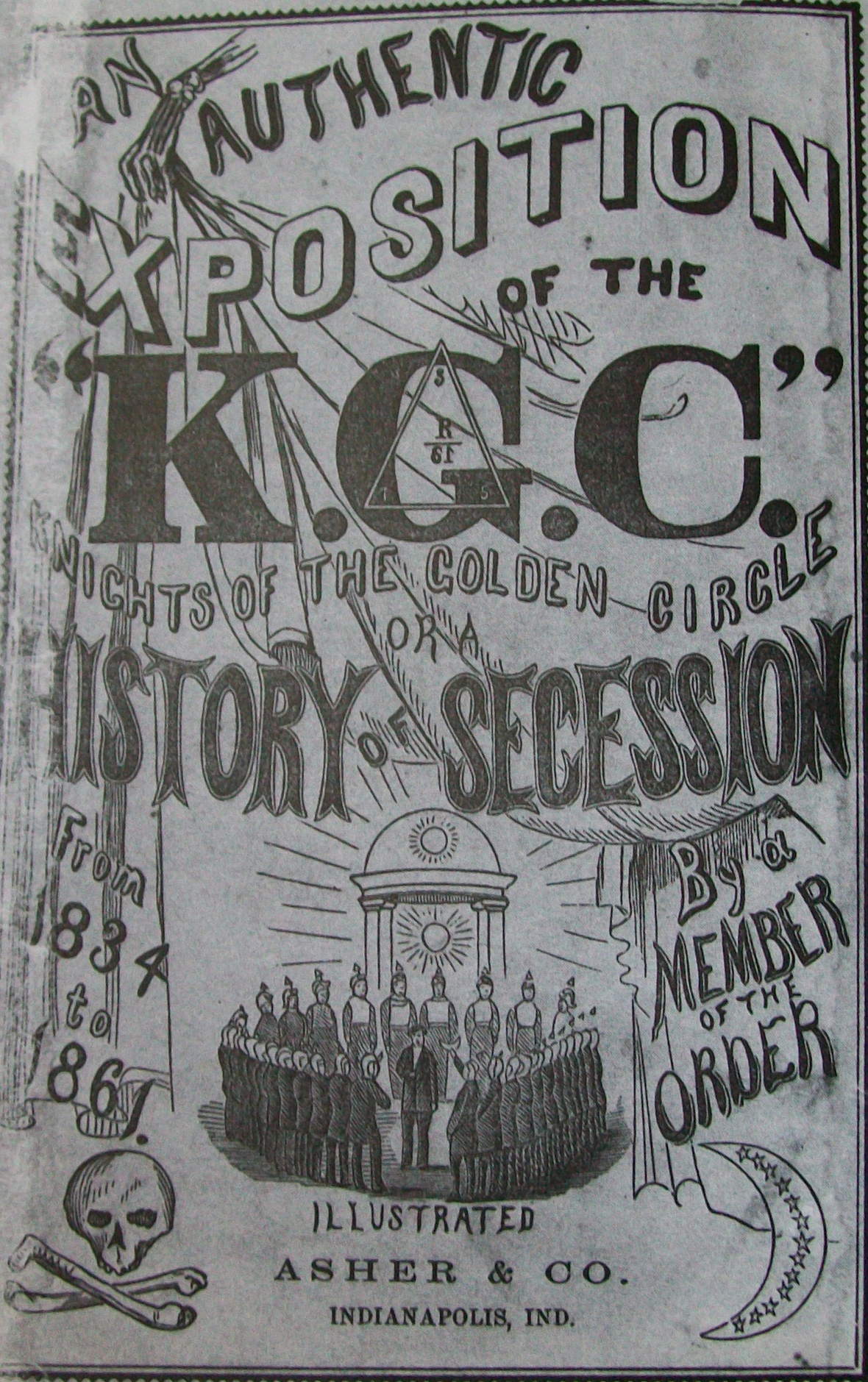
The Knights of the Golden Circle (KGC) was a secret society founded in 1854 by American George W. L. Bickley (pictured below left. Its objective was initially to expand the United States into Latin America, adding slave states and ensuring the permanent continuance of slavery. This later became a plan for the southern states to secede and then add Latin American territory. The ‘golden circle’ was a circle of 16-degree radius (about 2,400 miles) centered on Havana, covering territories whose climates were suitable for large-scale plantation agriculture. It would have consisted of the Southern United States, Mexico (which was to be divided into 25 new slave states), Central America, Cuba, Haiti, the Dominican Republic, Caribbean South America, and most other Caribbean islands (see the map above).
The KGC’s proposal grew out of previously unsuccessful proposals to annex Cuba (the Ostend Manifesto), parts of Central America (the Filibuster War), and all of Mexico (the All-of-Mexico Movement). In Cuba, the issue was complicated by the desire of many in the colony for independence from Spain. Mexico and Central America had no interest in joining the United States. Initially, the KGC advocated that the United States should annex the new territories to vastly increase the number of slave states, and thus the power of slaveholders.
In response to the increased anti-slavery agitation that followed the Dred Scott decision (1857), the Knights changed their position: the Southern United States should secede, forming their own confederation, and then invade and annex the other areas of the Golden Circle. The proposed new country’s northern border would roughly coincide with the Mason–Dixon line, and within it were included such cities as Washington, D.C., St. Louis, Mexico City, and Panama City. In either case, the goal was to irreversibly increase slavers’ political and economic power.
During the American Civil War, some Southern sympathizers in Northern states such as Ohio, Illinois, Indiana, Minnesota, and Iowa joined the KGC, which was renamed first the Order of American Knights, and then, in a deliberate reference to the Sons of Liberty of the American Revolution, the Order of the Sons of Liberty.
The KGC has been called a “model” for the Ku Klux Klan. Although nominally secret societies, the actual existence of the Knights of the Golden Circle and the Order of the Sons of Liberty was never considered a secret.
Back to George Bickey. He was hounded by creditors, and he left Cincinnati in the late 1850s, traveling through the East and South to promote an expedition to seize Mexico and establish a new territory for slavery. He found his greatest support in Texas and, within a short time, managed to organize 32 chapters there. In the spring of 1860, the group made the first of two attempts to invade Mexico from Texas. A small band reached the Rio Grande, but Bickley failed to show up with a large force he claimed he was assembling in New Orleans, and the campaign dissolved. In April, some KGC members in New Orleans, displeased with Bickley’s inept leadership, met and expelled him, but Bickley called a convention in Raleigh, North Carolina, in May and succeeded in having himself reinstated as the group’s leader. Following the outbreak of the American Civil War, numerous Golden Circle members focused on making the New Mexico Territory part of the proposed Golden Circle. In May 1861, members of the KGC and Confederate Rangers attacked a building in Texas which housed a pro-Union newspaper, the Alamo Express, owned by J. P. Newcomb, and burned it down.
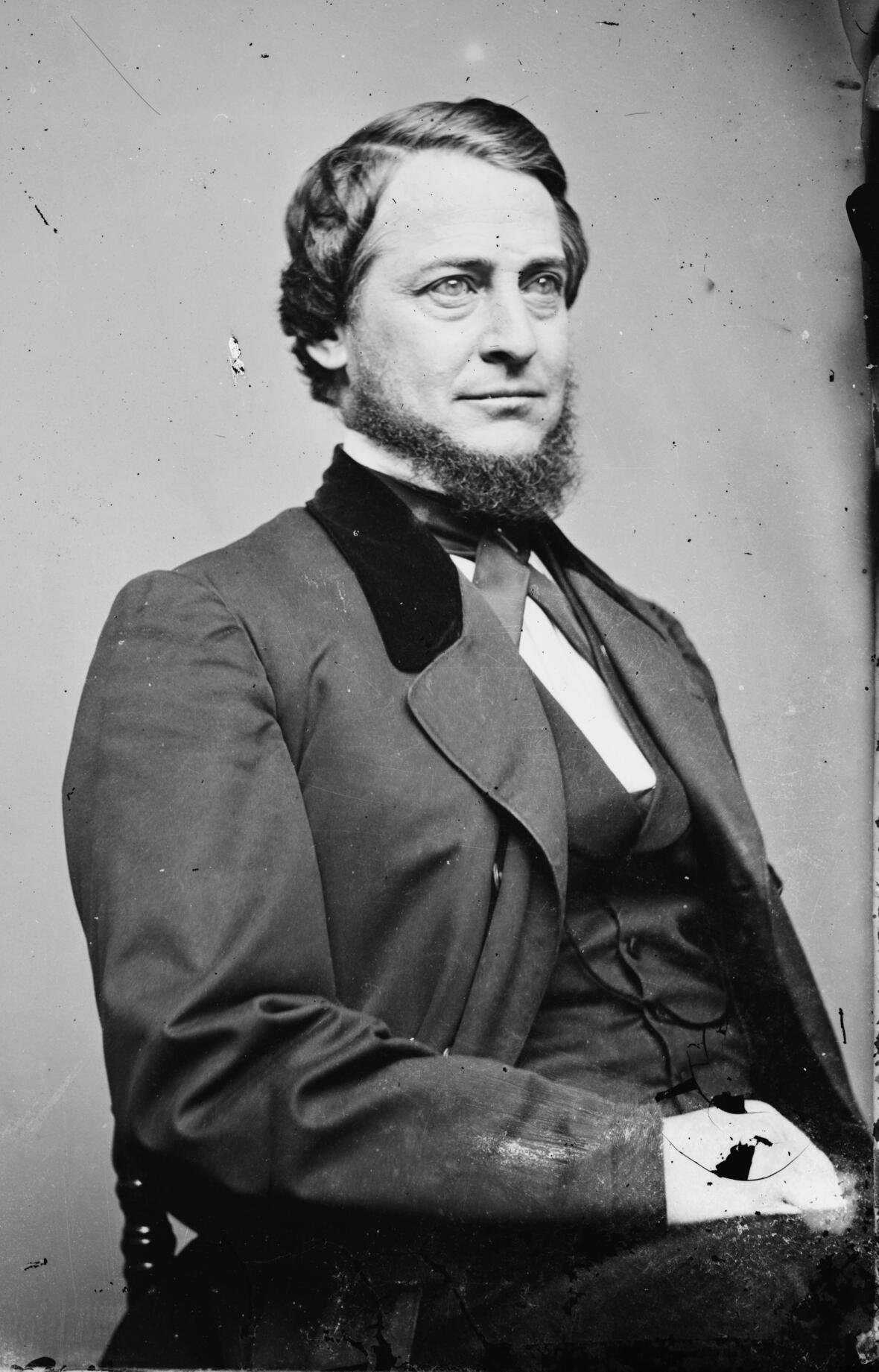
KGC members largely aligned with Copperhead politicians who wanted a negotiated end to the war. In late 1863, the Knights of the Golden Circle were reorganized (sans Bickley) as the Order of American Knights and again, early in 1864, as the Order of the Sons of Liberty, with Clement Vallandigham (pictured below right), the most prominent of the Copperheads, as its supreme commander. The order was dissolved in 1864 after being exposed, with members arrested and tried for treason.
CHIEF SUMMERFIELD
 CHIEF SUMMERFIELD
My wife’s elusive ancestor Richard Franklin had a grandson named Alfred Summerfield Franklin, and by another son, a great-grandson, Francis Clarence Summerfield Franklin.
This provides a big hint about a potential Franklin ancestor. Was Richard Franklin’s wife a Summerfield or was his mother a Summerfield? Of course, we know that biologically, he appears to be a son of Thomas Hatcher and Wilmouth Blankenship.
The only Summerfields in early Virginia were in far western Virginia, and not around the greater Richmond/Petersburg area where Richard was from. I searched for any Summerfield marriages in Franklin, Hatcher, and Blankenship, and one such marriage came up: a marriage of Phebe Summerfield to Joseph Blankenship. It turns out Joseph was the first cousin of Wilmouth Blankenship Hatcher. So, we are off slightly on the DNA match, or how did Summerfield become so ingrained to show up in two different branches of the tree?
So, when I went to see who Phoebe’s parents were, and the answer, while frustrating, helped to maybe explain why the name endured. Her father was “Chief Summerfield”, a name that has no records to support his existence; therefore, he becomes mythical. Mythical names have as good a chance as any to be passed down, as there’s a story that’s more fun than most of our names.
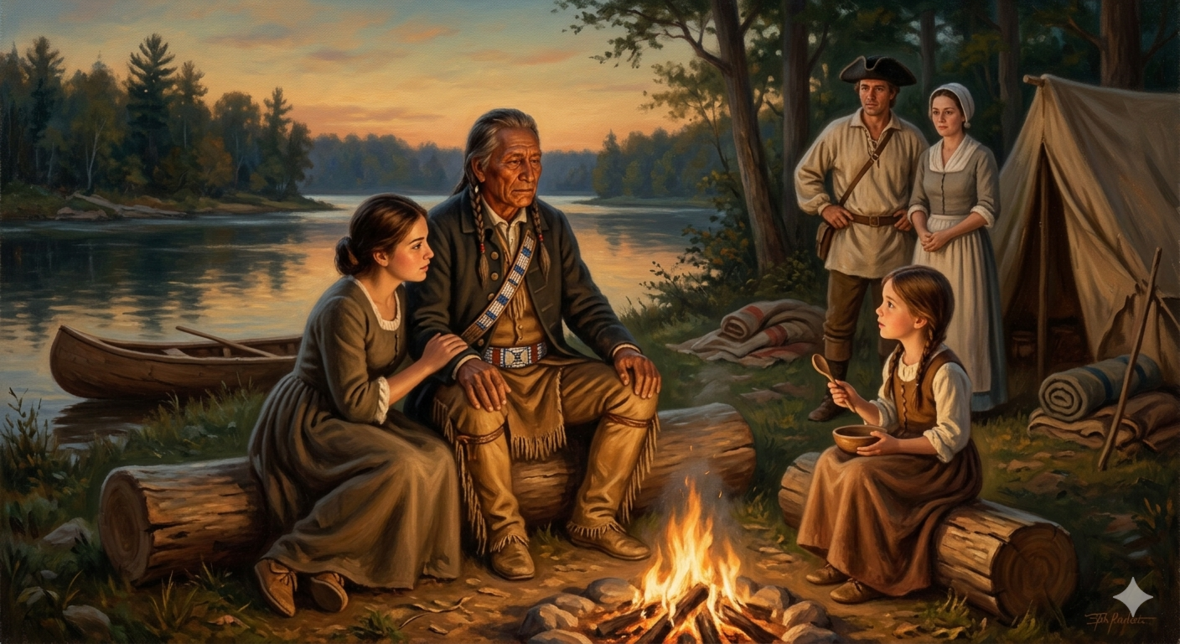
Here’s the mythical story. In the mid-1700s, Chief Summerfield arrived in the rolling hills of Chesterfield County—a stranger from a distant northern world. He was born of the Penobscot Nation, far up in the rocky, river-threaded forests of Maine. Why he left the ancestral lands of the northeast remained a secret locked deep within him, but he did not make the arduous journey south alone. By his side was his wife, a resilient woman named Elizabeth, and a traveling companion named Joseph Roy. Together, they navigated the shifting, often perilous borderlands of a rapidly changing America, carrying only what they could pack and the quiet dignity of survival.
When the travelers finally settled in the James River basin, the locals were captivated by the stately Penobscot man. He possessed the quiet aura of a leader, a man who spoke rarely but carried himself with the gravity of a sachem. Though he held no official title in the south, a local settler was so moved by the man’s noble bearing that he bestowed a new moniker upon him.
“He carries himself like a chief,” the settler remarked. And so, the legend was born. To the community, he became Chief Summerfield, and his family took the name as their own.
Chief Summerfield and Elizabeth raised two daughters in the Virginia backcountry. The girls grew up walking between two completely different worlds, their identity a delicate thread stitching Indigenous heritage to the fabric of colonial Virginia. One of these daughters was Phebe Summerfield, born around 1740. She grew into a sharp-minded and observant young woman, watching the smoke rise from the hearths of Chesterfield County as the shadow of the coming Revolutionary War lengthened over the colonies.
In time, Phebe’s path crossed with Joseph Blankenship, a hardworking man from a prominent local family. When they married, the mythical lineage of the Penobscot traveler was officially woven into the colonial records. Through their union, Chief Summerfield’s bloodline expanded, connecting his family to the sprawling networks of the Blankenships, the Hatchers, and the Franklins.
Decades later, after the old Chief and Phebe had both been laid to rest in the Virginia soil, the grander details of their lives began to blur. To the great-grandchildren who gathered around stone hearths in the 1800s, Chief Summerfield became a ghost of the frontier—a legendary, larger-than-life figure who had stepped out of the northern mists to anchor their family tree. Scholars and genealogists would later search in vain for formal marriage certificates or official treaties linking the names. But the lack of ink on paper did nothing to dim the truth, which the family kept alive. They knew that before the Blankenships and the Franklins built their homesteads, a Penobscot man had walked the wilderness, leaving a legacy of resilience that no passage of time could ever fully erase.
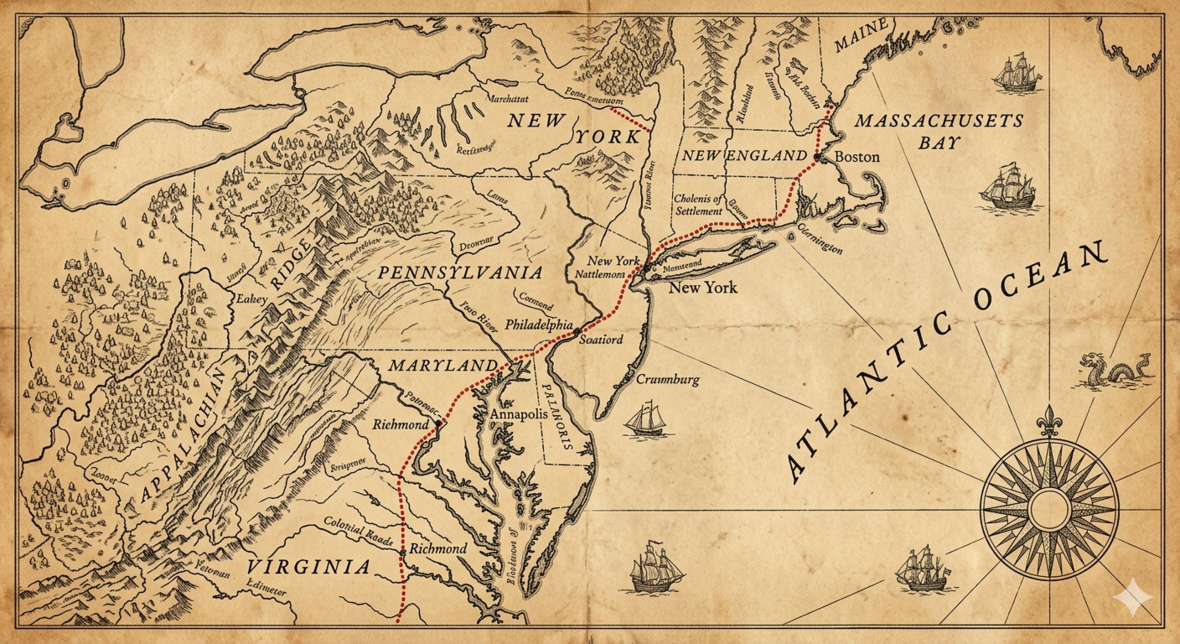
Chief Summerfield’s arduous 800-mile migration from Maine to Virginia was a major overland journey down the colonial East Coast that would include traveling through multiple British colonies and multiple tribal lands, all fraught with danger:
• They would begin in the rugged, river-threaded homelands of the Penobscot Nation in northern Maine.
• They would have traveled southwest through the Province of Massachusetts Bay, navigating early networks that became the Boston Post Road.
• They would have pushed past the Hudson River in the Province of New York, crossing through traditional Lenape and Susquehannock territories in New Jersey and Pennsylvania.
• They would have followed early trading paths through Maryland Colony, undertaken a dangerous crossing of the Potomac River, and entered the Colony of Virginia.
• Then they would have settled permanently in the James River basin of Chesterfield County, where the family lineage eventually integrated into the Blankenship and Hatcher family trees.
“CAN YOU WALK 23 MILES IN A DAY? COULD YOU AT 96?”
 “CAN YOU WALK 23 MILES IN A DAY? COULD YOU AT 96?”
My 5 X Great Grandfather Anthony Carroll was born in 1725 in Scotland. He was a British sailor released from military duty because he was overage. By 1770, with his wife, Mary Donaway, Anthony had immigrated to America. He was a weaver by trade. Anthony first settled in Annapolis, Anne Arundel Co., Maryland.
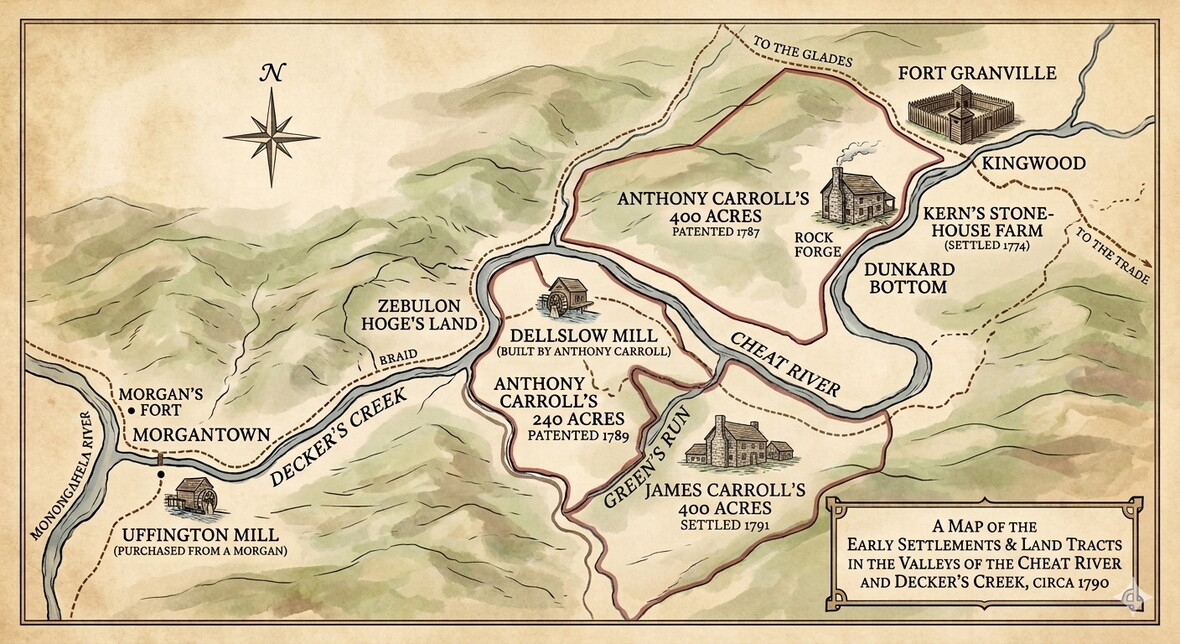
He took some advice and headed west to Morgantown, Monongalia Co., Virginia. Here, he found the Morgans (a large family) and the Indians arguing, making it unsafe for bystanders. So, he, along with others, moved into the fort at Granville. By 1776, he had bought the Kern’s stone-house farm (settled in 1774) along the Cheat River at Rock Forge, adjoining Dunkard Bottom. Dunkard is the largest body of truly level land in present-day Preston Co., near Kingwood, Virginia, known for its sandy, unproductive soil. He patented these 400 acres in 1787. Later, he bought a mill at Uffington from a Morgan. He also built a mill at Dellslow and operated both mills and the farm for several years. Finally, he patented an additional 240 acres of land on Decker’s Creek (pictured above) adjoining Zebulon Hoge’s in 1789.
In 1791, the court called him to testify for Owen Davey, who was accused of stealing a canoe from Thomas Evans. The court fined Davey one penny. Anthony and his son James were both called to testify in 1794 for Baldwin Weaver, a blacksmith accused of assaulting Richard Merrifield. Weaver was found innocent. In 1798, the commonwealth called John Scott to testify against Anthony and James Carroll for Anthony’s assault on Dudley Evans (Anthony was roughly 73 years old).
Anthony and Mary had two children. After Mary’s death, he married a second wife (name unknown), who died right after the marriage, and they had no children. After her death, Anthony married Rose Hall, by whom Anthony had another child. After her death, he took a fourth wife, Mrs. Walls.
At age 96, he walked from Morgantown to Kingwood, 23 miles away, in one day. Some of his descendants claim it was to see a lady. He then walked back a few days later.
You can see on the map below the dotted-line road that Anthony would have used to go from Morgantown to Kingwood. He would have passed his Uffington Mill, walking along Decker’s Creek, past this Dellslow Mill, and his 240 acres, past his son James’ (the husband of Sarah “Ally” Van Kirk discussed above) 400 acres on Green’s Run, continuing along the Cheat River, through Dunkard Bottom, past the Rock Forge and his 400 acres, known as the Kern’s Stone-House Farm, and into Kingwood. Since he lived near Kingwood, the 23 miles likely referred to the return trip.
Also, if you have never been to West Virginia, it’s hilly, and having been to Preston County, it’s really hilly; however, I guess at 96, it’s not a good idea to get on a horse.
Anthony died in 1832 in Monongalia, VA, at age 107, which, if he was released from service for being overage at 45 in 1770, wouldn’t be a stretch to see him be that age when his 1832 will was executed.
BABIES WEARING WHITE RIBBONS
 BABIES WEARING WHITE RIBBONS
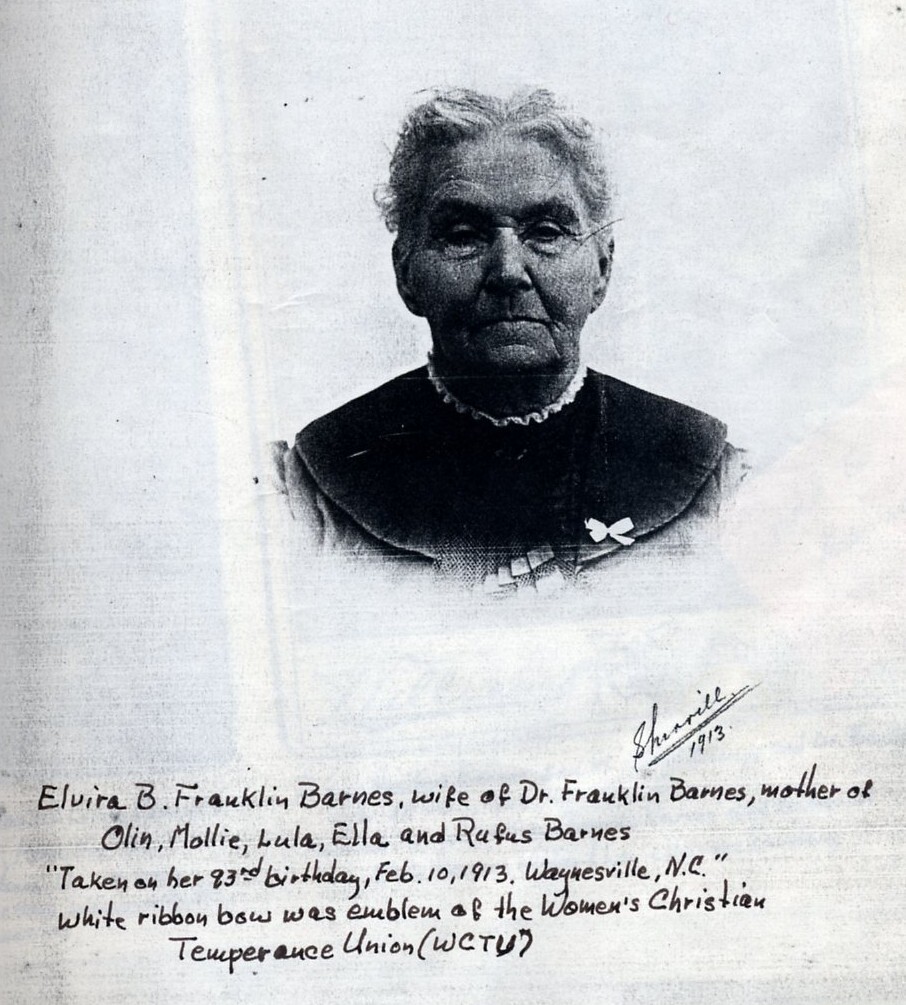
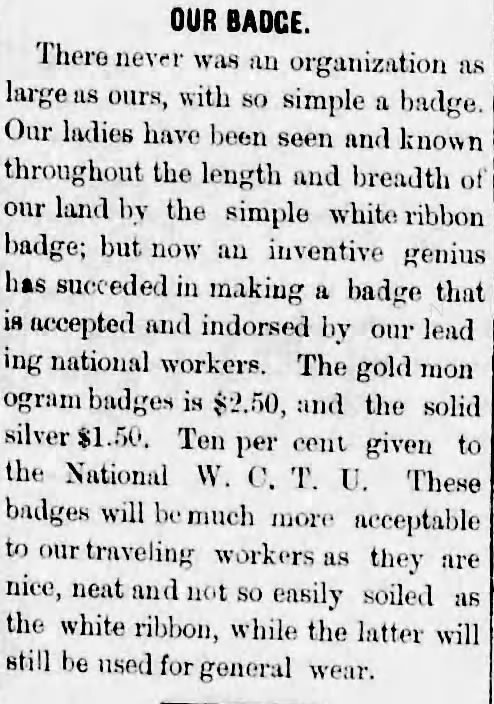
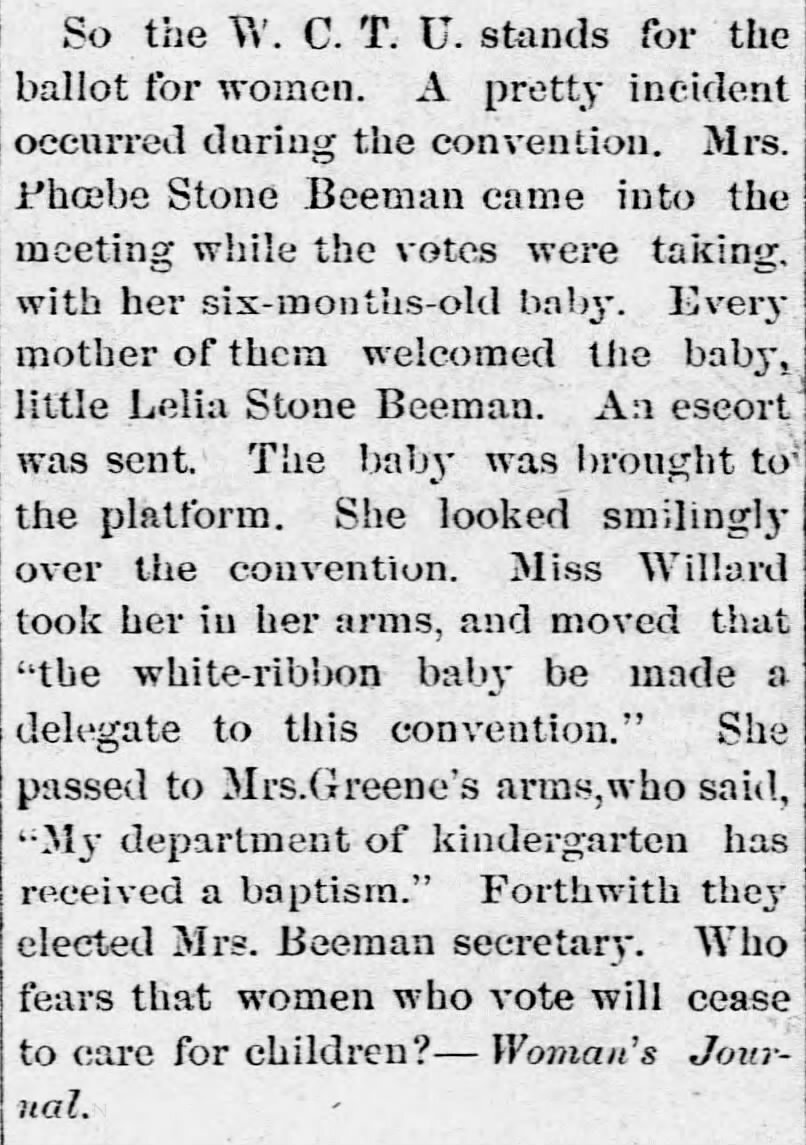
Elvira was deeply involved in the Women’s Christian Temperance Union (WCTU). Later, so was her daughter, Lula Barnes Ansley; Lula wrote The History of the WCTU in Georgia. The white ribbon was worn by members. Notice the one in Elvira’s picture, and also Lula Barnes Ansley is wearing one in her picture.
Her daughter Ruth remembered having a white ribbon pinned on her as an infant. This organization began just to abolish the evils of liquor but, under the influence of Francis Willard, expanded to include women’s rights of all kinds, including the right to vote.
That is explained by the fact that the Woman’s Christian Temperance Union conducts a White Ribbon Recruit (WRR) ceremony, in which babies are dedicated to the cause of temperance through a white ribbon being tied to their wrists, with their adult sponsors pledging to help the child live a life free from alcohol and other drugs.
PRESERVE YOUR FAMILY HISTORY, TODAY
 PRESERVE YOUR FAMILY HISTORY, TODAY
Reach out to Dancestors Genealogy. Our genealogists will research, discover, and preserve your family history. No one is getting any younger, and stories disappear from memory every year, eventually fading from our ability to find them.
Preserve your legacy and the heritage of your ancestors.
Paper gets thrown in the trash; books survive!
Ready to embark on your family history journey? Don’t hesitate. Call Dan Nelson and get your project started!
