

24 Jun Genealogist Newsletter- June 27, 2026
GENEALOGIST- THE NEWSLETTER PODCAST STYLE!
You can now listen as well as read the Dancestors Genealogy Newsletter.
Listen to all Dancestors Genealogy newsletters on our podcast page.
 GENEALOGIST- THE CASE OF THE THREE PHEBE’S
 GENEALOGIST- THE CASE OF THE THREE PHEBE’S
In the last edition, I shared the story of my visit to the land that belonged to my 3-times-great-grandfather, David Stevenson. DAVID’S LAND Stevenson’s land on Maiden Springs Fork of the Clinch River adjoined that of his Belshe in-laws and may have even been part of his wife Phebe’s inheritance.
There were three Phebe’s (Belcher, Belcha, Belsha, Belshee) in early Tazewell County, Virginia. While Phebe is not a direct ancestor, as I come from David’s second wife, her ancestry was part of the web I needed to untangle.
Here’s what I knew about Phebe. According to the 1820 census, she was born around 1795, likely 5 or so years older than David, who might have been a minor at their 1818 wedding. Not something you see very often. They did have a female child under 10 in the 1820 census. Was she conceived before marriage? Was that the reason for a hasty wedding?
Anyways, back to Phebe’s ancestry. The early indications from a Belshe genealogy record located in the Tazewell Library were that she was the daughter of Robert and Mary Clancy Belshe, which would have made them first cousins, since David’s mother was Mary’s sister, Phebe Clancy. Which would have made a shotgun marriage more awkward. Marrying your first cousin in 1818, Virginia was legal. However, it was not necessarily viewed as a good idea.
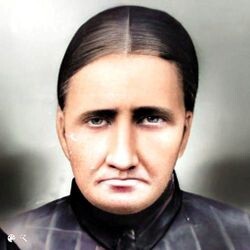
However, later in the document, it said that she married Doddridge Bailey on June 6, 1812, which was young for our 1795 Phebe. This Phebe (the happy lady pictured adjacent) turned out to be a descendant of Isom Belcher, whose family lived 25 miles north of our Phebe’s family, and were ancestors of my son-in-law’s family.
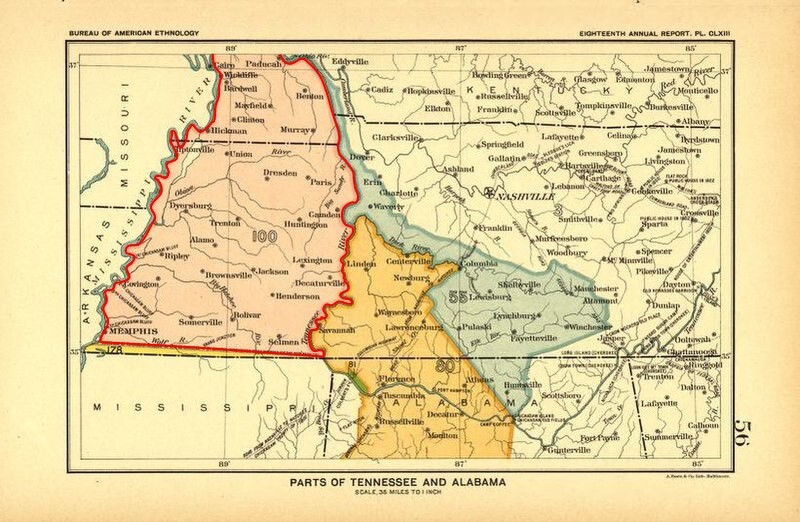
There was a story that my David Stevenson had left Phebe and gone west to the Jackson Purchase (shown below), and I’ll tell you more about that story in the next edition. I determined that it would have happened around 1823, as David was showing up in 1824 and 1825 in Henry County, TN, records, in the “west”, which would have been about the time that David’s brother James started having children with Phebe. So, I concluded that David may have left Phebe because he was running around with his brother, or that she found security with his brother, married him, and had eight children with him between 1824 and 1842, and that she outlived both James and David and passed away in 1866. Even odder, James and Phebe named a son David,
which you’d think they wouldn’t have wanted to honor the ex in such a way.
In the meantime, I’d also reviewed 755 pages of Tazewell Court records (why you hire a genealogist) to no avail, looking for anything in the court records from the 1820s or 1830s about this bizarre story.
To add to the confusion, I also found a record showing that Phebe was an Anderson, but I set that aside when I found one of her sons, whose death certificate listed his mother as Phebe Belcher.
While in this process, I came across a document in a Belshe gallery, created by Bob Belshe in 2015 to straighten out the Tazewell Belshe records. After reading through his great documentation, I found out that what I was assuming was one Phebe Belshe was two different ladies, who were first cousins. The one who was the first cousin of David Stevenson had married James Stephenson, and her cousin Phebe had married David Stevenson. That was confirmed by the fact that her father, William Belshe, had left land to his wife, Hannah Markum Stevenson, and his children, including Phebe, who married David.
Here are notes on the Jackson Purchase below: The Western Tennessee land acquisitions under President James Monroe between the Chickasaw and the U. S. affecting the states of Kentucky and Tennessee, and the Alabama Territory: Pink with red outline – Treaty of Tuscaloosa (1818) Yellow – Treaty with Chickasaw (1817) *Gray – Treaty with Chickasaw (1805).
Henry County, TN, is in the top of the pink, near the KY line, and Paris on the map is the county seat.
GENEALOGIST- THE MURDER OF THE DANE IN NYC
 GENEALOGIST- THE MURDER OF THE DANE IN NYC
I mentioned in the last edition that my ancestor Johannes Nevius had become a Schepen in New Amsterdam, replacing a Schepen who had been murdered in 1654. NEVIUS SCHEPEN The murdered Schepen was Jochem Pietersen Kuyter.
Kuyter was a native of Dithmarschen, now part of Germany, and a Dane by birth. According to tradition, he had served the Danish East India Company and the Dutch East India Company. In a joint venture with Jonas Bronck, Kuyter mounted an expedition to settle in New Netherland aboard a ship they had hired, “De Brandt van Troyen” (The Fire of Troy).
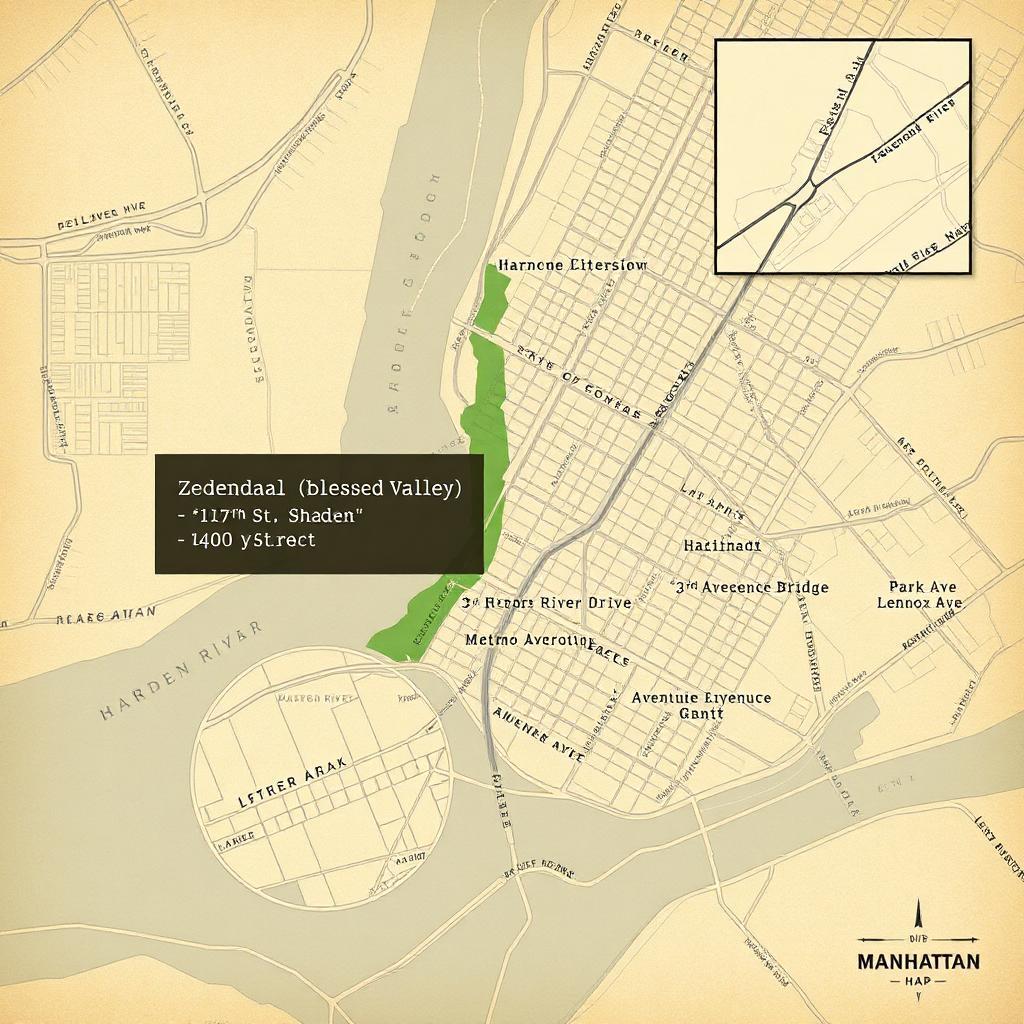
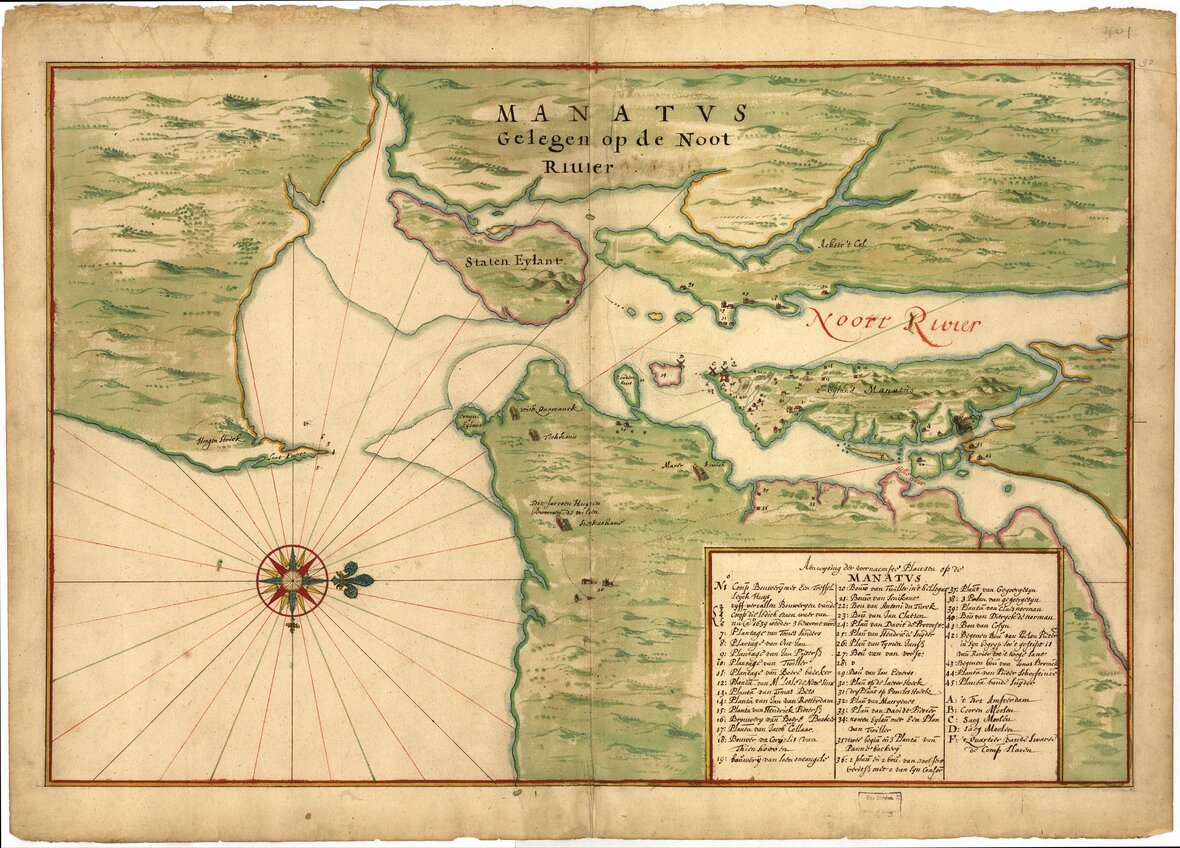
He arrived at the port of New Amsterdam in July 1639. Johannes Kuyter settled with his farmers and herdsmen upon a tract of 400 acres of fine farming land, of which he had obtained a grant from the Dutch West India Company. The homestead named Zedendaal, or Blessed Valley, stretched along the Harlem River from about the present 127th Street to 140th Street (see adjoining map).
Kuyter was married to Lentie Martens, who was possibly a sister of his friend and partner, the aforementioned Jonas Bronck. They had no children. In March 1644, the house was burned down, presumably by the indigenous population who rampaged across the colony in response to attacks at Pavonia and Corlear’s Hook.
None of the other Danes in New Amsterdam obtained the social prestige of Kuyter. He was a member of the Board of Twelve Men from August 29, 1641, to February 18, 1642, and of the Board of Eight Men, which existed from September 1643 to September 1647. After a journey to Holland, he was made a member of the Board of Nine Men, which existed from September 25, 1647, until the city was incorporated in 1653, when he was made schout (sheriff).
Kuyter twice came into conflict with the Director of New Netherland. Kuyter was a man of good education, as evidenced by his dealings with Willem Kieft, whom he believed had damaged the colony through his policies and the outbreak of Kieft’s War in 1643. In 1647, when Peter Stuyvesant arrived in New Amsterdam to replace Kieft, Kuyter and Cornelis Melyn, acting on behalf of the citizens of New Amsterdam, brought charges against the outgoing governor, demanding an investigation into his conduct in office. Recognizing the danger such actions posed to his own administration, Stuyvesant refused to consider Melyn and Kuyter’s demands and had them tried for lèse majesté. The case was quickly decided against the defendants, who were sentenced to banishment from the colony. On August 16, 1647, Kuyter and Melyn sailed aboard the Princess Amelia to appeal their convictions to the States-General in Holland. Their vessel ran aground off the coast of Wales, but both survived and presented their cases in early 1648. The States-General acted favorably upon their appeal and issued a writ of mandamus dated April 28 ordering Director-General Stuyvesant to appear in person, or through his representative, to sustain his judgment against them.
In 1651, Kuyter sold three-fourths of land and cultivated the remaining portions. He was killed by Lenape Indians in 1654. Before his death, the Directors in Amsterdam recommended to Stuyvesant that he appoint Kuyter as New Amsterdam’s schout.
A 1639 map below shows Manhattan situated on the North River with a numbered key showing settlements, with 42 representing the Zegendael homestead. #43, across the Harlem River, represents that of Bronck, who settled the land on the Bronx side of the river.
GENEALOGIST- WHERE’S MY MUSICAL?
 GENEALOGIST- WHERE’S MY MUSICAL?
I wrote about my wife’s 6th-great-uncle, James Jones, in November 2021. JAMES JONES. I came across this article from 2019 the other day, and it’s a sarcastic poke at the man who killed him.
Wartime aide-de-camp to George Washington?
Involvement with Aaron Burr?
Fatal Duel in New Jersey?
No, it’s not the guy on the ten-dollar bill, founder of The NY Post, and subject of Broadway’s phenomenal hit.
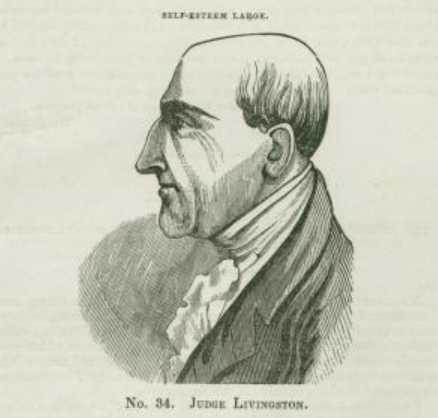
It’s Henry Brockholst Livingston (1757-1823), U.S. Supreme Court Justice and participant in a 1798 duel that killed James Jones!
But Brockholst, as he preferred to be called, was more than just acquainted with the more famous duelists. In 1800, he was part of the legal dream team in the first sensational trials of our republic – The Trial of Levi Weeks for the Murder of Gulielma Sands. American State Trials states that:
“…probably no other person tried for a felony at any time or in any part of the country had such an eminent counsel… Livingston… Hamilton… Burr”.
And, while Lin-Manuel Miranda’s “Hamilton” Act I song “Non-Stop” mentions the Weeks trial, Livingston is not mentioned!
But back to the Livingston-Jones duel….
The leading Democratic paper Argus published that at a pro-French meeting, “…Master Jemmy Jones, another boy, and not quite sixty, graced the assembly with his presence” . Federalist Jones, upon reading this false reporting, contacted the publisher Thomas Greenleaf and demanded to know the author. It was Brockholst Livingston.
Meeting in Battery Park, a humiliating nose-tweaking and caning of Livingston by Jones ensued, and the resulting duel was set for the following day.
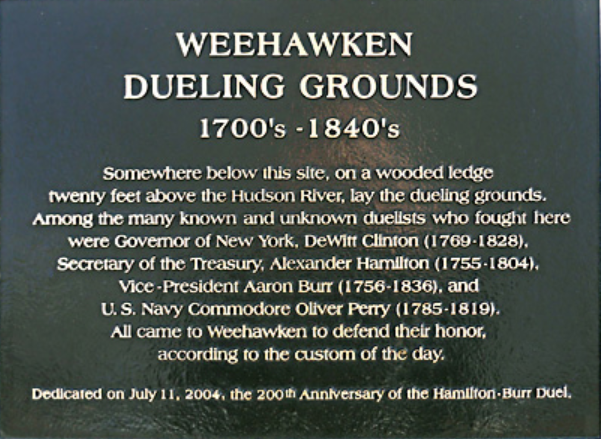
Jones met his death in the most popular dueling spot of the day: Hoboken, an area now known as Weehawken, and later the site of the Burr-Hamilton duels, which you can see below, and look whose name isn’t on the sign!
Newspapers of the day reported that the men fired at the same time, and Jones received a ball to his groin, which opened a main artery, resulting in his bleeding to death within minutes.
But Brockholst, as he preferred to be called, was more than just acquainted with the more famous duelists. In 1800, he was part of the legal dream team in the first sensational trials of our republic – The Trial of Levi Weeks for the Murder of Gulielma Sands. American State Trials states that:
And while Brockholst Livingston has yet to be on the Great White Way or pictured on currency, he did receive a recess appointment to the U.S. Supreme Court from Thomas Jefferson in 1806. His brief obituary (Daily Intelligencer, 3/19/1823) made no mention of the long-forgotten duel, but simply stated that he was a “…finished gentleman, and a truly benevolent man.”

GENEALOGIST- SCAMMER GENEALOGIST
 GENEALOGIST- SCAMMER GENEALOGIST
We’re all hyper-aware of fraudsters and scammers impacting our daily lives. There are even genealogists who are scammers. People ask me how they can make sure that they’re not getting scammed. I tell them to look at the reviews and the website, as bad guys will spend plenty of time constructing a fabricated financial institution, or some type of business where hundreds of thousands of dollars, if not millions, can be swindled away. Those types of payoffs are likely not there for them in the genealogy world.
Google and other review sites track how frequently reviews are posted (looking for mass dumps), and the IP addresses that they come from that seem out of sorts. So, it would take a really long time to amass 100’s of reviews and gather testimonials from false sources. We limit the reach of our website to Americans, but foreign sources are constantly trying to get in (last week, it was France-based IP addresses that led the way), hoping we store payment or people’s personal information on the site, which we do not.
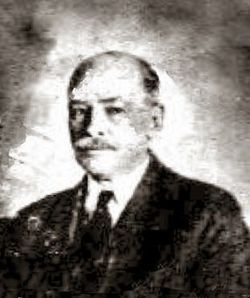
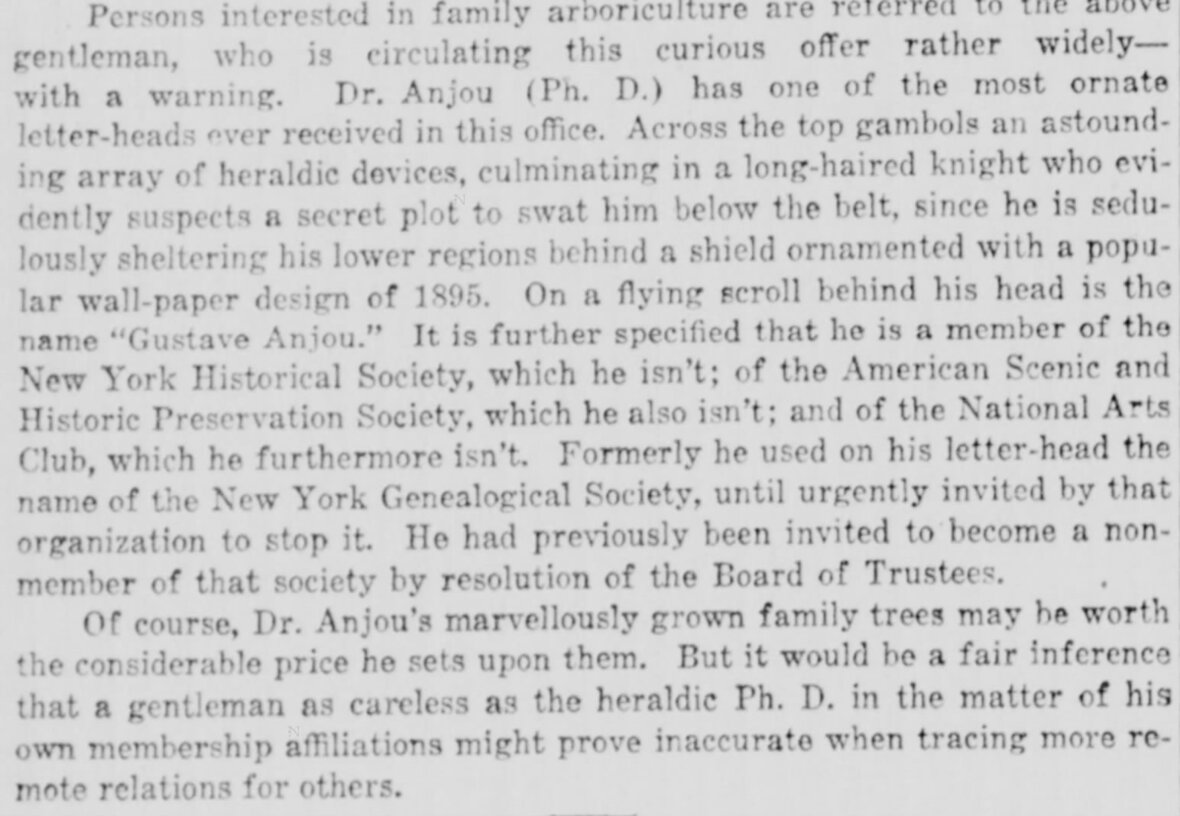
My first encounter with the work of a fraudster, was Gustave Anjou. I first came across the work of Anjou when researching my Nicholson line. The cited work was within one of his fraudulent genealogical reports.
Anjou was born in Katarina Parish in Stockholm, Sweden, and was the natural son of Carl Gustaf Jungberg and his housekeeper Maria Lovisa Hagberg. After serving a prison term in 1886 for forgery, Anjou changed his name to “Gustaf Ludvig Ljungberg” and then began using the alias “Gustave Anjou” (based on the maiden name of his fiancée, Anna Maria Anjou). Usually, he used the alias “Gustave Anjou,” but occasionally, he also used the aliases “H. Anjou” and “M. Anjou.” Gustave and Anna Maria married in 1889. Later in life, Gustaf claimed to have been born in Paris, France, including this birthplace on his application to become a naturalized American citizen in 1918.
After emigrating to the U.S. in 1890, Anjou settled on Staten Island. Anjou presented himself as a professional genealogist, and his services were employed by many East Coast (USA) families in the late 19th and early 20th centuries. In 1910, the New York City Directory reported: “British-Am Record Soc, 116 Nassau R 1116–C. Percy Hurditch, Pres; Gustave Anjou. Sec.”, and in 1912, it reported, “Am Genealogical Soc., 116 Nassau R 1117 – Gustave Anjou, Sec.”
Subsequent scholarly investigation of Anjou’s findings revealed flawed research intended to defraud. In 1991, genealogists Robert Charles Anderson and Gordon L. Remington wrote companion articles in the Genealogical Journal, a publication of the Utah Genealogical Association, elaborating on the nature and extent of the fraud committed by Anjou.
Anderson’s article We Wuz Robbed, The ‘Modus Operandi’ of Gustave Anjou described the manner in which Anjou fabricated the genealogies he prepared. Anderson wrote:
” A typical Anjou pedigree displays four recognizable features:
1. A dazzling range of connections between dozens of immigrants to New England, for example, connections far beyond what may be seen in pedigrees produced by anyone else.
- Many wild geographical leaps, outside the normal range of migration patterns.
- An overwhelming number of citations to documents that exist, and actually include what Anjou says they include; and
- Here and there, an invented document, without citation, which appears to support the many connections noted under item 1 above.”
Only three of his frauds made it into a bound publication:
- Freeman Genealogy (1901) – This was the only book actually published and distributed directly by Anjou himself.
- Blaisdell Genealogy – Compiled by Anjou, but published later by others who used his manuscript.
- Shapleigh Genealogy – Similarly compiled by Anjou and printed posthumously by others.
However, there were many unbound publications:
- The Ogden Family in America (1907): Written by William Ogden Wheeler. After Wheeler died, the publishers mistakenly hired Anjou to finish the book. Anjou completely fabricated a Hampshire, England origin for the family.
- Ulster County, New York Wills (2 Volumes, 1906): Anjou published these under his own name. While the local New York probate records he transcribed are mostly real, his commentary and attached family lineages are heavily laced with his trademark fabrications.
- Over 300 distinct family genealogies have been identified, and here are some of his more significant frauds:
a. The Markle Family Typography (1930): Anjou charged industrialist John Markle an astonishing $30,000 (roughly $500,000 today) to construct a fraudulent pedigree.
b. The Woolworth Family Pedigree: Anjou claimed to trace the department store magnate’s family back to the year 1208 in England.
c. The Caldwell, Cornell, Corwin, and Taylor Families: Massive, leather-bound manuscripts mailed out from his Staten Island office that eventually flooded the shelves of the New York Public Library and the Family History Library in Salt Lake City.
Remington’s article, “Gustave We Hardly Knew Ye: A Portrait of Herr Anjou as a Jungberg,” revealed Anjou’s true identity by exposing his real biological father. So, be wary of anything with Anjou listed as an author or contributor.
You can see a 1911 news article questioning his credibility.
GENEALOGIST- “TWO MANY MOONS AGO”
 GENEALOGIST- “TWO MANY MOONS AGO”
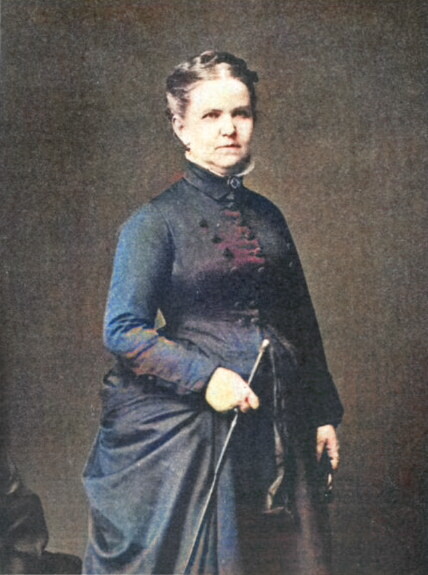
Cynthia Charlotte Moon, known as Lottie (see below left), was born in Danville, Virginia. When she was young, her father sold their slaves and moved the family north to Oxford, Ohio.
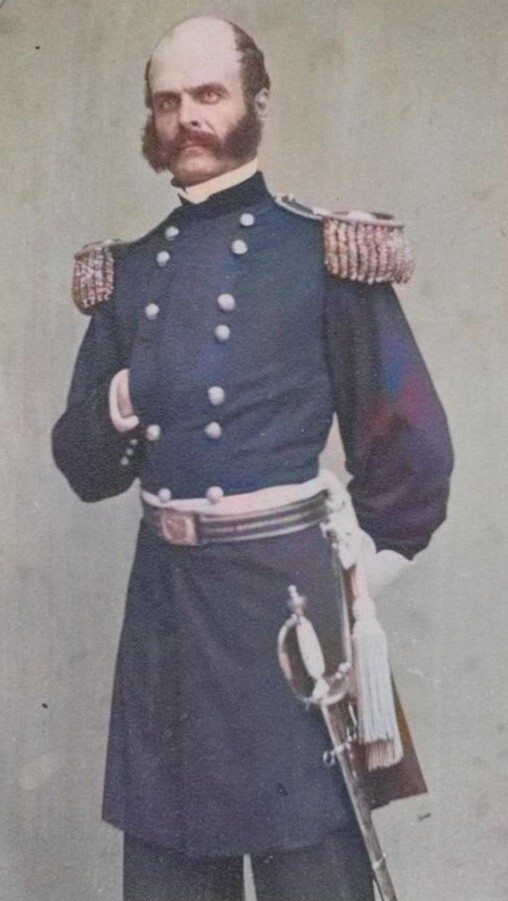
Lottie performed in amateur plays, often showcasing her ventriloquism. As a young woman, she was engaged to a young officer (and later Union general), Ambrose E. Burnside (as in sideburns, see to the left), whom she left at the altar. When the minister asked whether she had taken Burnside as her husband, it is claimed that she answered, “No siree, Bob!” Later, she was engaged to sixteen Confederate soldiers at once in an effort to allow them to at least die happily.
Before the American Civil War, Lottie married Judge James Clark. Lottie began her espionage career when a letter needed to be delivered, but no courier was available. Throughout the war, both sisters used various disguises.
Among other colorful incidents, Lottie once rode in President Abraham Lincoln’s personal carriage disguised as “Lady Hull”, a rheumatic English invalid. She pretended to be asleep while President Lincoln and Secretary of War Edwin M. Stanton discussed upcoming strategies. The two Union men believed they were taking Lady Hull to the South for a warm-springs treatment for her illness. Stanton offered $10,000 for the capture of Lottie Moon after realizing Lady Hull was Lottie Moon.
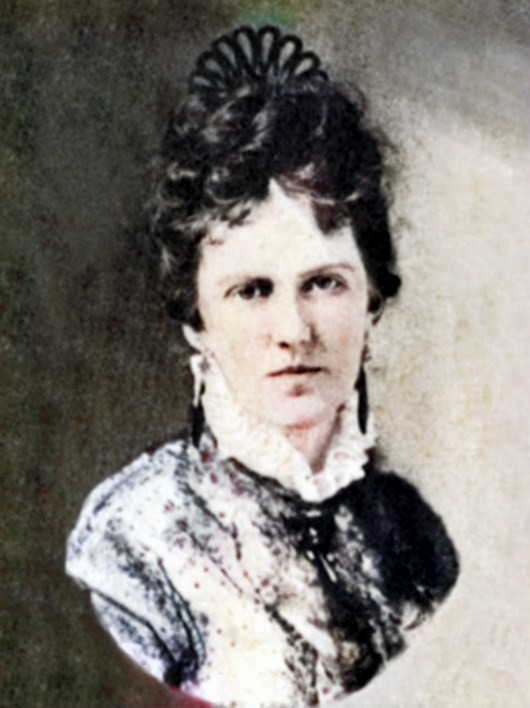
During the war, Lottie’s little sister, Ginnie (below right), attended the Oxford Female Institute. While there, Moon was kicked out after she shot the stars out of the American Flag and scratched a pro-Jefferson Davis message on a local store window with a ring. She was sent to live with Lottie and her husband, Judge James Clark, in Ohio.
The Clarks’ home was a stopping point for Confederate couriers. Moon eventually moved to Memphis, Tennessee, with her mother in 1862, where she began a short but notable career as an espionage agent working with Memphis entrepreneur-turned-soldier Nathan Bedford Forrest and other Confederates, including her sister, Lottie. When the Union forces occupied the city, she was arrested for spying but escaped with the help of her sister. She continued her work further south and was eventually imprisoned in New Orleans.
Eventually, both sisters began to help move information back and forth from the North and South and smuggled much-needed quinine and morphine into the Confederacy. They often disguised themselves. Once they were caught smuggling medicine quilted into their voluminous hoop skirts. On a mission together, the sisters were captured. Ginnie had written a message hidden on her person. When the men who captured her insisted that the women be searched, Moon pulled a gun on them and threatened to shoot any of the men who attempted to search her. When the men went to find a woman to search them, the women were left alone. In those few minutes, Ginnie dipped the message in water and ate it. On another occasion, Ginnie, her sister, and her mother were caught by Lottie’s jilted fiancé, General Ambrose Burnside, who kept them under house arrest for several months, but never pressed charges.
After the war, she ran a boarding house and was considered a heroine in the 1870s yellow fever epidemics. In her 70s, she decided to act again, now in the new silent film industry. She found producer Jesse Lasky and asked for a job. In response to his inquiries about her ability to act, she informed him that, at age 75, she had already “acted all the parts”. Moon acted in several movies, including Robin Hood and The Spanish Dancer. She was found dead at age 81 in New York City, with her cat sitting next to her.
GENEALOGIST- DOES YOUR NAME TELL A STORY?
 GENEALOGIST- DOES YOUR NAME TELL A STORY?
We first covered the origin of the name of my wife’s Great-Great Grandfather, Santarelli Sydenham Galitzin Franklin. This August 10, 2024, post gives the details: SSG Franklin, and a follow-up story was published on August 24, 2024. SSG 2
Parents in early America often gave their children names that they hoped would become their attributes. I believe the case here may be with Santarelli’s parents. The parents, when they named their son in 1829 in Mississippi, were obviously literate. We have evidence of that as the father signed his will, and they had their books and musical instruments stolen from them by Spanish Robbers on the Natchez Trace. Illiterate people don’t take books on 900-mile trips. Of course, I am not sure what Spanish robbers do with books written in English, and it seems like bulky contraband, but that’s the story.
I am guessing that their books included stories about people associated with Benjamin Franklin, as we are all a bit fascinated by famous people who share our surnames. The parents were also going to send Santarelli to Cincinnati to study music. Looking at what was available in the 1845-1853 period, that would have probably been the Herron Academy, as it was non-sectarian.
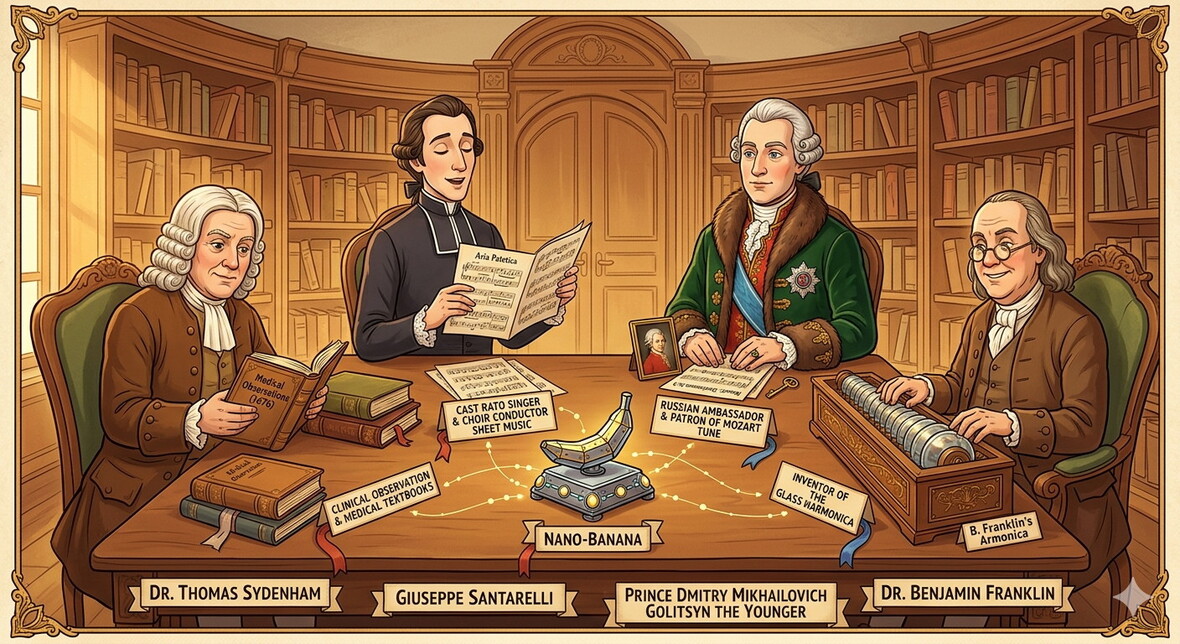
You can see that two of the namesakes were tied to music, and the other to medicine. Santarelli’s mother’s great-uncles included Dr. John Jones, the father of American surgery, Dr. Thomas Jones, and a great-grandfather, Dr. Evan Jones. His father may have had an uncle named Dr. Richard Franklin/
The Italian Count Giuseppe Santarelli (1710-1790), an Italian castrato, composer, choir conductor, voice teacher, and Roman Catholic priest, was named a knight of the Sovereign Military Order of Malta.
Prince Dmitri Alekseyevich Golitsyn (1736-1803) was a Russian diplomat, art agent, author, volcanologist, and mineralogist. By birth, he was a member of the House of Golitsyn. He supported recognition of the United States and participated in drafting the First League of Armed Neutrality. He was the first Russian-educated person to propose abolishing serfdom in Russia. He and Franklin exchanged letters on electricity and other matters. He supposedly taught Benjamin Franklin about music.
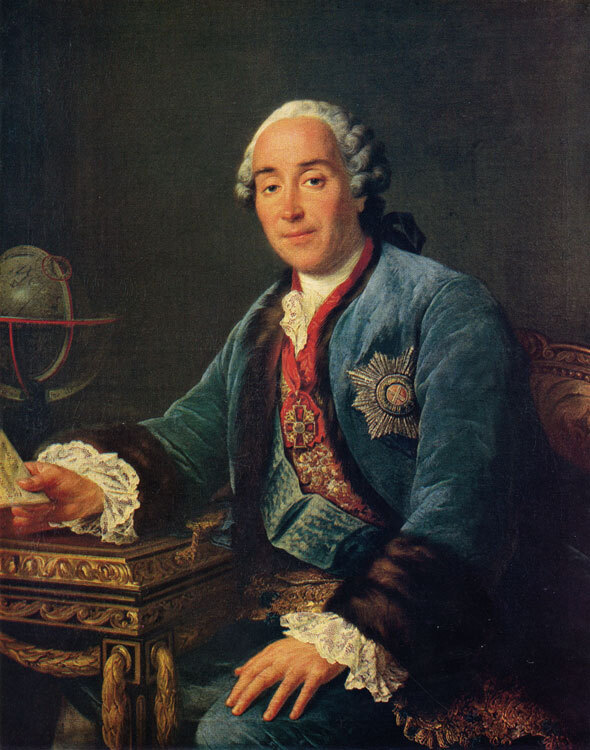
However, further research suggests that’s unlikely, as Benjamin Franklin was already well respected as a musician, having invented the glass harmonica. It may be that I had the wrong Golitsyn, and that Santarelli’s second middle name came from this Prince’s Uncle, Prince Dmitry Mikhailovich Golitsyn or Gallitzin (1721 – 1793), a Russian diplomat, philanthropist, and art collector from the Golitsyn family (pictured). He served as the Russian ambassador to Austria from 1761 to 1792. He is famous in music history for his relationship with Wolfgang Amadeus Mozart, whom he sponsored. Mozart even wrote two pieces of music for the glass harmonica.
The childless Prince Golitsyn, wishing to keep his wife’s memory alive for future generations, donated a large sum to establish the Golitsyn Hospital in Moscow. His palace in Vienna boasted several hundred paintings by Old Masters. After his death, these paintings were exhibited in the gallery of the Golitsyn Hospital before being auctioned off in order to finance the hospital’s extension.
Lord Sydenham was not even a title until 1840. However, Benjamin Franklin wrote much about Dr. Thomas Sydenham (1626 – 1689), an English physician. He was the author of Observationes Medicae (1676), which became a standard medical textbook for two centuries, earning him the nickname ‘The English Hippocrates’. Among his many achievements was the discovery of a disease, Sydenham’s chorea, also known as St Vitus’ Dance. To him is attributed the prescient dictum, “A man is as old as his arteries.”
So, since we have pictures of Santarelli, Sydenham, Golitsyn, and Franklin, why not ask AI to create a picture of the four men together (granted that was impossible as Sydenham was long dead). Here’s what AI came up with:
GENEALOGIST- PRESERVE YOUR FAMILY HISTORY, TODAY
 GENEALOGIST- PRESERVE YOUR FAMILY HISTORY, TODAY
Reach out to Dancestors Genealogy. Our genealogists will research, discover, and preserve your family history. No one is getting any younger, and stories disappear from memory every year, eventually fading from our ability to find them.
Preserve your legacy and the heritage of your ancestors.
Paper gets thrown in the trash; books survive!
Ready to embark on your family history journey? Don’t hesitate. Call Dan Nelson and get your project started!
