

24 Jan Genealogy Newsletter- January 24, 2026
Contents
- 1 CHEROKEE BILL’S BAD DEEDS AND TRIALS
- 2 FROM ADAM AND EVE WORKING THROUGH THE LEGENDARY DANISH KINGS
- 3 KILLER CORN
- 4 FORMER POTENTIAL HALFTIME PERFORMERS
- 5 SHAKING DOWN TO THE LAST THREE
- 6 ANCIENT WARRIOR QUEEN NZINGA
- 7 DRIVING CAPONE AND THE PRESIDENT
- 8 PRESERVE YOUR FAMILY HISTORY, TODAY
- 9 THE NEWSLETTER PODCAST STYLE!
 CHEROKEE BILL’S BAD DEEDS AND TRIALS
 CHEROKEE BILL’S BAD DEEDS AND TRIALS
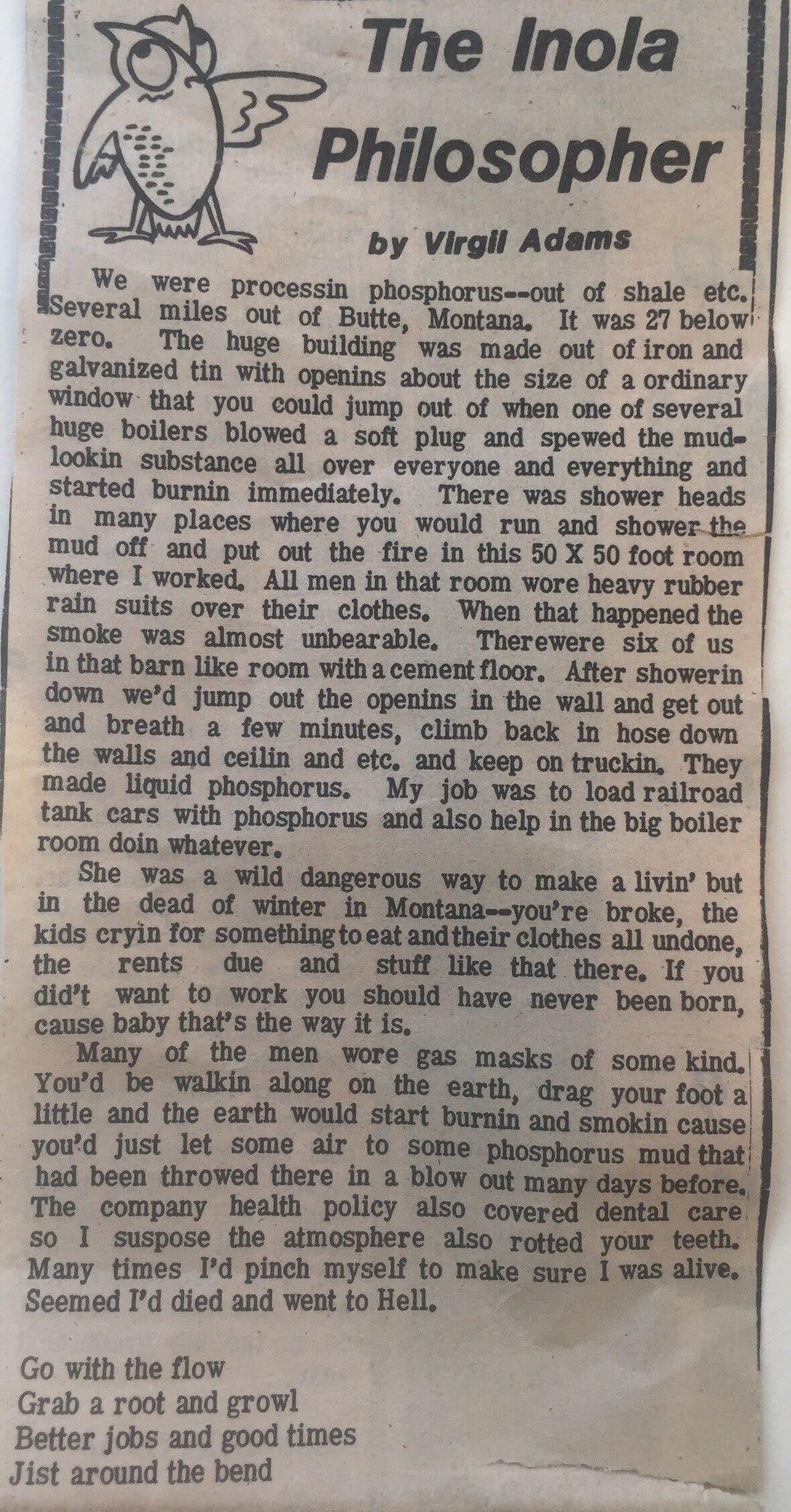
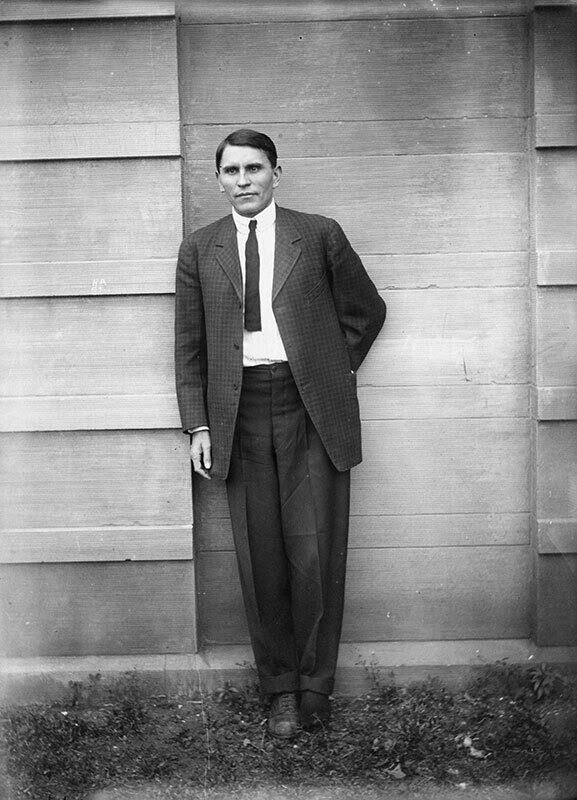
As a kid, my grandfather (his Inola Philosopher above) had us ride to the top of nearby Belle Starr hill, near Inola, OK. I suspect every town with a hill had one of her alleged hideouts; Oklahoma’s version of Washington slept here. In a continuation of the last edition’s article on Ike Rogers, Ike and Bill, this next chapter involves Belle and Sam Starr’s son, Henry (pictured).
Here’s what Ike and his gang did that led to the intersection.
• On May 26, 1894, robbery of T.H. Scales Store, Wetumka, Oklahoma. 35 cents was stolen.
• On June 17, 1894, the killing of Deputy Sequoyah Houston.
• On July 4, 1894, Kansas and Arkansas Railroad brakeman Samuel Collins was shot through the bowels after ejecting a drunkard for trying to steal a ride at Fort Gibson, Oklahoma; a prostitute who was on the same car tried to run, was shot and died later; the assailant was Crawford Goldsby; according to an 1896 account Collins apparently died as well.
• On July 6, 1894, Mississippi Railway Station Agent A. L. “Dick” Richards of Nowata, Oklahoma, was reportedly killed by Cherokee Bill, of whom he later boasted but whom he later denied.
• On July 18, 1894, Goldsby and his gang robbed Wells-Fargo Express Company and the St Louis and San Francisco railroad train at Red Fork.
• On July 30, 1894, they robbed the Lincoln County Bank in Chandler, Oklahoma, and made off with $500, killing J. B. Mitchell, in the process.
• In September 1894, Goldsby shot and killed his brother-in-law, Joseph “Mose” Brown, either over an argument about some hogs, or because he thought that Brown “..got more of the parental estate than was due him…”
• On September 14, 1894, a robbery of Parkinson’s Store at Okmulgee, Oklahoma.
• On October 9, 1894, robbery of the Express Office and Depot at Chouteau, Oklahoma.
• On October 20, 1894, a train robbery at Correatta, Oklahoma.
• On October 22, 1894, Goldsby and three others robbed the post office and Donaldson’s Store at Watova, Oklahoma.
• On November 8, 1894, when the men robbed the Shufeldt and Son General Store, Goldsby shot and killed Ernest Melton, who happened to enter the store during the robbery.
• On December 23, 1894, Goldsby and an accomplice Jim French held up and robbed Nowata, Oklahoma, Station Agent Bristow of $190.00.
Because of the Melton murder incident, the authorities stepped up their pursuit for Goldsby and the Cook Gang. With the pressure on, the gang split up. Most of the men were captured or killed, but Goldsby managed to escape. When the authorities offered a $1300 reward for the capture of Goldsby, some of his acquaintances came forward and agreed to help.
As we shared in the last edition, on January 31, 1895, Goldsby was captured by Ike Rogers and Clint Scales in Nowata, Oklahoma, and taken to Fort Smith, Arkansas, to await trial.
On April 13, 1895, he was sentenced to death after being tried and convicted for the murder of Ernest Melton. However, his lawyer, J. Warren Reed, managed to postpone the execution date.
In June 1895, a pistol was discovered in a bucket at the Fort Smith jail; Goldsby claimed that a prison trustee named Ben Howell had brought the gun in and then had run away a few days later.
In the meantime, Goldsby had made a friend, Sherman Vann, who was a jail trusty. Sherman managed to sneak a six-gun into Goldsby’s cell, a Colt revolver.
On July 26, 1895, Goldsby attempted a jail break with it. He jumped the night guards as they came to lock him into his cell. A guard, Lawrence Keating, was shot in the stomach. As Keating staggered back down the corridor, Goldsby shot him again in the back. Other guards arrived and prevented Goldsby from escaping, but they were unable to enter the jail either. Then another prisoner, Henry Starr, convinced the guards to let him go in and get Goldsby out. Moments later, he came back with Goldsby, who was unarmed.
The second trial lasted three days, resulting in a guilty verdict, and U.S. District Judge Isaac C. Parker sentenced Goldsby to be hanged on September 10, 1895. A stay was granted, pending an appeal to the Supreme Court. On December 2, the Supreme Court affirmed the Fort Smith court’s decision, and Judge Parker again set the execution date for March 17, 1896.
On the morning of March 17, Goldsby awoke at six to have a smoke break. He ate a light breakfast sent by his mother from the hotel. At 9:20, his mother and “Aunty” Amanda Foster were admitted to his cell, and shortly afterwards, Father Pius, a Catholic priest with whom he had been meeting voluntarily for the previous five days, arrived.
The hanging was scheduled for 11 am, but was delayed until 2 pm so his sister, Georgia, could see him before the hanging. She was scheduled to arrive on the eastbound train at 1 pm.
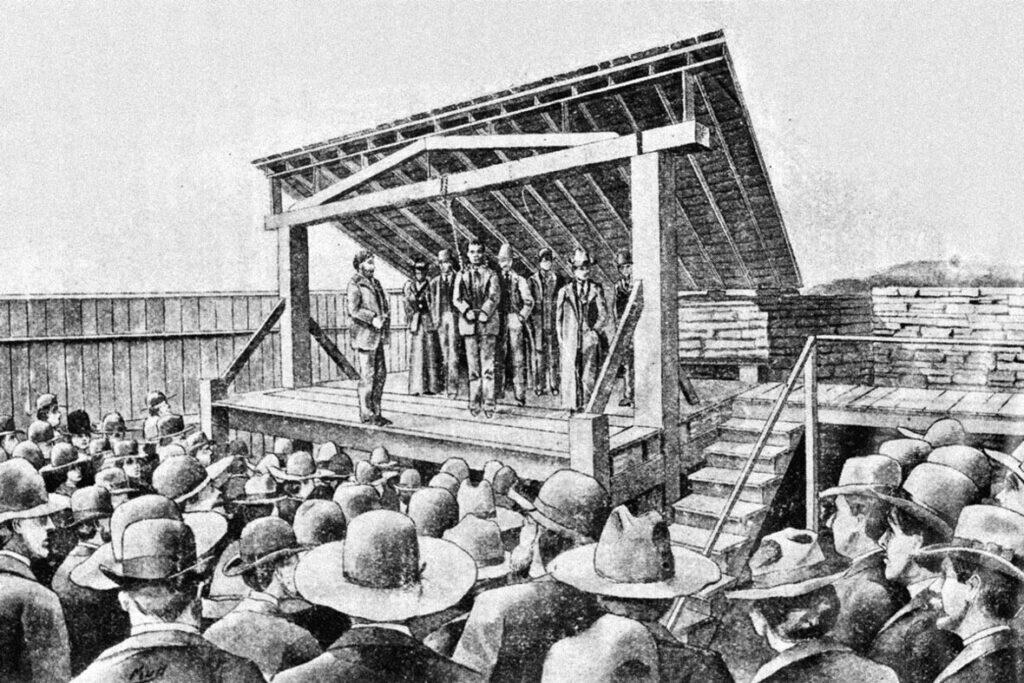
Shortly after 2 p.m., while on the gallows, it was reported that Goldsby was asked if he had anything to say, and he replied, “I came here to die, not make a speech.” About 12 minutes later, Crawford “Cherokee Bill” Goldsby, the most notorious outlaw in the Territory, was dead (pictured below).
On April 20, 1897, Ike “Robinson” Rogers, who was reported to have been involved in the capture of Cherokee Bill, was shot and killed by Clarence Goldsby at Ft Gibson, Oklahoma. More on that in the next edition.
FROM ADAM AND EVE WORKING THROUGH THE LEGENDARY DANISH KINGS
 FROM ADAM AND EVE WORKING THROUGH THE LEGENDARY DANISH KINGS
For the third article on examining a person’s descent from Adam and Eve, we last left off with a legendary Danish king, Roric. The tree lists Roric’s son as Harold Hildetand, better known as Harold Wartooth, even though I can find no evidence that Harold is Roric’s son. However, Harold was the son of Ivar Vidfadma (in the tree), through his mother, Auðr the Deep-Minded.
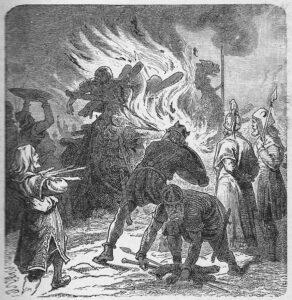
The tree then lists Harold’s son Sigurd, King of Denmark; however, sources show Sigurd as Harold’s nephew, the son of his brother Randver. Pictured above is the aftermath of the Battle of the Brávellir, where Sigurd let the dead body of Harald Wartooth, who would be his father, rather than his uncle, be burned, although kings didn’t often kill their fathers in battle.
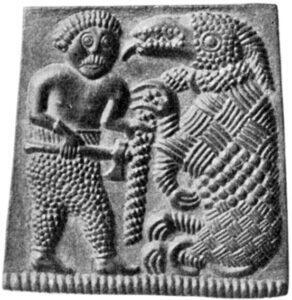
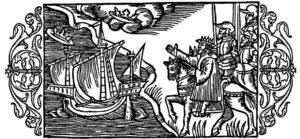
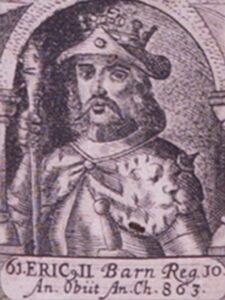
The line next goes to Sigurd’s son Ragnar, King of Denmark, born 750, who is pictured below in baggy pants slaying a beast. Then the line merges with one of Ragnar’s sons. Eric Weatherhat (pictured below, controlling the winds so that the ship turns in his direction), with Eric II King of Denmark, pictured below to the right. Horik II (who died after 864), also known as Hårik or, in late sources, Erik Barn (Danish: “Erik the Child”), was King of the Danes from the fall of Horik I in 854 to an unknown date between 864 and 873. These names come from Gesta Danorum (“Deeds of the Danes”) by Saxo Grammaticus, which is the most extensive and widely known Danish chronicle of Danish kings. However, they list Eric, the great-grandson of Ragnar, which means it’s missing two generations, which speeds up the descent.
More in the next edition!
KILLER CORN
 KILLER CORN
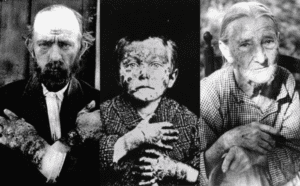
With all of the recent news on the government changing its guidelines on our recommended diets, I thought about several clients’ ancestors who died from Pellagra. It was a common cause of death up until the 1930’s.
Pellagra can be common in people who obtain most of their food energy from corn. It is a poor source of tryptophan and niacin. Following the corn cycle, symptoms usually appear in spring, increase in summer due to greater sun exposure, and return the following spring.
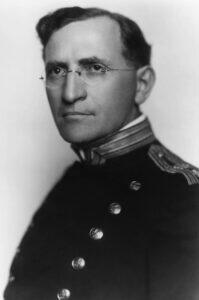
In the early 1900s, pellagra reached epidemic proportions in the American South. Between 1906 and 1940, more than 3 million Americans were affected by pellagra, with more than 100,000 deaths, yet the epidemic resolved itself right after dietary niacin fortification. Pellagra deaths in South Carolina numbered 1,306 during the first 10 months of 1915; 100,000 Southerners were affected in 1916. At this time, the scientific community held that pellagra was probably caused by a germ or some unknown toxin in corn. The Spartanburg Pellagra Hospital in Spartanburg, South Carolina, was the first facility in the United States dedicated to discovering the cause of pellagra. It was established in 1914 with a special Congressional appropriation to the U.S. Public Health Service and set up primarily for research. In 1915, Dr. Joseph Goldberger (pictured), assigned by the surgeon general of the United States to study pellagra, showed that it was linked to diet by observing outbreaks of pellagra in orphanages and mental hospitals. Goldberger noted that children between the ages of 6 and 12 (but not older or younger children at orphanages) and patients at the mental hospitals (but not doctors or nurses) seemed most susceptible to pellagra. Goldberger theorized that a lack of meat, milk, eggs, and legumes made those particular populations susceptible to pellagra. By modifying the diet served in these institutions with “a marked increase in the fresh animal and the leguminous protein foods,” Goldberger was able to show that pellagra could be prevented. By 1926, Goldberger established that a diet that included these foods, or a small amount of brewer’s yeast, prevented pellagra.
My grandparents in Iowa raised corn, and while they ate it as many people did as a side dish, it was primarily grown for animal feed. Corn is often a cheaper way to provide energy for livestock, especially compared to hay when forage is scarce, because it’s energy-dense and mass-produced, making it cost-effective for weight gain in cattle, poultry, and pigs, though it must be balanced with protein and forage. It’s a key factor in the affordability of grain-finished beef, as it allows for faster finishing times, though it’s used as a supplement, not a complete diet, and requires protein and roughage.
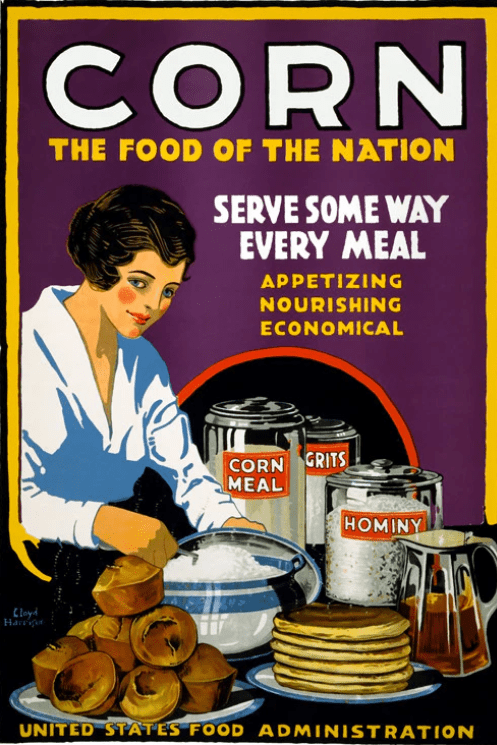
Unfortunately, it’s not a useful part of the human diet, even though the U.S. Food Administration was promoting it (as seen in the poster), as late as the 1930’s. Today, it’s primarily raised for high fructose corn syrup, which is a significant contributor to processed foods, which often leads to obesity and diabetes, so the cycle of corn misuse continues.
However, I did have fun as a kid on the farm, throwing the shelled corn cobs to the pigs from the tractor-pulled corn crib!
FORMER POTENTIAL HALFTIME PERFORMERS
 FORMER POTENTIAL HALFTIME PERFORMERS
A year ago, just before the Super Bowl, we reported on which US presidents played football https://gem.godaddy.com/p/3435cb1. This year, since the Super Bowl often includes memorable musical experiences, we’ll cover which presidents played musical instruments. We had a picture in an edition last year of Harry Truman playing the piano with Lauren Bacall on top of it (https://gem.godaddy.com/p/5725fb1), which apparently got him a scolding from his wife, Bess.
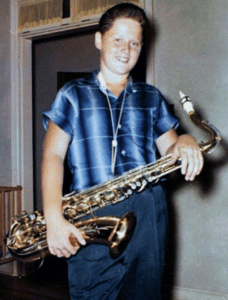
Many U.S. Presidents played musical instruments, with the piano being the most common; presidents besides Truman who played were Nixon, both Roosevelts, L.B. Johnson, Kennedy, and Carter. The violin with Jefferson, Wilson, and Tyler playing, and the saxophone with Bill Clinton (pictured).
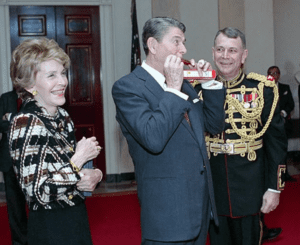
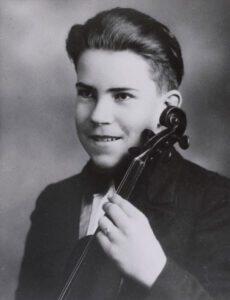
Other notable musicians included harmonica, with Ronald Reagan (pictured) and Calvin Coolidge; Chester A. Arthur played the banjo; John Quincy Adams, skilled at playing the flute, violin, and guitar; and Nixon, who, in addition to the piano, played the clarinet, accordion, and violin (pictured).
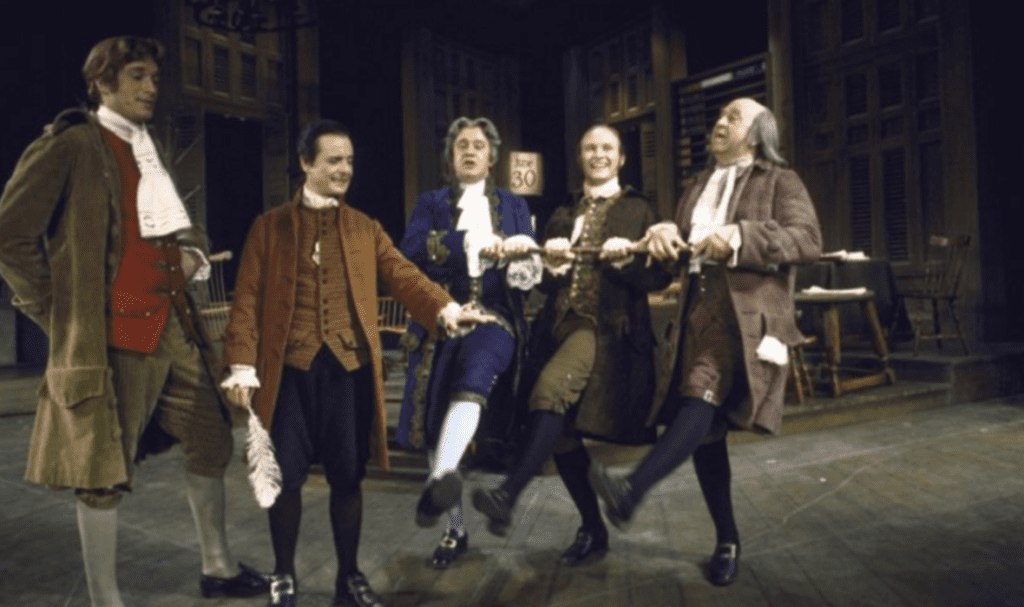
Then, of course, the characters of Washington, Jefferson, and Madison sans instruments all appeared in the musical Hamilton (pictured).
SHAKING DOWN TO THE LAST THREE
 SHAKING DOWN TO THE LAST THREE
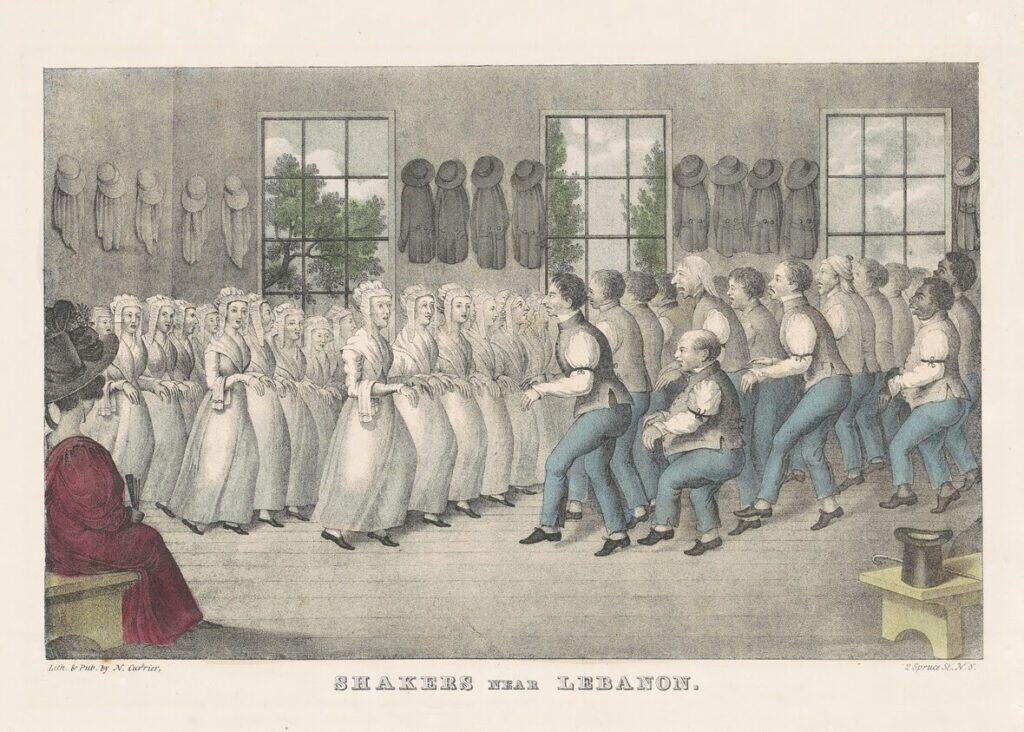
In 2024, we visited the Shaker Village in Pleasant Hill Kentucky, where we learned that the United Society of Believers in Christ’s Second Appearing, more commonly known as the Shakers, are a millenarian restorationist Christian sect founded c. 1747 in England and then organized in the United States in the 1780s. They were initially known as “Shaking Quakers” because of their ecstatic behavior during worship services.
Espousing egalitarian ideals, the Shakers practice a celibate and communal utopian lifestyle, pacifism, uniform charismatic worship, and their model of equality of the sexes, which they institutionalized in their society in the 1780s. They are also known for their simple living, architecture, technological innovation, music, and furniture. Women took on spiritual leadership roles alongside men, including founding leaders such as Jane Wardley, Ann Lee, and Lucy Wright. The Shakers emigrated from England and settled in British North America, with an initial settlement at Watervliet, New York (present-day Colonie), in 1774.
During the mid-19th century, an Era of Manifestations resulted in a period of dances, gift drawings, and gift songs inspired by spiritual revelations. At its peak in the mid-19th century, there were 2,000–4,000 Shaker believers living in 18 major communities and numerous smaller, often short-lived communities. External and internal societal changes in the mid- and late 19th century resulted in the thinning of the Shaker community as members left or died with few converts to the faith to replace them.
By 1920, there were only 12 Shaker communities remaining in the United States. As of 2019, there was only one active Shaker village: Sabbathday Lake Shaker Village, in Maine. Consequently, many of the other Shaker settlements are now museums. As of August 2025, there were three members.
Moral of the story, if you’re going to have a celibate community then you need to be good recruiters or you won’t last!
ANCIENT WARRIOR QUEEN NZINGA
 ANCIENT WARRIOR QUEEN NZINGA
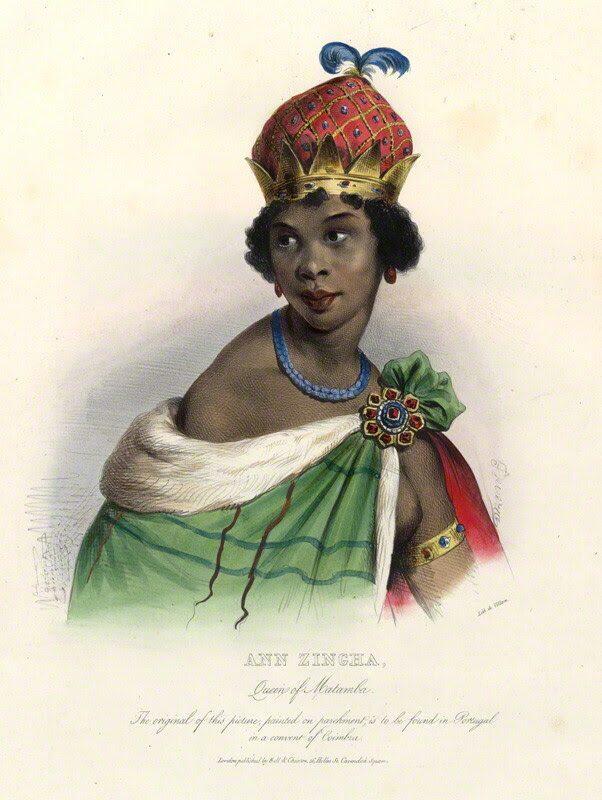
Nzinga or Njinga Ana de Sousa c. 1583 – 1663) was a southwest African paramount ruler who ruled as a queen of the Ambundu Kingdoms of Ndongo (1624–1663) and Matamba (1631–1663), located in present-day northern Angola. Born into the ruling family of Ndongo, her grandfather Ngola Kilombo Kia Kasenda was the king of Ndongo, succeeded by her father.
Nzinga received military and political training as a child, and she demonstrated an aptitude for defusing political crises as an ambassador to the Portuguese Empire. In 1624, she assumed power over Ndongo after the death of her brother Mbandi. She ruled during a period of rapid growth of the African slave trade and encroachment by the Portuguese Empire in South West Africa.
The Portuguese declared war on Ndongo in 1626 and by 1628, Njinga’s army had been severely depleted and they went into exile. In search of allies, she married Imbangala warlord Kasanje. Using this new alliance to rebuild her forces, she conquered the Kingdom of Matamba from 1631 to 1635. In 1641, she entered into an alliance with the Dutch West India Company who had captured Luanda from the Portuguese. Between 1641 and 1644, Njinga was able to reclaim large parts of Ndongo. Alongside the Dutch, she defeated the Portuguese in a number of battles but was unable to take the Fortress of Massangano. In 1648, the Portuguese recaptured Luanda, with the Dutch leaving Angola. Njinga continued to fight the Portuguese until a peace treaty was signed in 1656.
In the centuries since her death, Njinga has been increasingly recognized as a major historical figure in Angola and in the wider Atlantic Creole culture. She is remembered for her intelligence, her political and diplomatic wisdom, and her military tactics.
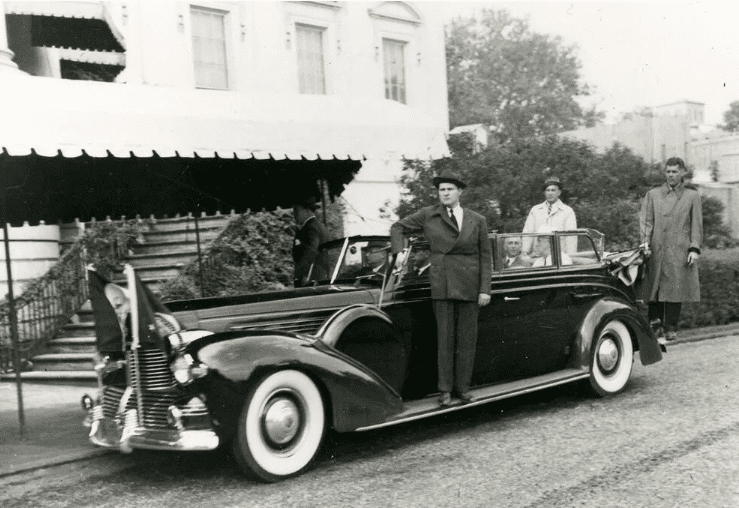
DRIVING CAPONE AND THE PRESIDENT
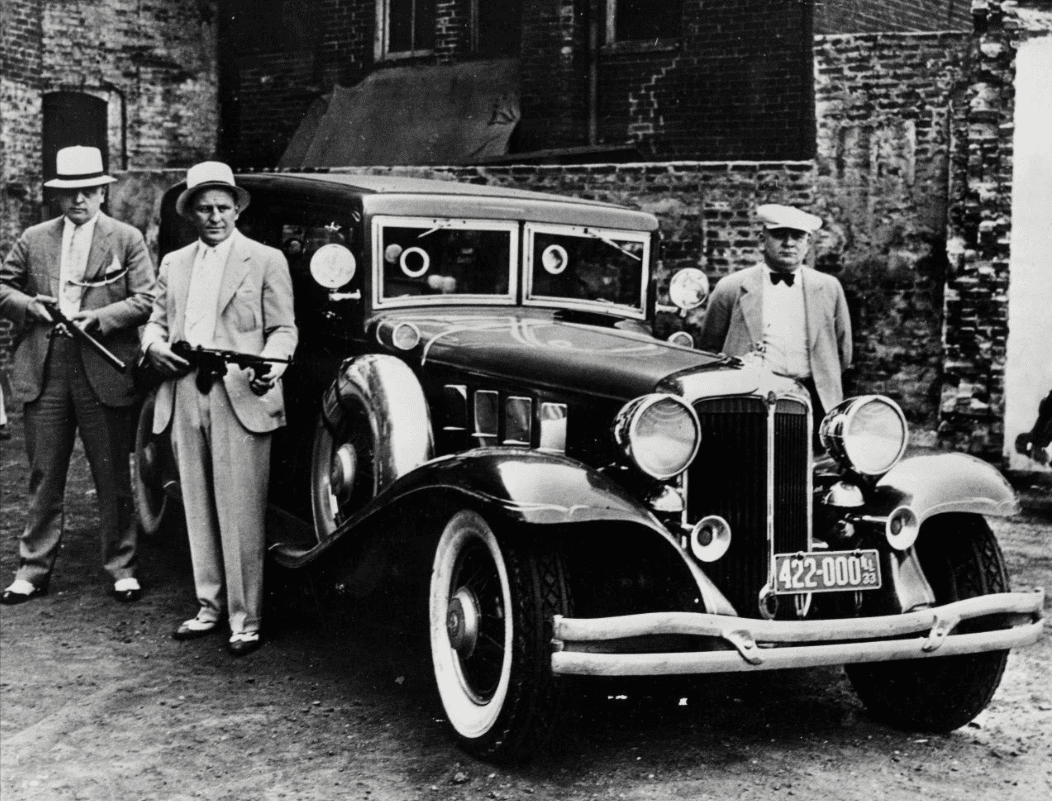
On December 8, 1941, FDR took a car to the capitol to give his Day of Infamy speech to a joint session of Congress, to ask them to declare war. The story goes that this car, however, was no ordinary car as it belonged to Al Capone and was used to keep FDR safe as it was bulletproof.
FDR’s secret service agent Michael F. Reilly wrote several books, and in one of them mentions the need for an armored car to protect the president while he traveled. However, Reilly states that they used the car on December 9th, not the 8th, and merely draped their bodies around the car and had the military line the streets.
His account, however, has several problems, specifically when he called the car an open-top car, when Capone’s car was definitely a closed-top car. Another problem in his story was that at the time, Al Capone’s car was on display in England and several photos from December 8, 1941, clearly shows a different car than the one Al Capone owned. Books, bloggers, and even CBS all wrote about the story, but they are not true.
While the president’s usual car, his “Sunshine Special” was being refitted to protect him, what FDR really used during this time was a 1938 semi-armored Cadillac from the White House Fleet. So, contrary to popular opinion, FDR did not ride in Al Capone’s car on that fateful day in 1941, but in one of his own government vehicles.
PRESERVE YOUR FAMILY HISTORY, TODAY
 PRESERVE YOUR FAMILY HISTORY, TODAY
Reach out to Dancestors Genealogy. Our genealogists will research, discover, and preserve your family history. No one is getting any younger, and stories disappear from memory every year, eventually fading from our ability to find them.
Preserve your legacy and the heritage of your ancestors.
Paper gets thrown in the trash; books survive!
Ready to embark on your family history journey? Don’t hesitate. Call Dan Nelson and get your project started!
THE NEWSLETTER PODCAST STYLE!
 THE NEWSLETTER PODCAST STYLE!
You can now listen as well as read the Dancestors Genealogy Newsletter. The QR code links you to a podcast-style way to share the newsletter, enriching your commute or listening while puttering around the house.
